Science and Technology Division, LGC, Teddington, Middlesex, United Kingdom.
PLoS One. 2011;6(10):e26104. doi: 10.1371/journal.pone.0026104. Epub 2011 Oct 20.
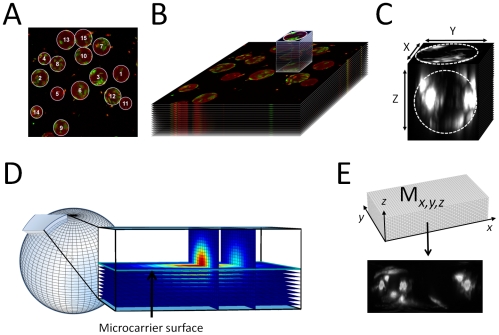
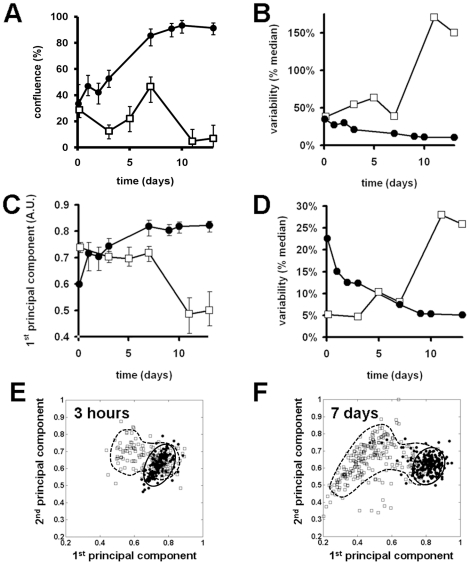
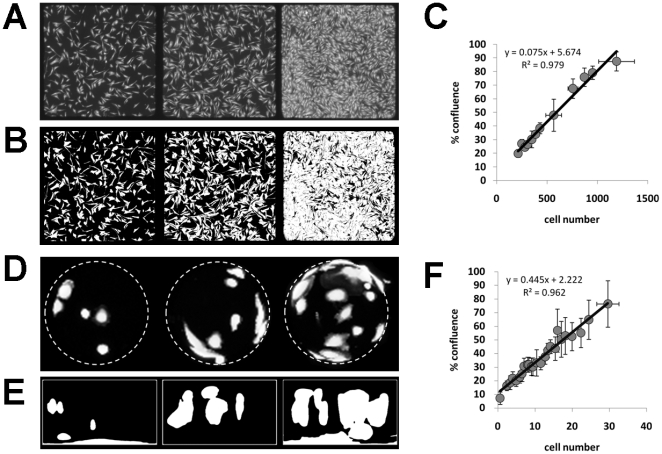
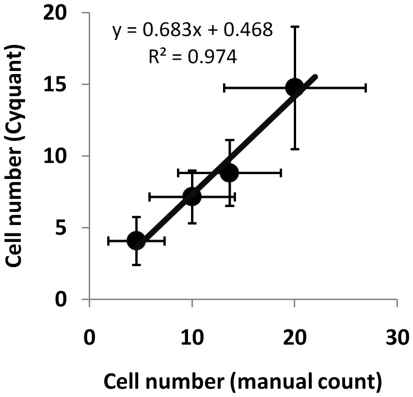
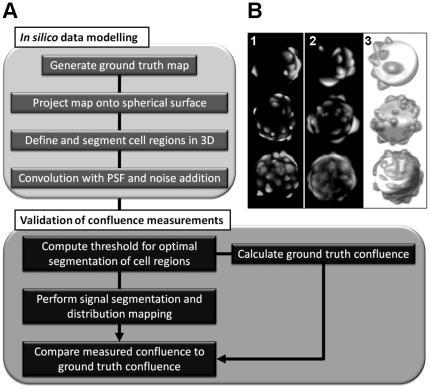
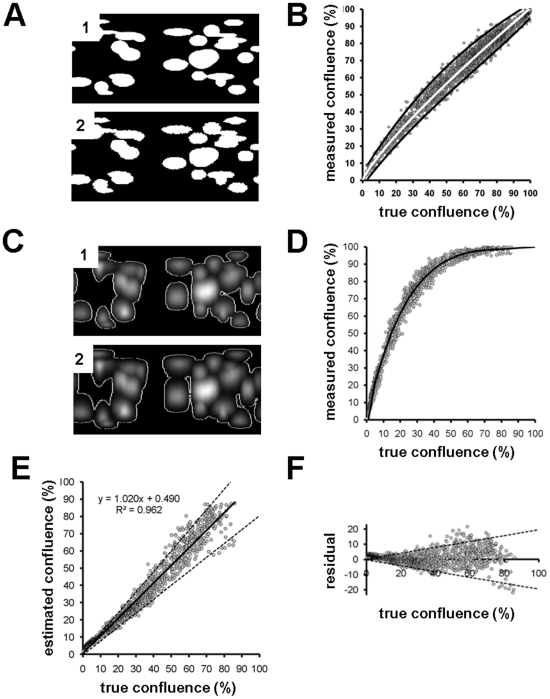
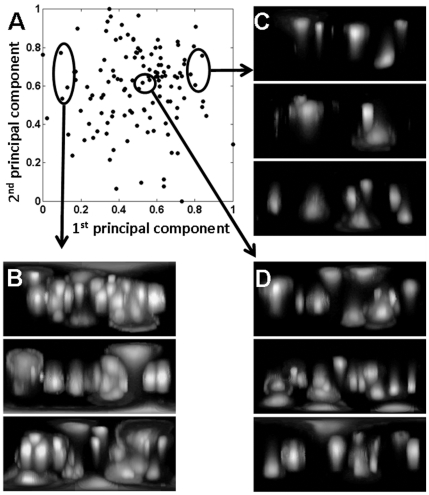
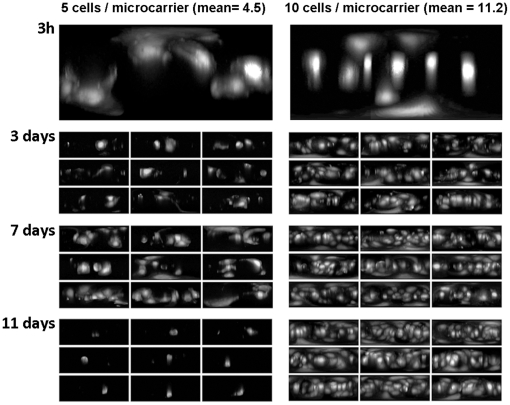
The transition from traditional culture methods towards bioreactor based bioprocessing to produce cells in commercially viable quantities for cell therapy applications requires the development of robust methods to ensure the quality of the cells produced. Standard methods for measuring cell quality parameters such as viability provide only limited information making process monitoring and optimisation difficult. Here we describe a 3D image-based approach to develop cell distribution maps which can be used to simultaneously measure the number, confluency and morphology of cells attached to microcarriers in a stirred tank bioreactor. The accuracy of the cell distribution measurements is validated using in silico modelling of synthetic image datasets and is shown to have an accuracy >90%. Using the cell distribution mapping process and principal component analysis we show how cell growth can be quantitatively monitored over a 13 day bioreactor culture period and how changes to manufacture processes such as initial cell seeding density can significantly influence cell morphology and the rate at which cells are produced. Taken together, these results demonstrate how image-based analysis can be incorporated in cell quality control processes facilitating the transition towards bioreactor based manufacture for clinical grade cells.
从传统的文化方法向基于生物反应器的生物加工转变,以生产用于细胞治疗应用的商业可行数量的细胞,需要开发强大的方法来确保所生产细胞的质量。测量细胞质量参数(如活力)的标准方法仅提供有限的信息,使得过程监测和优化变得困难。在这里,我们描述了一种基于 3D 图像的方法来开发细胞分布图谱,该图谱可用于同时测量搅拌罐生物反应器中附着在微载体上的细胞的数量、融合度和形态。通过对合成图像数据集的计算机模拟验证了细胞分布测量的准确性,结果表明准确性>90%。使用细胞分布映射过程和主成分分析,我们展示了如何在 13 天的生物反应器培养期间定量监测细胞生长,以及制造过程(如初始细胞接种密度)的变化如何显著影响细胞形态和细胞产生的速度。总之,这些结果表明如何将基于图像的分析纳入细胞质量控制过程中,促进向基于生物反应器的生产方法转变,以用于临床级细胞。