University of Catania, Catania, Italy.
PLoS One. 2011;6(10):e26523. doi: 10.1371/journal.pone.0026523. Epub 2011 Oct 19.
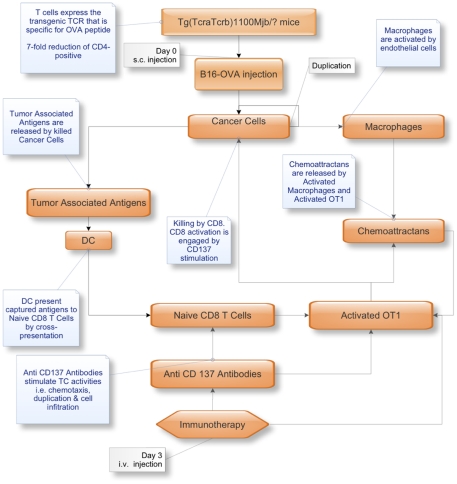
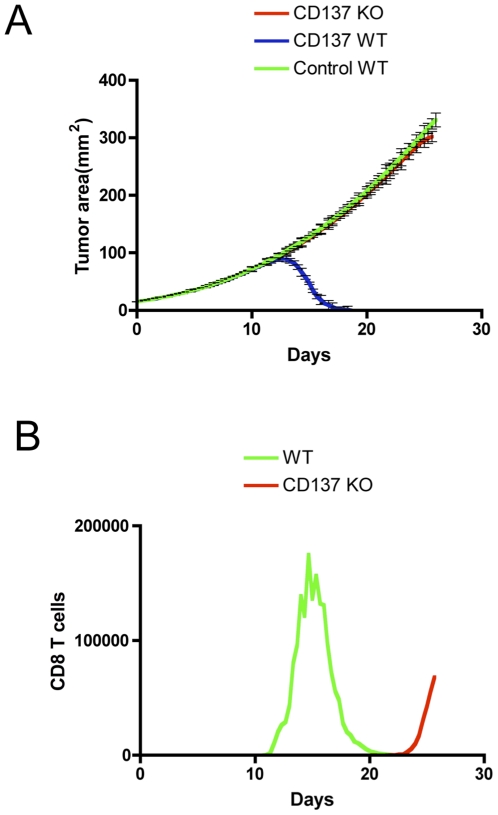
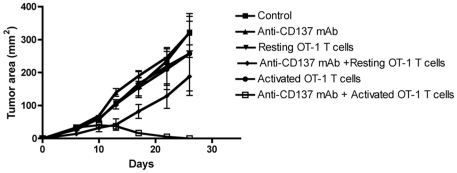
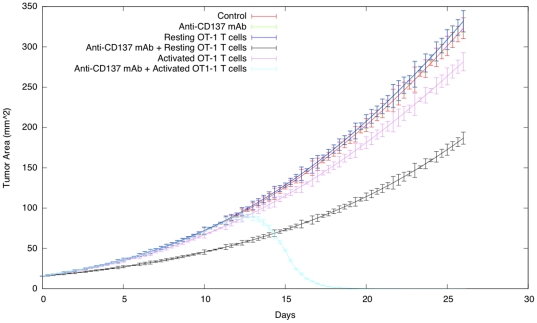
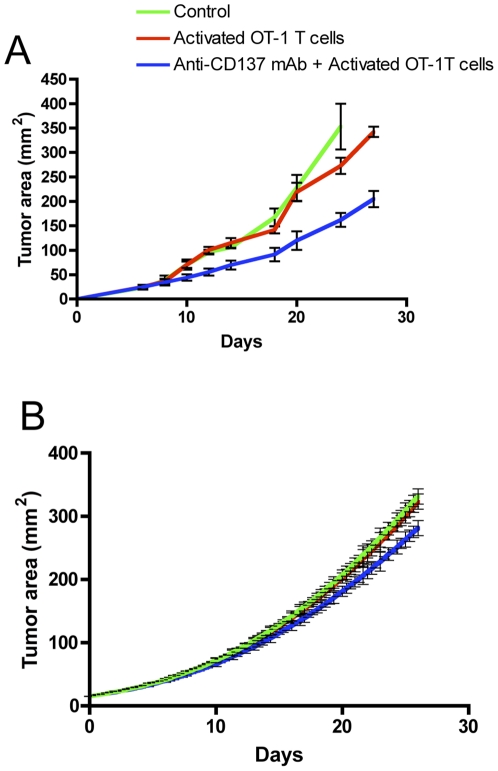
Immunological therapy of progressive tumors requires not only activation and expansion of tumor specific cytotoxic T lymphocytes (CTLs), but also an efficient effector phase including migration of CTLs in the tumor tissue followed by conjugation and killing of target cells. We report the application of an agent-based model to recapitulate both the effect of a specific immunotherapy strategy against B16-melanoma in mice and the tumor progression in a generic tissue section. A comparison of the in silico results with the in vivo experiments shows excellent agreement. We therefore use the model to predict a critical role for CD137 expression on tumor vessel endothelium for successful therapy and other mechanistic aspects. Experimental results are fully compatible with the model predictions. The biologically oriented in silico model derived in this work will be used to predict treatment failure or success in other pre-clinical conditions eventually leading new promising in vivo experiments.
进展性肿瘤的免疫治疗不仅需要激活和扩增肿瘤特异性细胞毒性 T 淋巴细胞 (CTLs),还需要有效的效应期,包括 CTLs 在肿瘤组织中的迁移,然后与靶细胞结合并杀死。我们报告了一种基于代理的模型的应用,该模型可以重现针对 B16-黑色素瘤的特定免疫治疗策略在小鼠中的效果,以及在一般组织切片中的肿瘤进展。将计算机模拟结果与体内实验进行比较,结果显示出极好的一致性。因此,我们使用该模型来预测肿瘤血管内皮细胞上 CD137 表达对成功治疗的关键作用和其他机制方面。实验结果与模型预测完全吻合。这项工作中得出的基于生物学的计算机模型将用于预测其他临床前条件下的治疗失败或成功,最终为新的有前途的体内实验提供指导。