Lenz Dorina, May Patrick, Walther Dirk
Max Planck Institute for Molecular Plant Physiology, Am Mühlenberg 1, 14476 Potsdam-Golm, Germany.
BMC Res Notes. 2011 Nov 8;4:483. doi: 10.1186/1756-0500-4-483.
MicroRNA (miRNA) mediated regulation of gene expression has been recognized as a major posttranscriptional regulatory mechanism also in plants. We performed a comparative analysis of miRNAs and their respective gene targets across four plant species: Arabidopsis thaliana (Ath), Medicago truncatula(Mtr), Brassica napus (Bna), and Chlamydomonas reinhardtii (Cre).
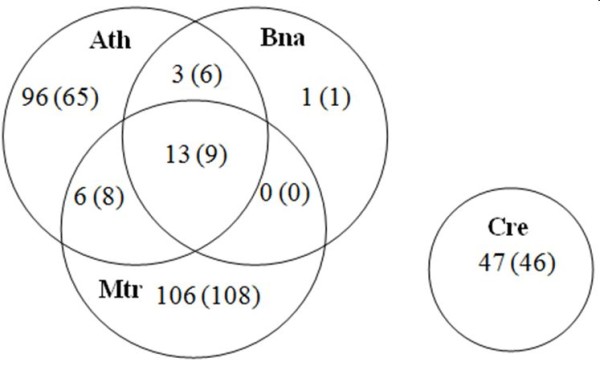
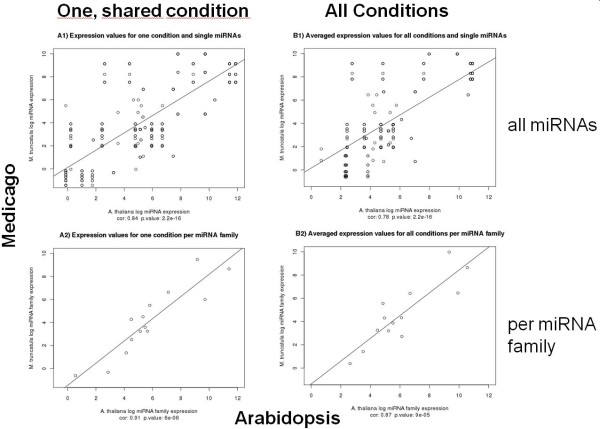
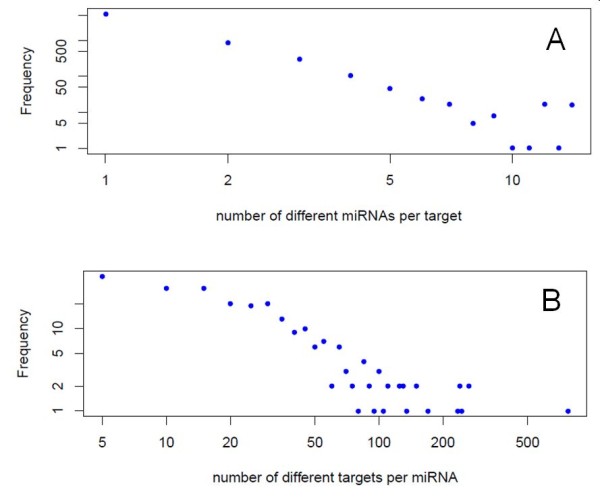
miRNAs were obtained from mirBase with 218 miRNAs for Ath, 375 for Mtr, 46 for Bna, and 73 for Cre, annotated for each species respectively. miRNA targets were obtained from available database annotations, bioinformatic predictions using RNAhybrid as well as predicted from an analysis of mRNA degradation products (degradome sequencing) aimed at identifying miRNA cleavage products. On average, and considering both experimental and bioinformatic predictions together, every miRNA was associated with about 46 unique gene transcripts with considerably variation across species. We observed a positive and linear correlation between the number miRNAs and the total number of transcripts across different plant species suggesting that the repertoire of miRNAs correlates with the size of the transcriptome of an organism. Conserved miRNA-target pairs were found to be associated with developmental processes and transcriptional regulation, while species-specific (in particular, Ath) pairs are involved in signal transduction and response to stress processes. Conserved miRNAs have more targets and higher expression values than non-conserved miRNAs. We found evidence for a conservation of not only the sequence of miRNAs, but their expression levels as well.
Our results support the notion of a high birth and death rate of miRNAs and that miRNAs serve many species specific functions, while conserved miRNA are related mainly to developmental processes and transcriptional regulation with conservation operating at both the sequence and expression level.
微小RNA(miRNA)介导的基因表达调控在植物中也被认为是一种主要的转录后调控机制。我们对四种植物物种:拟南芥(Ath)、蒺藜苜蓿(Mtr)、甘蓝型油菜(Bna)和莱茵衣藻(Cre)中的miRNA及其各自的基因靶标进行了比较分析。
从miRBase中获取miRNA,分别为Ath注释了218个miRNA,为Mtr注释了375个,为Bna注释了46个,为Cre注释了73个。miRNA靶标从可用的数据库注释、使用RNAhybrid的生物信息学预测以及旨在鉴定miRNA切割产物的mRNA降解产物分析(降解组测序)中获得。平均而言,综合考虑实验和生物信息学预测,每个miRNA与约46个独特的基因转录本相关,不同物种间差异较大。我们观察到不同植物物种中miRNA数量与转录本总数之间存在正线性相关,这表明miRNA的种类与生物体转录组的大小相关。保守的miRNA-靶标对与发育过程和转录调控相关,而物种特异性(特别是Ath)对参与信号转导和应激反应过程。保守的miRNA比非保守的miRNA具有更多的靶标和更高的表达值。我们发现不仅miRNA的序列,而且其表达水平也存在保守性的证据。
我们的结果支持miRNA具有高产生和高消亡率的观点,并且miRNA具有许多物种特异性功能,而保守的miRNA主要与发育过程和转录调控相关,在序列和表达水平上都存在保守性。