Memory and Aging Center, Department of Neurology, University of California San Francisco, 350 Parnassus Avenue, Suite 905, San Francisco, CA 94143, USA.
Alzheimers Res Ther. 2011 Nov 10;3(6):31. doi: 10.1186/alzrt93.
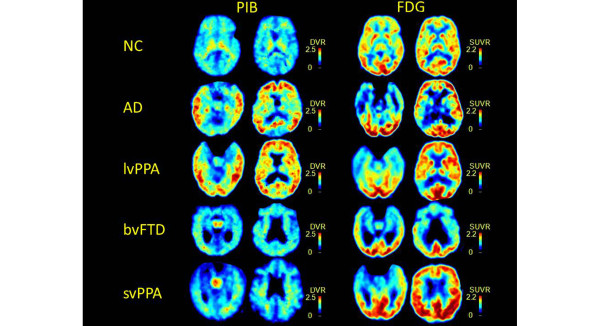
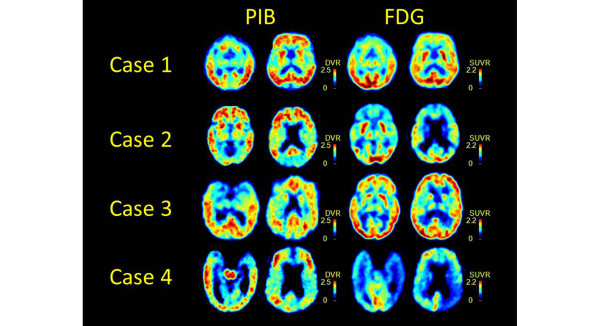
In the past decade, positron emission tomography (PET) with carbon-11-labeled Pittsburgh Compound B (PIB) has revolutionized the neuroimaging of aging and dementia by enabling in vivo detection of amyloid plaques, a core pathologic feature of Alzheimer's disease (AD). Studies suggest that PIB-PET is sensitive for AD pathology, can distinguish AD from non-AD dementia (for example, frontotemporal lobar degeneration), and can help determine whether mild cognitive impairment is due to AD. Although the short half-life of the carbon-11 radiolabel has thus far limited the use of PIB to research, a second generation of tracers labeled with fluorine-18 has made it possible for amyloid PET to enter the clinical era. In the present review, we summarize the literature on amyloid imaging in a range of neurodegenerative conditions. We focus on potential clinical applications of amyloid PET and its role in the differential diagnosis of dementia. We suggest that amyloid imaging will be particularly useful in the evaluation of mildly affected, clinically atypical or early age-at-onset patients, and illustrate this with case vignettes from our practice. We emphasize that amyloid imaging should supplement (not replace) a detailed clinical evaluation. We caution against screening asymptomatic individuals, and discuss the limited positive predictive value in older populations. Finally, we review limitations and unresolved questions related to this exciting new technique.
在过去的十年中,正电子发射断层扫描(PET)与碳-11 标记的匹兹堡化合物 B(PIB)一起,通过在体内检测淀粉样斑块(阿尔茨海默病(AD)的核心病理特征),彻底改变了衰老和痴呆的神经影像学。研究表明,PIB-PET 对 AD 病理学敏感,可将 AD 与非 AD 痴呆(例如额颞叶变性)区分开来,并有助于确定轻度认知障碍是否由 AD 引起。尽管碳-11 放射性标记的半衰期很短,迄今为止限制了 PIB 在研究中的应用,但第二代用氟-18 标记的示踪剂使淀粉样 PET 进入临床时代成为可能。在本综述中,我们总结了一系列神经退行性疾病中淀粉样蛋白成像的文献。我们重点介绍了淀粉样蛋白 PET 的潜在临床应用及其在痴呆鉴别诊断中的作用。我们认为,淀粉样蛋白成像在评估轻度受影响、临床表现不典型或发病年龄较早的患者时将特别有用,并通过我们实践中的病例来说明这一点。我们强调,淀粉样蛋白成像应补充(而非替代)详细的临床评估。我们警告不要对无症状个体进行筛查,并讨论了在老年人群中有限的阳性预测值。最后,我们回顾了与这项令人兴奋的新技术相关的局限性和未解决的问题。