Department of Kinesiology and Nutrition, University of Illinois at Chicago, Chicago, IL 60612, USA.
Mol Cell Endocrinol. 2012 Feb 26;349(2):222-31. doi: 10.1016/j.mce.2011.10.027. Epub 2011 Nov 10.
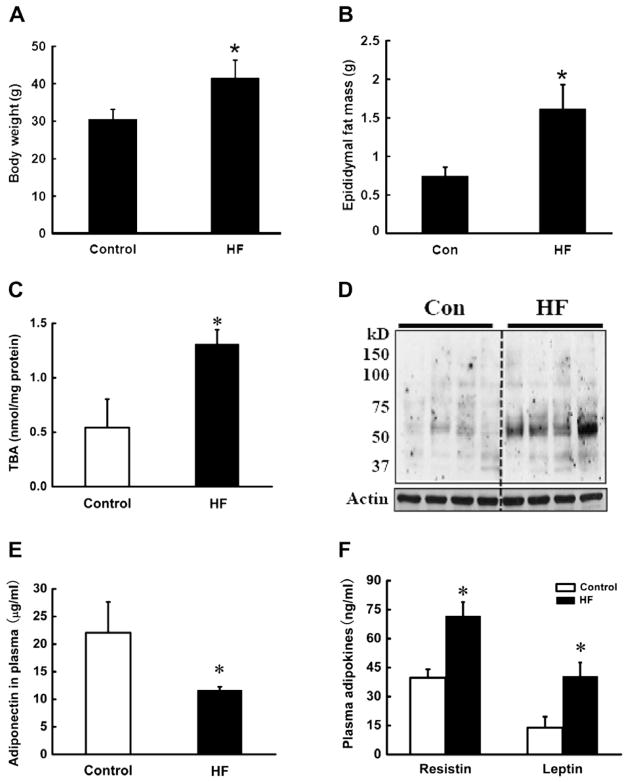
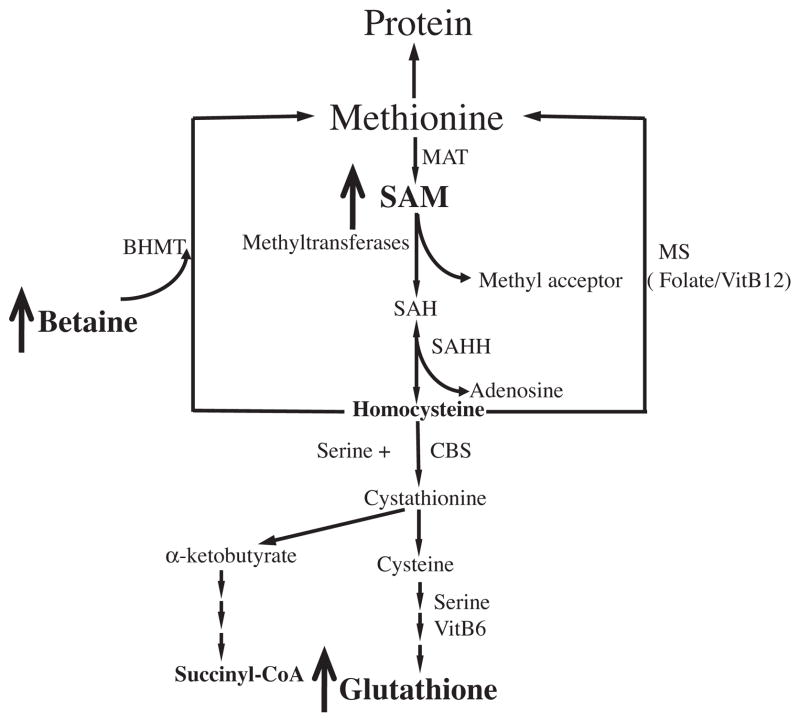
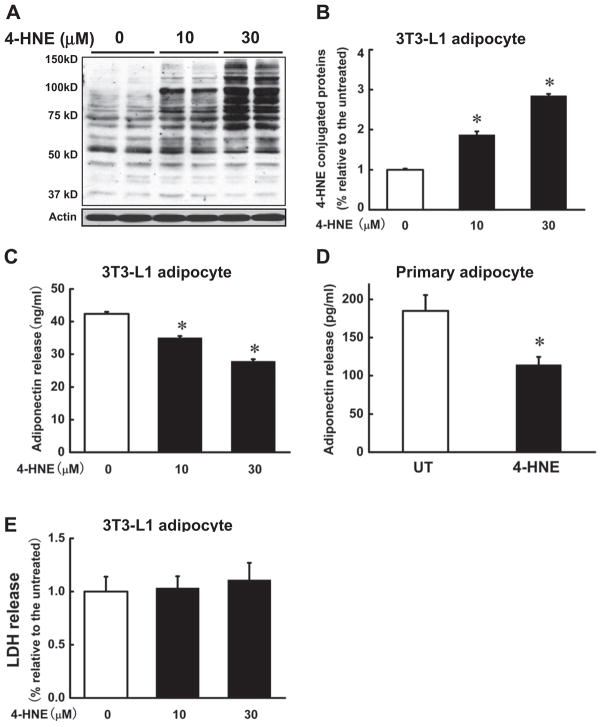
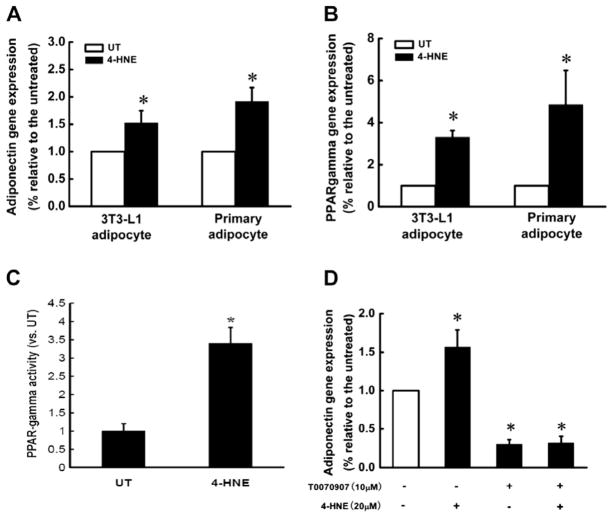
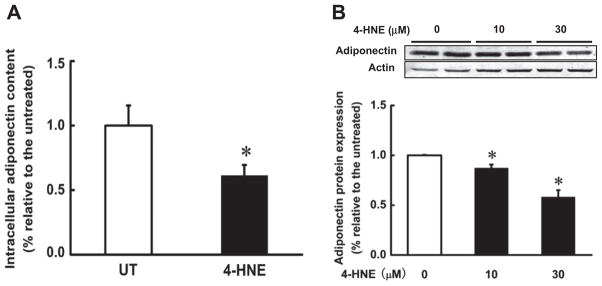
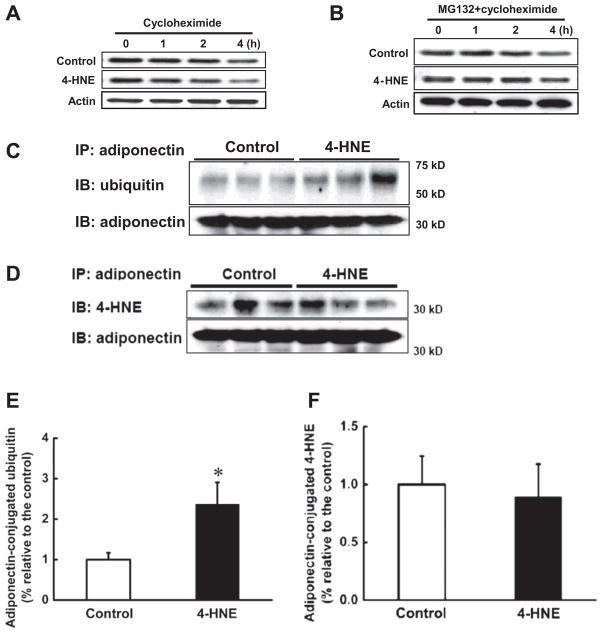
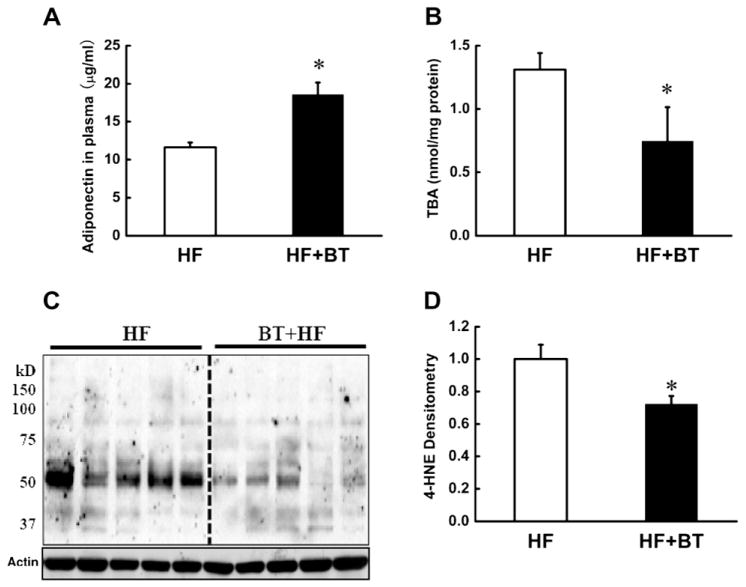
Although well-established, the underlying mechanisms involved in obesity-related plasma adiponectin decline remain elusive. Oxidative stress is associated with obesity and insulin resistance and considered to contribute to the progression toward obesity-related metabolic disorders. In this study, we investigated the effects of 4-hydroxynonenal (4-HNE), the most abundant lipid peroxidation end product, on adiponectin production and its potential implication in obesity-related adiponectin decrease. Long-term high-fat diet feeding led to obesity in mouse, accompanied by decreased plasma adiponectin and increased adipose tissue 4-HNE content. Exposure of adipocytes to exogenous 4-HNE resulted in decreased adiponectin secretion in a dose-dependent manner, which was consistent with significantly decreased intracellular adiponectin protein abundance. In contrast, adiponectin gene expression was significantly elevated by 4-HNE treatment, which was concomitant with increased peroxisome proliferator-activated receptor gamma (PPAR-γ) gene expression and transactivity. The effect was abolished by T0070907, a PPAR-γ antagonist, suggesting that PPAR-γ activation plays a critical role in this process. To gain insight into mechanisms involved in adiponectin protein decrease, we examined the effects of 4-HNE on adiponectin protein degradation. Cycloheximide (CHX)-chase assay revealed that 4-HNE exposure accelerated adiponectin protein degradation, which was prevented by MG132, a potent proteasome inhibitor. Immunoprecipitation assay showed that 4-HNE exposure increased ubiquitinated adiponectin protein levels. These data altogether indicated that 4-HNE enhanced adiponectin protein degradation via ubiquitin-proteasome system. Finally, we demonstrated that supplementation of HF diet with betaine, an antioxidant and methyl donor, alleviated high-fat-induced adipose tissue 4-HNE increase and attenuated plasma adiponectin decline. Taken together, our findings suggest that the lipid peroxidation product 4-HNE can differentially regulates adiponectin gene expression and protein abundance and may play a mechanistic role in obesity-related plasma adiponectin decline.
虽然已经得到充分证实,但肥胖相关血浆脂联素下降的潜在机制仍难以捉摸。氧化应激与肥胖和胰岛素抵抗有关,被认为是导致肥胖相关代谢紊乱进展的原因之一。在这项研究中,我们研究了 4-羟基壬烯醛(4-HNE)(最丰富的脂质过氧化终产物)对脂联素产生的影响及其在肥胖相关脂联素减少中的潜在作用。长期高脂肪饮食喂养导致小鼠肥胖,同时伴有血浆脂联素降低和脂肪组织 4-HNE 含量增加。外源性 4-HNE 暴露会导致脂联素分泌呈剂量依赖性下降,这与细胞内脂联素蛋白丰度的显著降低一致。相比之下,4-HNE 处理显著上调脂联素基因表达,同时伴随着过氧化物酶体增殖物激活受体 γ(PPAR-γ)基因表达和转录活性的增加。该作用被 PPAR-γ 拮抗剂 T0070907 所阻断,表明 PPAR-γ 激活在此过程中起关键作用。为了深入了解参与脂联素蛋白减少的机制,我们研究了 4-HNE 对脂联素蛋白降解的影响。环己酰亚胺(CHX)追踪实验显示,4-HNE 暴露加速了脂联素蛋白降解,而蛋白酶体抑制剂 MG132 则可以阻止这种降解。免疫沉淀实验表明,4-HNE 暴露增加了脂联素蛋白的泛素化水平。这些数据共同表明,4-HNE 通过泛素-蛋白酶体系统增强了脂联素蛋白的降解。最后,我们证明了在高脂肪饮食中补充甜菜碱(一种抗氧化剂和甲基供体)可以减轻高脂肪诱导的脂肪组织 4-HNE 增加,并减轻血浆脂联素的下降。综上所述,我们的研究结果表明,脂质过氧化产物 4-HNE 可以调节脂联素基因表达和蛋白丰度,可能在肥胖相关的血浆脂联素下降中发挥机制作用。