Ghoshal Angana, Mandal Chitra
Infectious Diseases and Immunology Division, Council of Scientific and Industrial Research, Indian Institute of Chemical Biology, 4 Raja S.C. Mullick Road, Kolkata 700032, India.
Mol Biol Int. 2011;2011:532106. doi: 10.4061/2011/532106. Epub 2011 Jul 25.
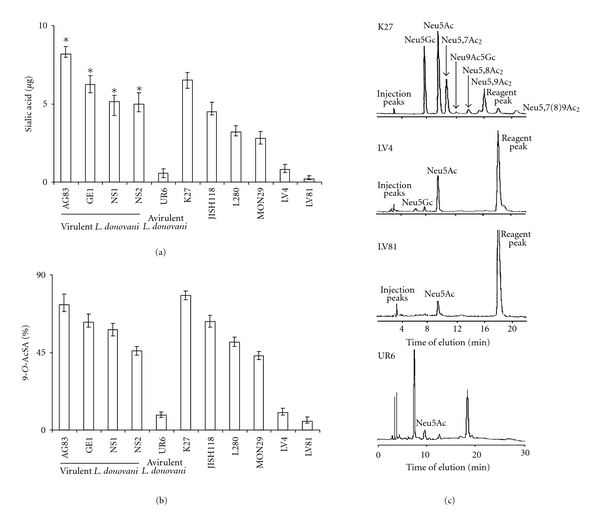
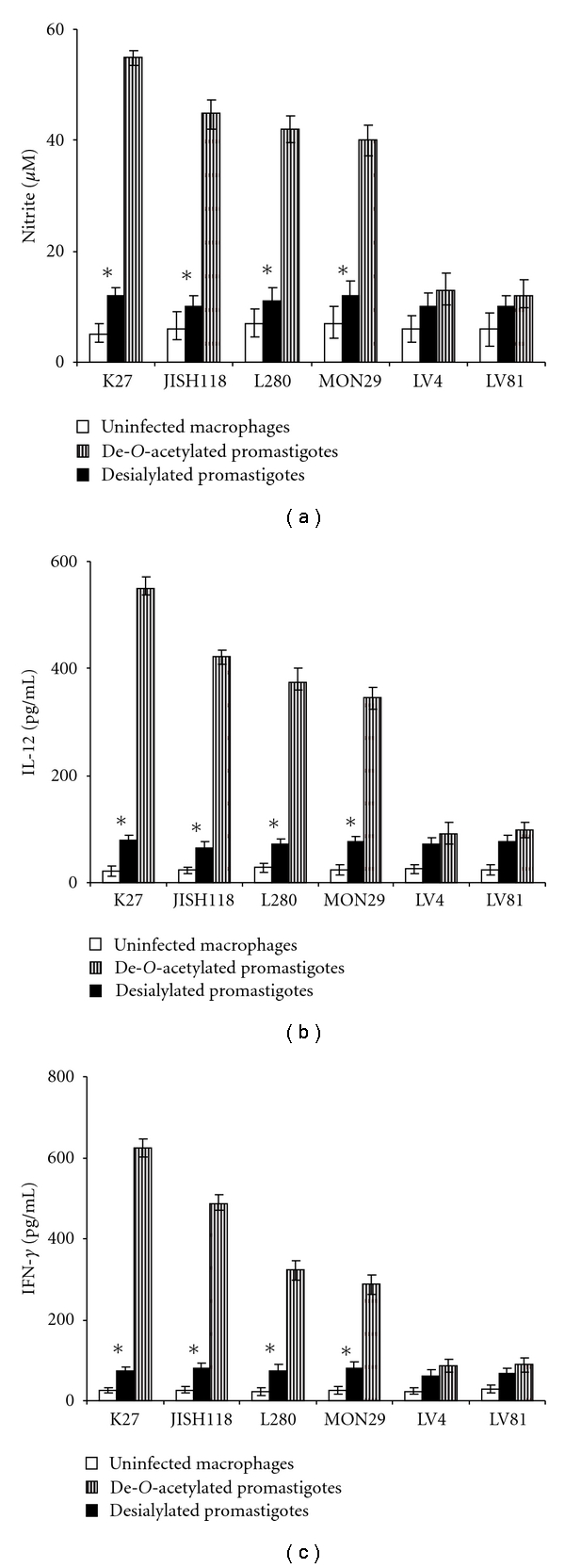
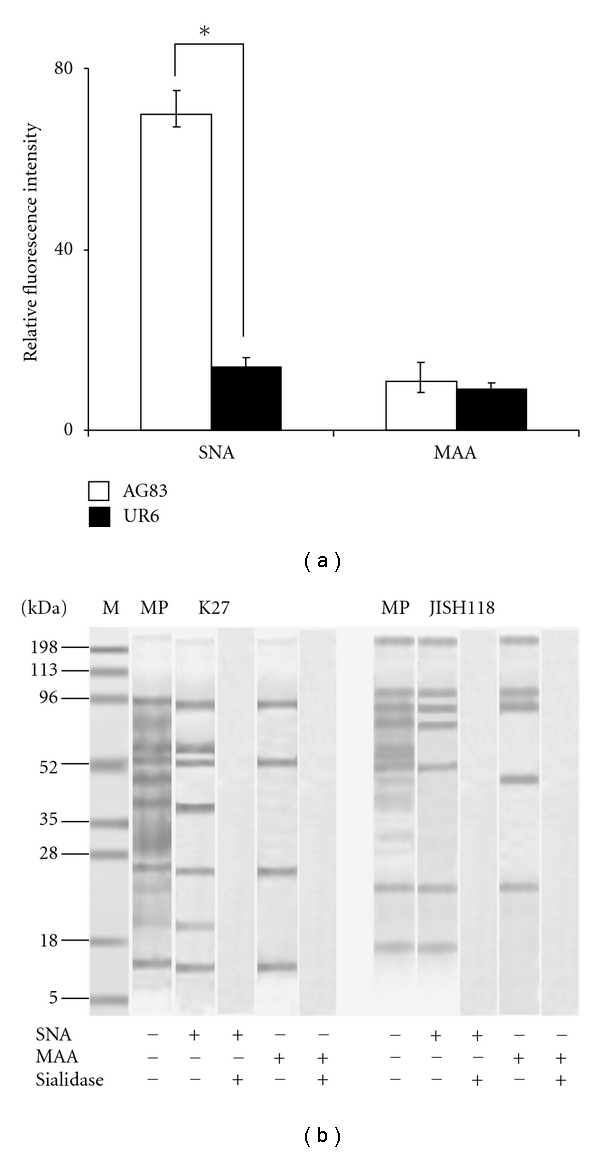
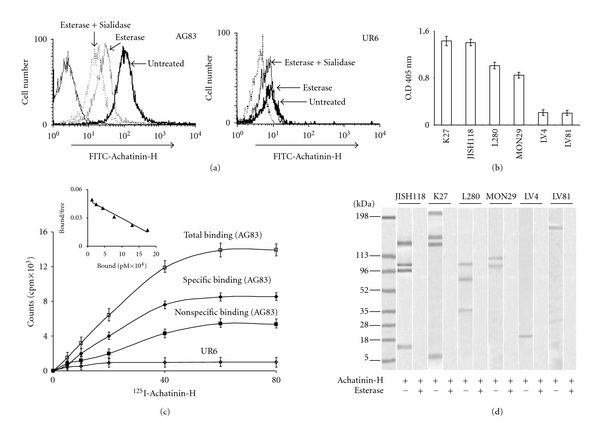
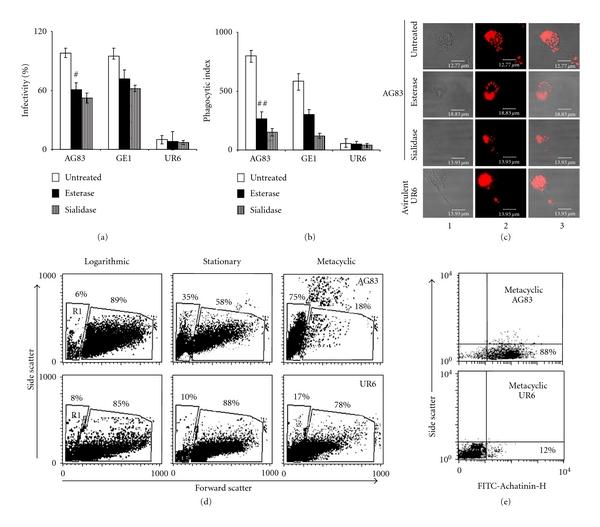
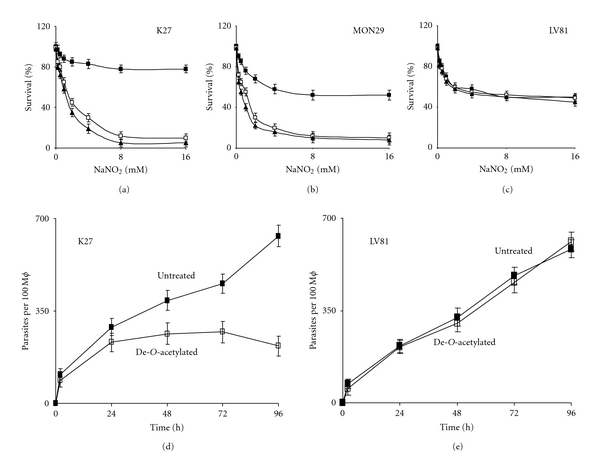
Leishmaniasis caused by Leishmania sp. has a wide range of manifestations from cutaneous to the deadly visceral form. They shuttle between the invertebrate and vertebrate hosts as promastigotes and amastigotes having adaptations for subverting host immune responses. Parasite-specific glycoconjugates have served as important determinants influencing parasite recognition, internalization, differentiation, multiplication, and virulence. Despite the steady progress in the field of parasite glycobiology, sialobiology has been a less traversed domain of research in leishmaniasis. The present paper focuses on identification, characterization, and differential distribution of sialoglycotope having the linkage-specific 9-O-acetylated sialic acid in promastigotes of different Leishmania sp. causing different clinical ramifications emphasizing possible role of these sialoglycotopes in infectivity, virulence, nitric oxide resistance, and host modulation in Leishmania spp. asserting them to be important molecules influencing parasite biology.
利什曼原虫属(Leishmania sp.)引起的利什曼病有广泛的表现形式,从皮肤型到致命的内脏型。它们以前鞭毛体和无鞭毛体的形式在无脊椎动物和脊椎动物宿主之间穿梭,具有颠覆宿主免疫反应的适应性。寄生虫特异性糖缀合物是影响寄生虫识别、内化、分化、增殖和毒力的重要决定因素。尽管寄生虫糖生物学领域取得了稳步进展,但唾液酸生物学在利什曼病研究中仍是一个较少涉及的领域。本文重点研究了不同利什曼原虫属前鞭毛体中具有连接特异性9-O-乙酰化唾液酸的唾液酸糖表位的鉴定、表征和差异分布,这些利什曼原虫属会导致不同的临床后果,强调了这些唾液酸糖表位在利什曼原虫属的感染性、毒力、抗一氧化氮能力和宿主调节中的可能作用,表明它们是影响寄生虫生物学的重要分子。