The Pennsylvania State University College of Medicine, Department of Pharmacology, R130, 500 University Drive, Hershey, PA 17033, USA.
Expert Opin Drug Metab Toxicol. 2012 Jan;8(1):47-69. doi: 10.1517/17425255.2012.637916. Epub 2011 Nov 19.
The biggest challenge faced by the scientific community involved in drug development is to deliver safe and effective dosage of drugs without causing systemic toxicity. Therefore, novel nano-based delivery vehicles specifically targeting tumors but not normal tissues are urgently needed.
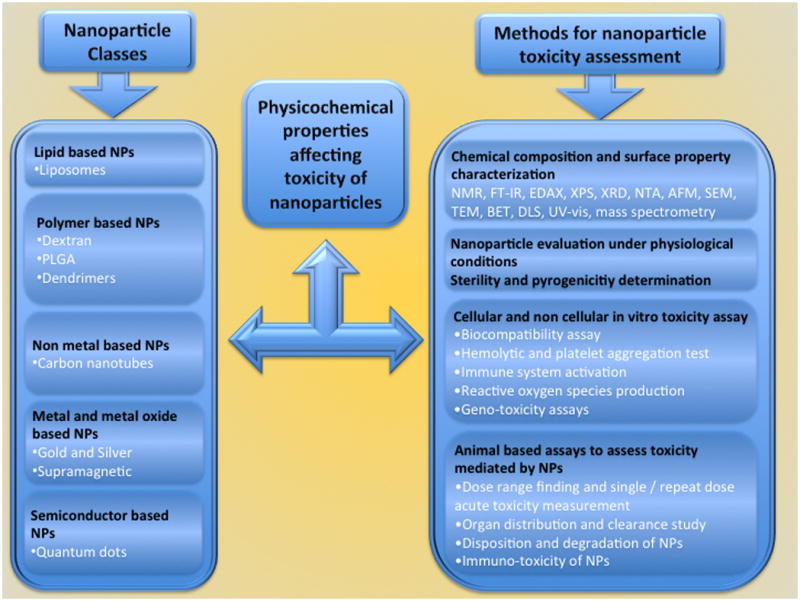
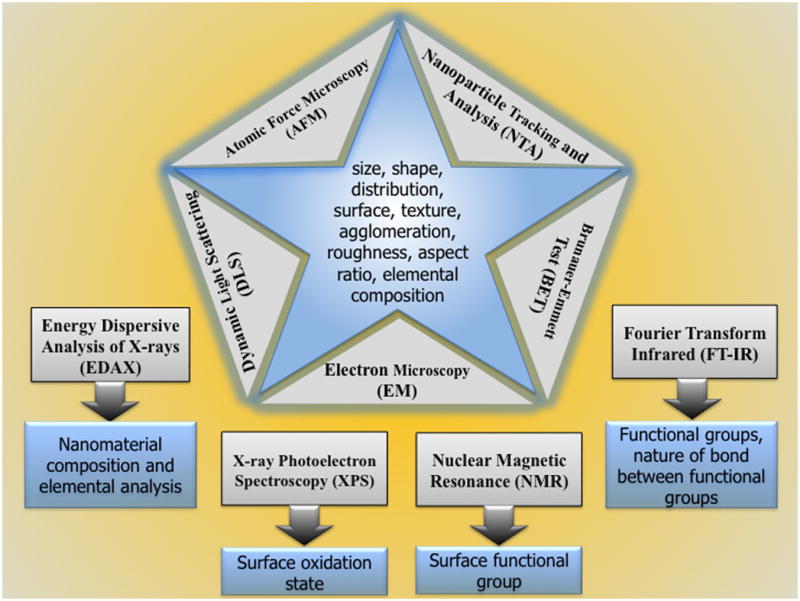
Nanoparticles have beneficial aspects but can be toxic themselves, which is always a concern for any drug or delivery agent. This review examines and details the toxicological aspects that should be considered when planning to use nanoparticles in animals or in man for drug delivery or imaging. Subjects discussed in this review include i) overviews of applications of various nanoparticles for drug delivery and imaging; ii) toxicological aspects to consider when selecting particular nanoparticles for use in various applications in animals or man; iii) hurdles faced when examining nanoparticle toxicity; and iv) current approaches for assessing nanoparticle toxicity.
Nanotechnology has significant potential for advancing therapeutic efficacy and imaging in cancer; however, these agents can be toxic. Therefore, toxicity needs to be considered when selecting nanoparticles for a particular application. Methods for assessing nanoparticle toxicity need to be improved and standardized across all nanotechnology platforms in order to speed up the application of nanoparticle use in humans.
药物开发领域的科学界面临的最大挑战是提供安全有效的药物剂量,而不引起全身毒性。因此,急需新型纳米靶向药物载体,专门针对肿瘤,而不针对正常组织。
纳米颗粒有其有益的方面,但本身也可能有毒,这始终是任何药物或给药剂的一个关注点。这篇综述审查并详细说明了在计划将纳米颗粒用于动物或人类的药物输送或成像时应考虑的毒理学方面。本综述讨论的主题包括:i)各种用于药物输送和成像的纳米颗粒的应用概述;ii)在动物或人类的各种应用中选择特定纳米颗粒时要考虑的毒理学方面;iii)在检查纳米颗粒毒性时面临的障碍;iv)评估纳米颗粒毒性的当前方法。
纳米技术在提高癌症治疗效果和成像方面具有重大潜力;然而,这些药物可能有毒。因此,在选择特定应用的纳米颗粒时,需要考虑毒性。为了加快纳米颗粒在人类中的应用,需要改进和标准化所有纳米技术平台的纳米颗粒毒性评估方法。