Core Research for Evolutional Science and Technology, Japan Science Technology Agency Kawaguchi-shi, Saitama, Japan.
Front Mol Neurosci. 2011 Nov 2;4:33. doi: 10.3389/fnmol.2011.00033. eCollection 2011.
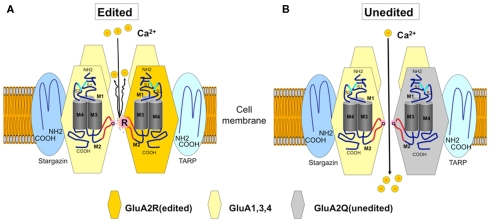
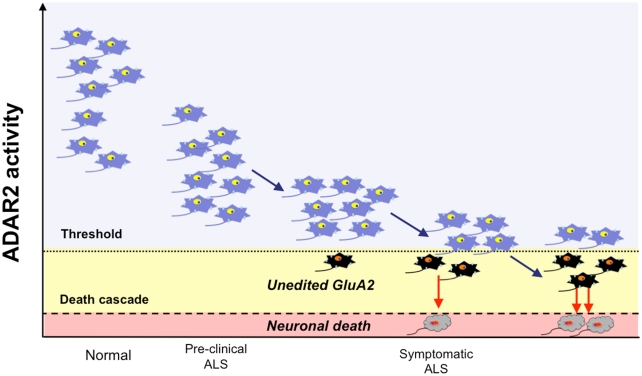
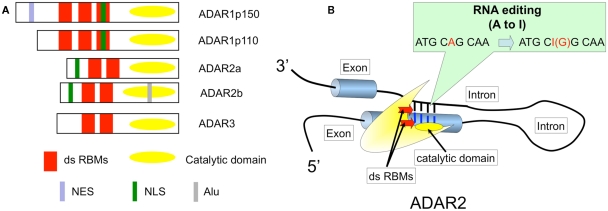
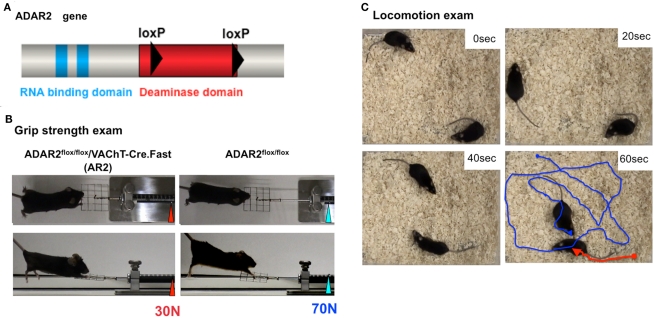
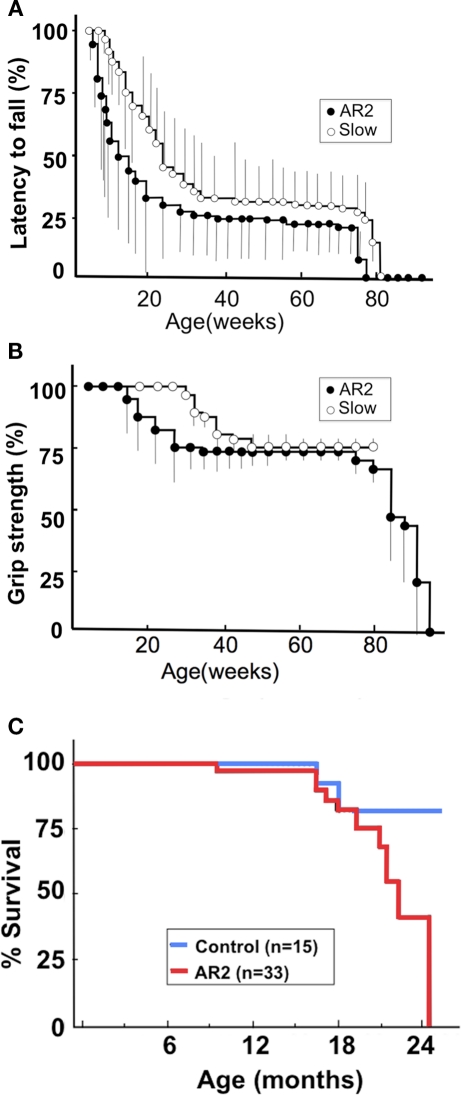
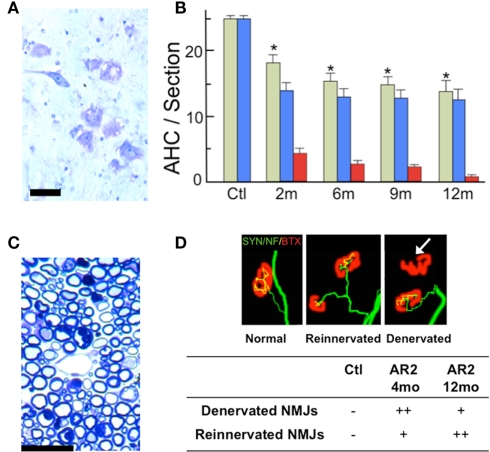
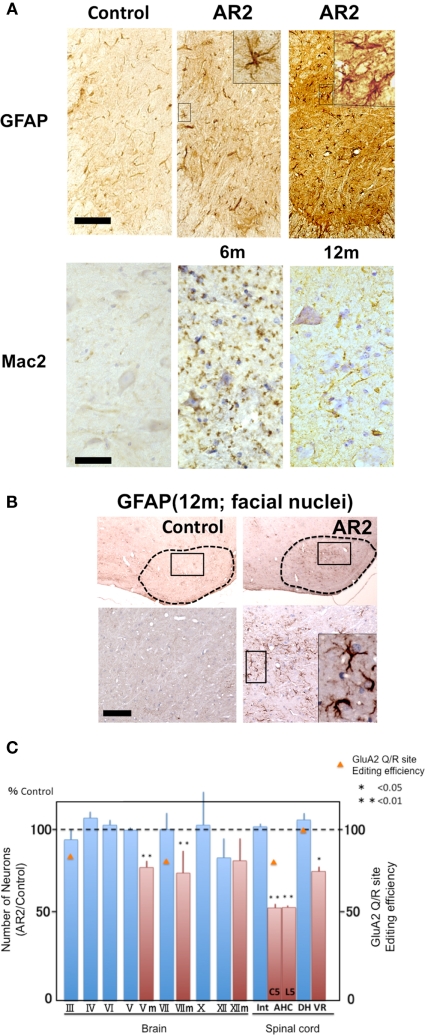
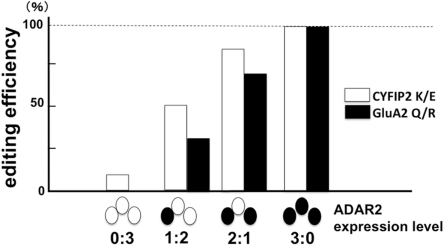
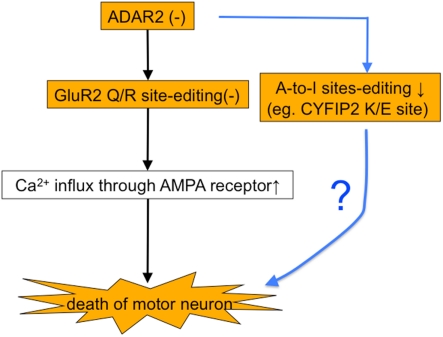
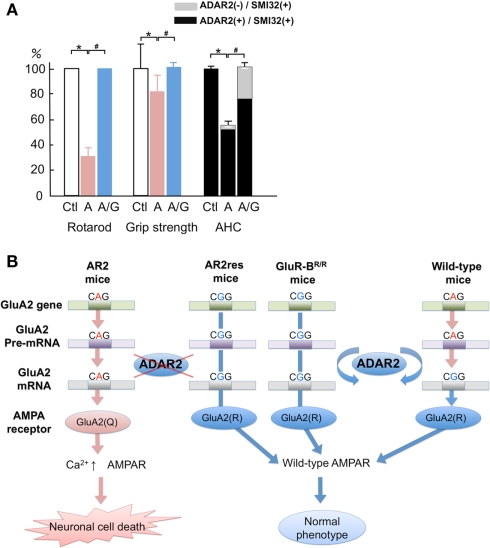
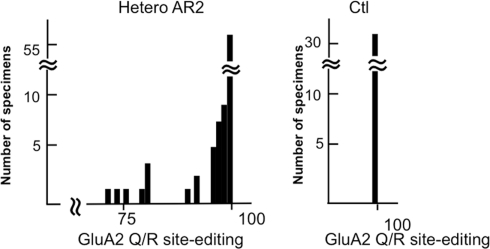
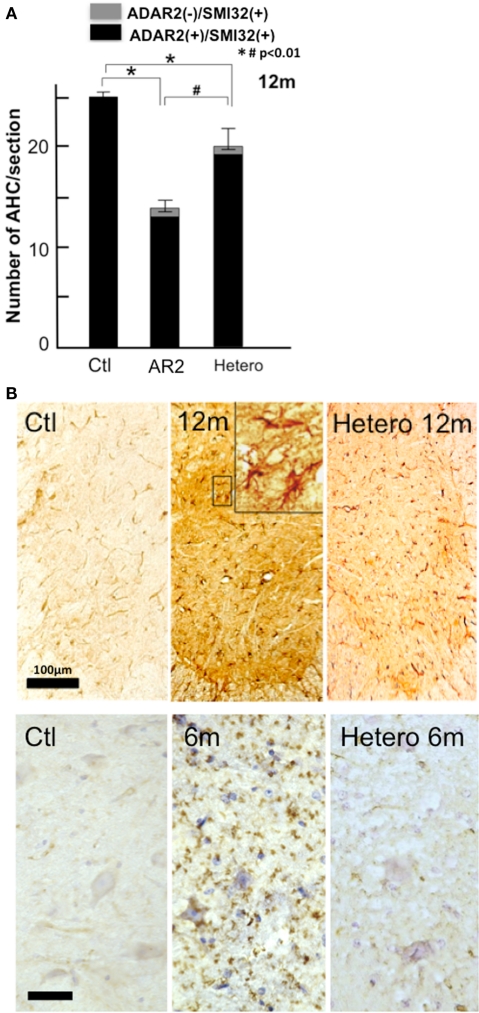
Amyotrophic lateral sclerosis (ALS) is the most common adult-onset motor neuron disease. More than 90% of ALS cases are sporadic, and the majority of sporadic ALS patients do not carry mutations in genes causative of familial ALS; therefore, investigation specifically targeting sporadic ALS is needed to discover the pathogenesis. The motor neurons of sporadic ALS patients express unedited GluA2 mRNA at the Q/R site in a disease-specific and motor neuron-selective manner. GluA2 is a subunit of the AMPA receptor, and it has a regulatory role in the Ca(2+)-permeability of the AMPA receptor after the genomic Q codon is replaced with the R codon in mRNA by adenosine-inosine conversion, which is mediated by adenosine deaminase acting on RNA 2 (ADAR2). Therefore, ADAR2 activity may not be sufficient to edit all GluA2 mRNA expressed in the motor neurons of ALS patients. To investigate whether deficient ADAR2 activity plays pathogenic roles in sporadic ALS, we generated genetically modified mice (AR2) in which the ADAR2 gene was conditionally knocked out in the motor neurons. AR2 mice showed an ALS-like phenotype with the death of ADAR2-lacking motor neurons. Notably, the motor neurons deficient in ADAR2 survived when they expressed only edited GluA2 in AR2/GluR-B(R/R) (AR2res) mice, in which the endogenous GluA2 alleles were replaced by the GluR-B(R) allele that encoded edited GluA2. In heterozygous AR2 mice with only one ADAR2 allele, approximately 20% of the spinal motor neurons expressed unedited GluA2 and underwent degeneration, indicating that half-normal ADAR2 activity is not sufficient to edit all GluA2 expressed in motor neurons. It is likely therefore that the expression of unedited GluA2 causes the death of motor neurons in sporadic ALS. We hypothesize that a progressive downregulation of ADAR2 activity plays a critical role in the pathogenesis of sporadic ALS and that the pathological process commences when motor neurons express unedited GluA2.
肌萎缩侧索硬化症(ALS)是最常见的成年起病的运动神经元疾病。超过 90%的 ALS 病例为散发性,大多数散发性 ALS 患者不携带导致家族性 ALS 的基因突变;因此,需要针对散发性 ALS 进行专门的研究,以发现其发病机制。散发性 ALS 患者的运动神经元以疾病特异性和运动神经元选择性的方式表达在 GluA2 mRNA 的 Q/R 位点未经编辑的形式。GluA2 是 AMPA 受体的一个亚基,当基因组中的 Q 密码子在 mRNA 中被腺苷-次黄嘌呤转换为 R 密码子时,它在 AMPA 受体的 Ca2+通透性中具有调节作用,这种转换由 RNA 2 上的腺苷脱氨酶介导(ADAR2)。因此,ADAR2 的活性可能不足以编辑 ALS 患者运动神经元中表达的所有 GluA2 mRNA。为了研究 ADAR2 活性缺乏是否在散发性 ALS 中起致病作用,我们生成了基因修饰小鼠(AR2),其中 ADAR2 基因在运动神经元中条件性敲除。AR2 小鼠表现出 ALS 样表型,ADAR2 缺失的运动神经元死亡。值得注意的是,当 AR2/GluR-B(R/R)(AR2res)小鼠中仅表达编辑后的 GluA2 时,缺乏 ADAR2 的运动神经元存活,其中内源性 GluA2 等位基因被编码编辑后的 GluA2 的 GluR-B(R)等位基因取代。在仅携带一个 ADAR2 等位基因的杂合性 AR2 小鼠中,约 20%的脊髓运动神经元表达未经编辑的 GluA2 并发生退化,表明一半正常的 ADAR2 活性不足以编辑运动神经元中表达的所有 GluA2。因此,未经编辑的 GluA2 的表达可能导致散发性 ALS 中运动神经元的死亡。我们假设 ADAR2 活性的逐渐下调在散发性 ALS 的发病机制中发挥关键作用,并且当运动神经元表达未经编辑的 GluA2 时,病理过程开始。