Yamashita Takenari, Akamatsu Megumi, Kwak Shin
Graduate School of Medicine, University of Tokyo, Bunkyo-ku, Tokyo 113-0033, Japan.
Clinical Research Center for Medicine, International University of Health and Welfare, Ichikawa, Chiba 272-0827, Japan.
Genes (Basel). 2017 Feb 8;8(2):60. doi: 10.3390/genes8020060.
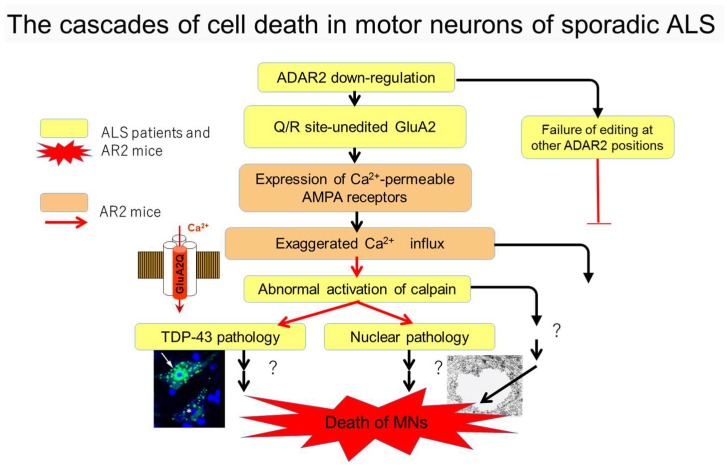
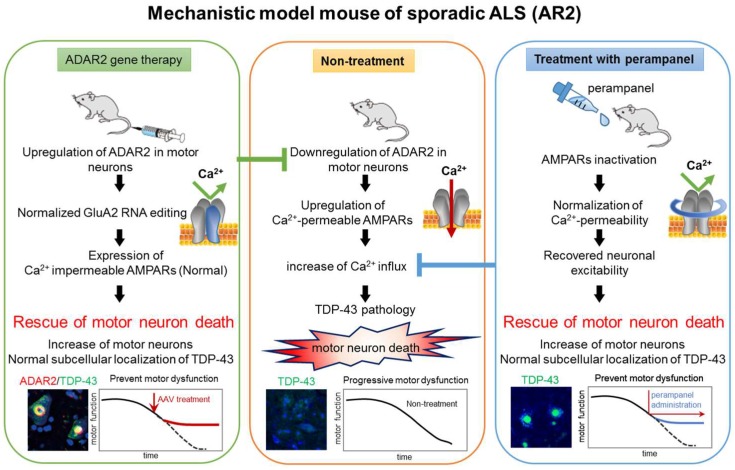
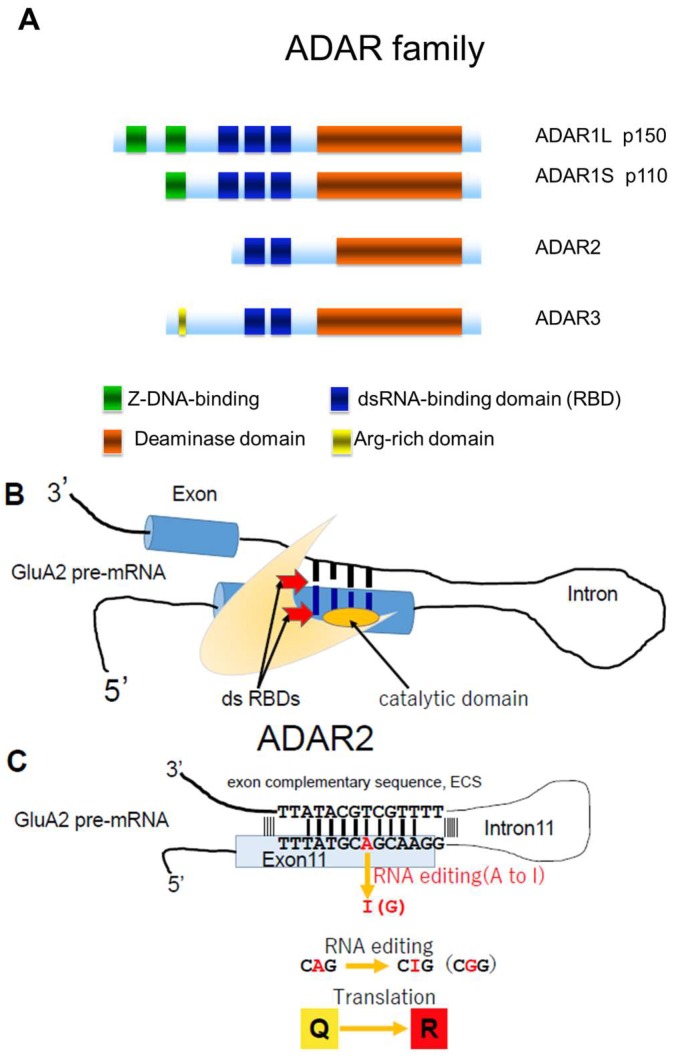
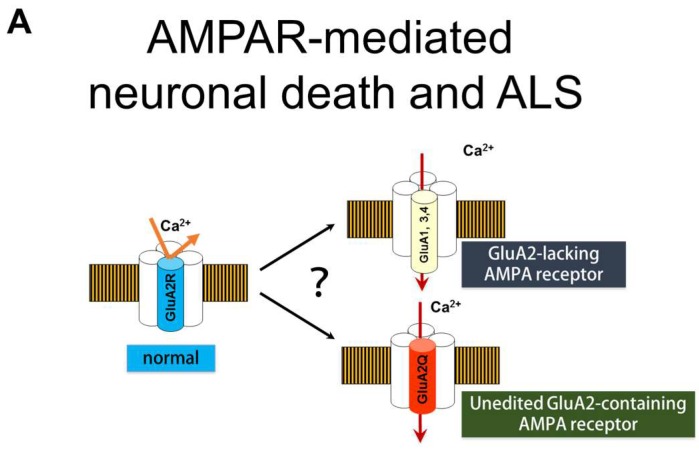
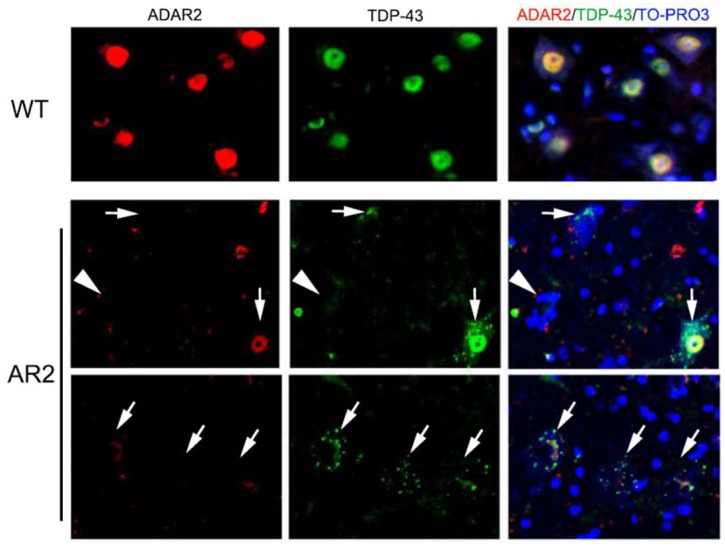
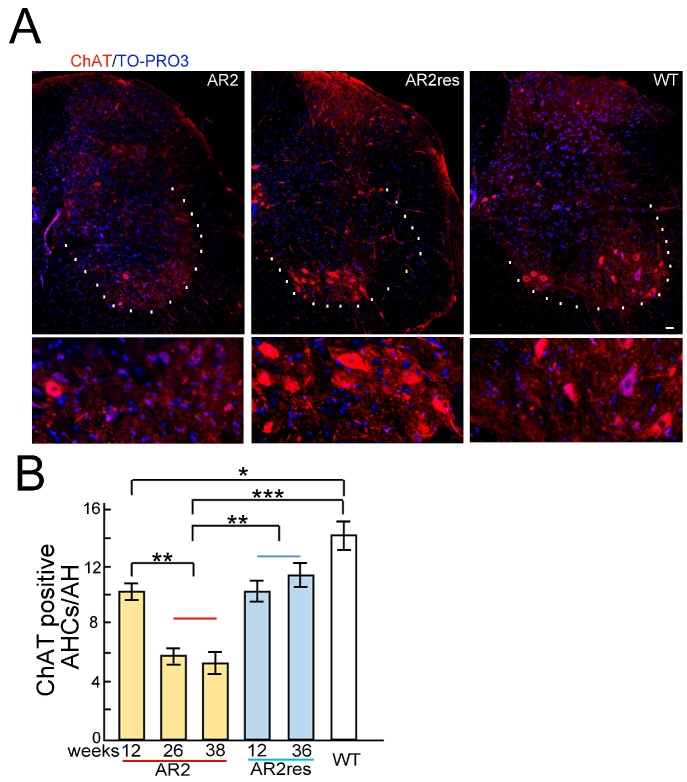
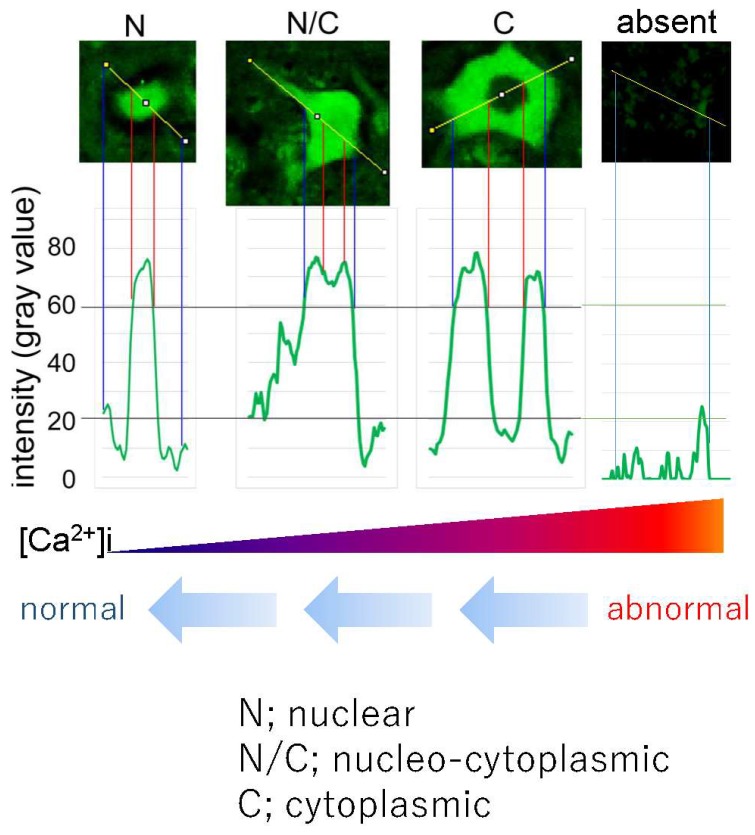
Transactive response DNA-binding protein (TDP-43) pathology, and failure of A-to-I conversion (RNA editing) at the glutamine/arginine (Q/R) site of α-amino-3-hydroxy-5-methyl-4-isoxazole propionic acid (AMPA) receptor subunit GluA2, are etiology-linked molecular abnormalities that concomitantly occur in the motor neurons of most patients with amyotrophic lateral sclerosis (ALS). Adenosine deaminase acting on RNA 2 (ADAR2) specifically catalyzes GluA2 Q/R site-RNA editing. Furthermore, conditional ADAR2 knockout mice (AR2) exhibit a progressive ALS phenotype with TDP-43 pathology in the motor neurons, which is the most reliable pathological marker of ALS. Therefore, the evidence indicates that ADAR2 downregulation is a causative factor in ALS, and AR2 mice exhibit causative molecular changes that occur in ALS. We discuss the contributors to ADAR2 downregulation and TDP-43 pathology in AR2 mouse motor neurons. We describe mechanisms of exaggerated Ca influx amelioration via AMPA receptors, which is neuroprotective in ADAR2-deficient motor neurons with normalization of TDP-43 pathology in AR2 mice. Development of drugs to treat diseases requires appropriate animal models and a sensitive method of evaluating efficacy. Therefore, normalization of disrupted intracellular environments resulting from ADAR2 downregulation may be a therapeutic target for ALS. We discuss the development of targeted therapy for ALS using the AR2 mouse model.
反式作用应答DNA结合蛋白(TDP - 43)病理改变,以及α-氨基-3-羟基-5-甲基-4-异恶唑丙酸(AMPA)受体亚基GluA2谷氨酰胺/精氨酸(Q/R)位点的A到I转换(RNA编辑)功能缺失,是与病因相关的分子异常,在大多数肌萎缩侧索硬化症(ALS)患者的运动神经元中同时出现。作用于RNA的腺苷脱氨酶2(ADAR2)特异性催化GluA2 Q/R位点的RNA编辑。此外,条件性ADAR2基因敲除小鼠(AR2)表现出进行性ALS表型,运动神经元中存在TDP - 43病理改变,而TDP - 43病理改变是ALS最可靠的病理标志物。因此,有证据表明ADAR2下调是ALS的致病因素,AR2小鼠表现出ALS中发生的致病分子变化。我们讨论了AR2小鼠运动神经元中ADAR2下调和TDP - 43病理改变的促成因素。我们描述了通过AMPA受体改善钙离子过度内流的机制,这在ADAR2缺陷的运动神经元中具有神经保护作用,且能使AR2小鼠的TDP - 43病理改变正常化。开发治疗疾病的药物需要合适的动物模型和评估疗效的敏感方法。因此,使因ADAR2下调导致的细胞内环境紊乱正常化可能是ALS的一个治疗靶点。我们讨论了使用AR2小鼠模型开发ALS靶向治疗的方法。