Department of Medicine, Division of Immunology & Rheumatology, Stanford School of Medicine, 265 Campus Drive, Stanford, CA 94305-5454, USA
Biomark Med. 2011 Dec;5(6):731-44. doi: 10.2217/bmm.11.92.
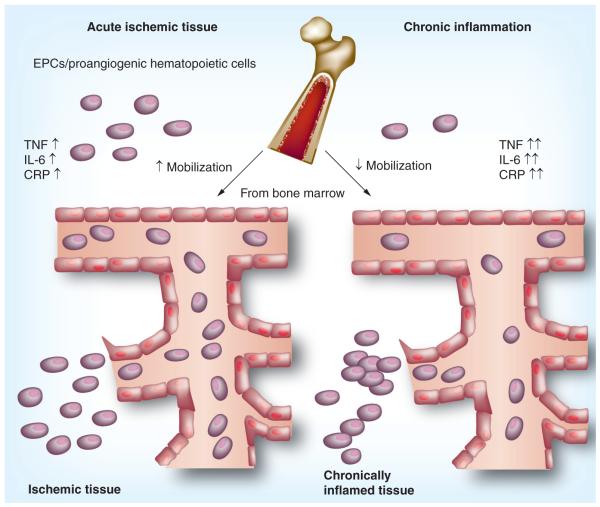
The discovery of endothelial progenitor cells in the 1990s challenged the paradigm of angiogenesis by showing that cells derived from hematopoietic stem cells are capable of forming new blood vessels even in the absence of a pre-existing vessel network, a process termed vasculogenesis. Since then, the majority of studies in the field have found a strong association between circulating endothelial progenitor cells and cardiovascular risk. Several studies have also reported that inflammation influences the mobilization and differentiation of endothelial progenitor cells. In this review, we discuss the emerging role of endothelial progenitor cells as biomarkers of cardiovascular disease as well as the interplay between inflammation and endothelial progenitor cell biology. We will also review the challenges in the field of endothelial progenitor cell-based therapy.
20 世纪 90 年代,内皮祖细胞的发现挑战了血管生成的模式,表明源自造血干细胞的细胞即使在没有预先存在的血管网络的情况下,也能够形成新的血管,这个过程被称为血管发生。自那时以来,该领域的大多数研究发现循环内皮祖细胞与心血管风险之间存在很强的关联。一些研究还报告称,炎症会影响内皮祖细胞的动员和分化。在这篇综述中,我们讨论了内皮祖细胞作为心血管疾病生物标志物的新作用,以及炎症和内皮祖细胞生物学之间的相互作用。我们还将回顾内皮祖细胞治疗领域的挑战。