Schaefer Sara E, Erber Eva, Trzaskos Janel P, Roache Cindy, Osborne Geraldine, Sharma Sangita
Nutrition Research Institute, University of North Carolina at Chapel Hill, Kannapolis, NC 28081, USA.
J Health Popul Nutr. 2011 Oct;29(5):454-64. doi: 10.3329/jhpn.v29i5.8899.
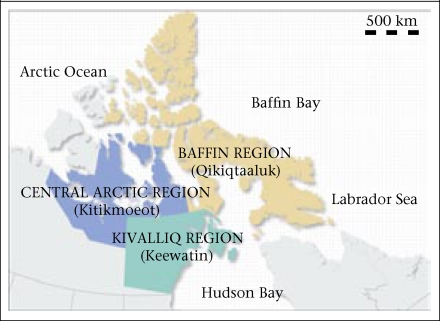
Dietary transition in the Arctic is associated with decreased quality of diet, which is of particular concern for women of childbearing age due to the potential impact of maternal nutrition status on the next generation. The study assessed dietary intake and adequacy among Inuit women of childbearing age living in three communities in Nunavut, Canada. A culturally-appropriate quantitative food-frequency questionnaire was administered to 106 Inuit women aged 19-44 years. Sources of key foods, energy and nutrient intakes were determined; dietary adequacy was determined by comparing nutrient intakes with recommendations. The prevalence of overweight/obesity was >70%, and many consumed inadequate dietary fibre, folate, calcium, potassium, magnesium, and vitamin A, D, E, and K. Non-nutrient-dense foods were primary sources of fat, carbohydrate and sugar intakes and contributed >30% of energy. Traditional foods accounted for 21% of energy and >50% of protein and iron intakes. Strategies to improve weight status and nutrient intake are needed among Inuit women in this important life stage.
北极地区的饮食转变与饮食质量下降有关,由于孕产妇营养状况对下一代有潜在影响,这一问题尤其值得育龄妇女关注。该研究评估了居住在加拿大努纳武特地区三个社区的育龄因纽特妇女的饮食摄入量和充足程度。对106名年龄在19至44岁之间的因纽特妇女进行了一份符合文化习惯的定量食物频率问卷调查。确定了主要食物来源、能量和营养摄入量;通过将营养摄入量与推荐量进行比较来确定饮食充足程度。超重/肥胖的患病率超过70%,许多人膳食纤维、叶酸、钙、钾、镁以及维生素A、D、E和K的摄入量不足。非营养密集型食物是脂肪、碳水化合物和糖摄入的主要来源,提供了超过30% 的能量。传统食物占能量的21%,蛋白质和铁摄入量的50% 以上。在这一重要生命阶段,因纽特妇女需要采取改善体重状况和营养摄入的策略。