Department of Geology & Geophysics, Yale University, New Haven, Connecticut, United States of America.
PLoS Biol. 2011 Nov;9(11):e1001200. doi: 10.1371/journal.pbio.1001200. Epub 2011 Nov 15.
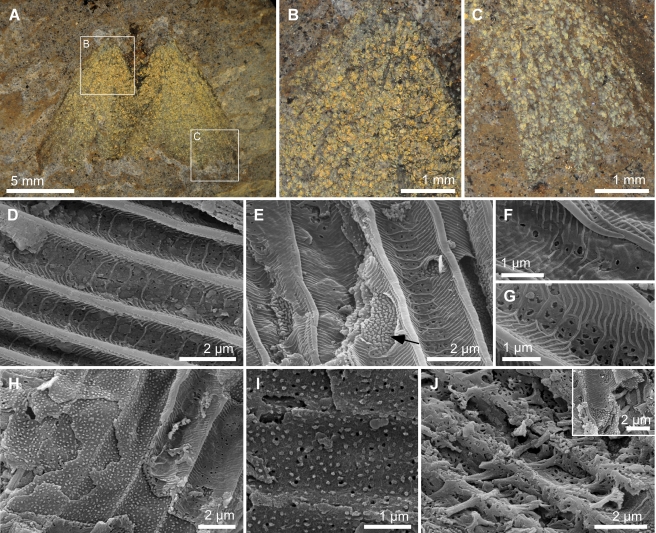
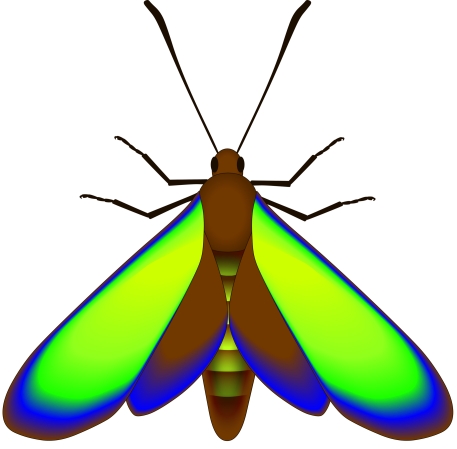
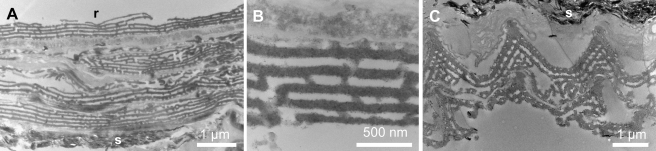
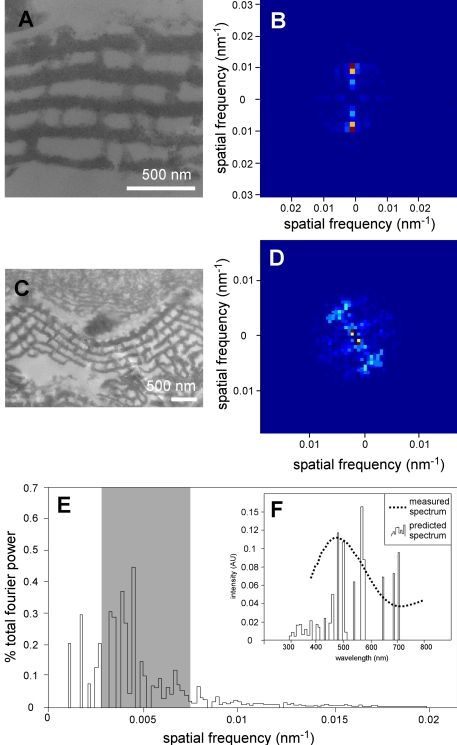
Structural colors are generated by scattering of light by variations in tissue nanostructure. They are widespread among animals and have been studied most extensively in butterflies and moths (Lepidoptera), which exhibit the widest diversity of photonic nanostructures, resultant colors, and visual effects of any extant organism. The evolution of structural coloration in lepidopterans, however, is poorly understood. Existing hypotheses based on phylogenetic and/or structural data are controversial and do not incorporate data from fossils. Here we report the first example of structurally colored scales in fossil lepidopterans; specimens are from the 47-million-year-old Messel oil shale (Germany). The preserved colors are generated by a multilayer reflector comprised of a stack of perforated laminae in the scale lumen; differently colored scales differ in their ultrastructure. The original colors were altered during fossilization but are reconstructed based upon preserved ultrastructural detail. The dorsal surface of the forewings was a yellow-green color that probably served as a dual-purpose defensive signal, i.e. aposematic during feeding and cryptic at rest. This visual signal was enhanced by suppression of iridescence (change in hue with viewing angle) achieved via two separate optical mechanisms: extensive perforation, and concave distortion, of the multilayer reflector. The fossils provide the first evidence, to our knowledge, for the function of structural color in fossils and demonstrate the feasibility of reconstructing color in non-metallic lepidopteran fossils. Plastic scale developmental processes and complex optical mechanisms for interspecific signaling had clearly evolved in lepidopterans by the mid-Eocene.
结构色是通过组织纳米结构的变化来散射光产生的。它们在动物中广泛存在,在蝴蝶和蛾类(鳞翅目)中研究得最为广泛,这些动物表现出最广泛的光子纳米结构多样性、产生的颜色和任何现存生物的视觉效果。然而,鳞翅目昆虫的结构色进化仍知之甚少。基于系统发育和/或结构数据的现有假说存在争议,并且没有纳入化石数据。在这里,我们报告了首例在化石鳞翅目昆虫中发现的具有结构颜色的鳞片;这些标本来自 4700 万年前的梅塞尔油页岩(德国)。保存下来的颜色是由鳞片腔中穿孔薄片堆叠而成的多层反射器产生的;不同颜色的鳞片在超微结构上有所不同。原始颜色在化石形成过程中发生了改变,但根据保存下来的超微结构细节进行了重建。前翅的背面是黄绿色,可能兼具双重防御信号的作用,即在进食时表现出警戒色,而在休息时则表现出隐藏色。这种视觉信号通过两种独立的光学机制得到了增强:多层反射器的广泛穿孔和凹面扭曲,从而抑制了虹彩(随视角变化的色调变化)。这些化石为我们所知,首次提供了结构色在化石中的功能证据,并证明了在非金属鳞翅目化石中重建颜色的可行性。到始新世中期,鳞翅目昆虫显然已经进化出了复杂的结构色发育过程和种间信号传递的光学机制。