Kim Mi-Young, Bae Jin-Sik, Kim Tae-Hyun, Park Joo-Man, Ahn Yong Ho
Department of Biochemistry and Molecular Biology, Yonsei University College of Medicine, 50 Yonsei-ro, Seodaemun-gu, Seoul 120-752, Republic of Korea.
Exp Diabetes Res. 2012;2012:716425. doi: 10.1155/2012/716425. Epub 2011 Oct 26.
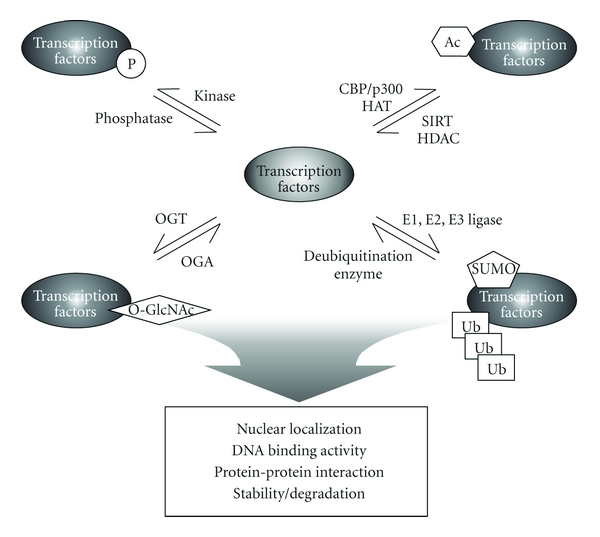
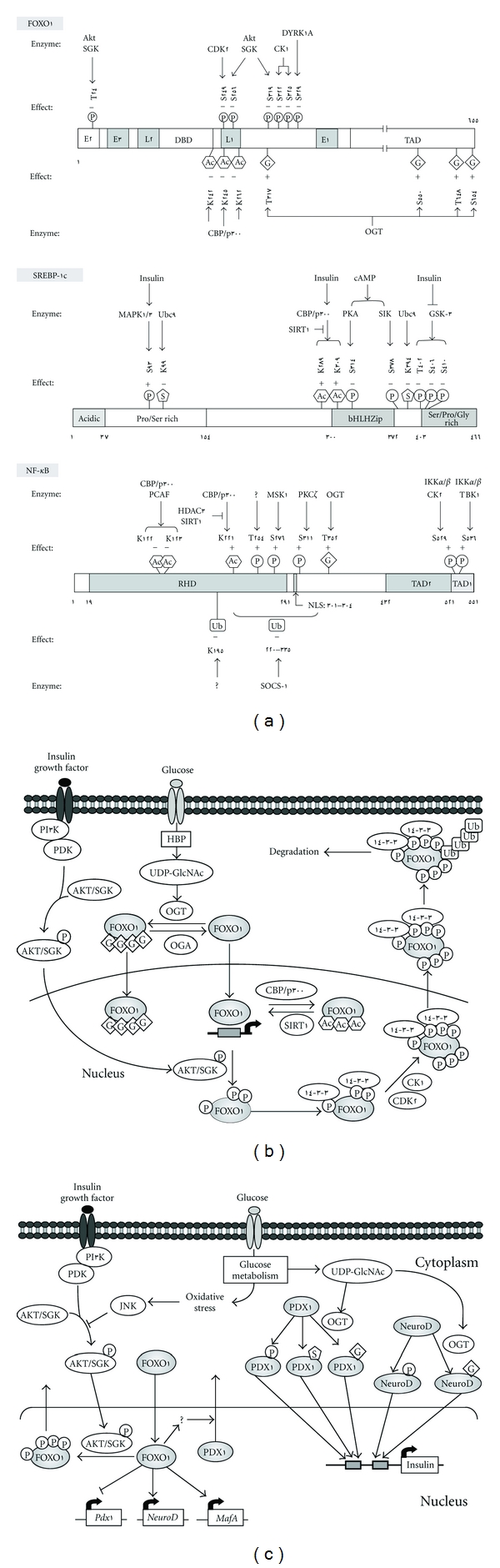
Non-alcoholic fatty liver disease (NAFLD) is characterized by fat accumulation in the liver not due to alcohol abuse. NAFLD is accompanied by variety of symptoms related to metabolic syndrome. Although the metabolic link between NAFLD and insulin resistance is not fully understood, it is clear that NAFLD is one of the main cause of insulin resistance. NAFLD is shown to affect the functions of other organs, including pancreas, adipose tissue, muscle and inflammatory systems. Currently efforts are being made to understand molecular mechanism of interrelationship between NAFLD and insulin resistance at the transcriptional level with specific focus on post-translational modification (PTM) of transcription factors. PTM of transcription factors plays a key role in controlling numerous biological events, including cellular energy metabolism, cell-cycle progression, and organ development. Cell type- and tissue-specific reversible modifications include lysine acetylation, methylation, ubiquitination, and SUMOylation. Moreover, phosphorylation and O-GlcNAcylation on serine and threonine residues have been shown to affect protein stability, subcellular distribution, DNA-binding affinity, and transcriptional activity. PTMs of transcription factors involved in insulin-sensitive tissues confer specific adaptive mechanisms in response to internal or external stimuli. Our understanding of the interplay between these modifications and their effects on transcriptional regulation is growing. Here, we summarize the diverse roles of PTMs in insulin-sensitive tissues and their involvement in the pathogenesis of insulin resistance.
非酒精性脂肪性肝病(NAFLD)的特征是肝脏中脂肪堆积,而非由酒精滥用所致。NAFLD伴有多种与代谢综合征相关的症状。尽管NAFLD与胰岛素抵抗之间的代谢联系尚未完全明确,但很明显NAFLD是胰岛素抵抗的主要原因之一。研究表明,NAFLD会影响包括胰腺、脂肪组织、肌肉和炎症系统在内的其他器官的功能。目前,人们正在努力从转录水平了解NAFLD与胰岛素抵抗之间相互关系的分子机制,特别关注转录因子的翻译后修饰(PTM)。转录因子的PTM在控制众多生物学事件中起关键作用,包括细胞能量代谢、细胞周期进程和器官发育。细胞类型和组织特异性的可逆修饰包括赖氨酸乙酰化、甲基化、泛素化和类泛素化。此外,丝氨酸和苏氨酸残基上的磷酸化和O-连接的N-乙酰葡糖胺化已被证明会影响蛋白质稳定性、亚细胞分布、DNA结合亲和力和转录活性。参与胰岛素敏感组织的转录因子的PTM赋予了针对内部或外部刺激的特定适应性机制。我们对这些修饰之间的相互作用及其对转录调控的影响的理解正在不断加深。在此,我们总结了PTM在胰岛素敏感组织中的多种作用及其在胰岛素抵抗发病机制中的参与情况。