Bioinformatics Center, College of Life Science, Northwest A&F University, Yangling, Shaanxi, China.
PLoS One. 2011;6(11):e27757. doi: 10.1371/journal.pone.0027757. Epub 2011 Nov 14.
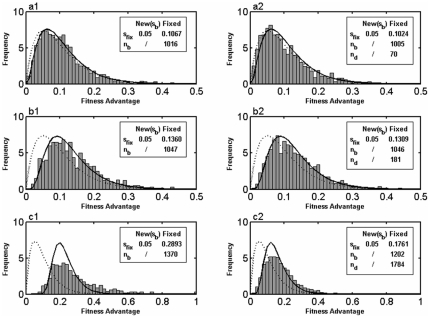
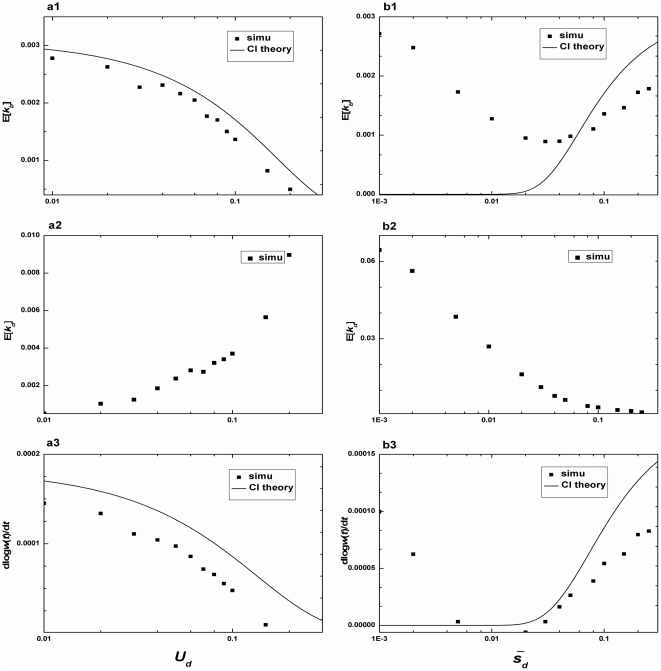
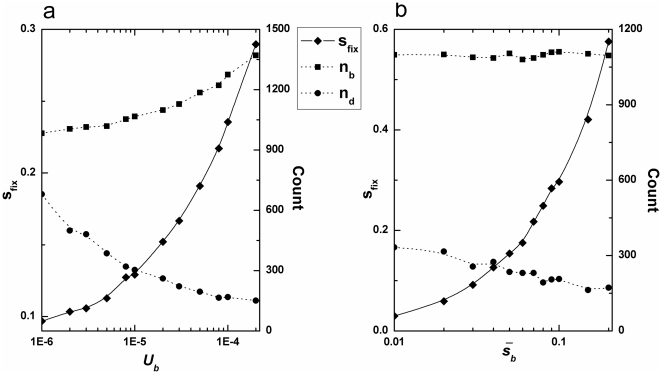
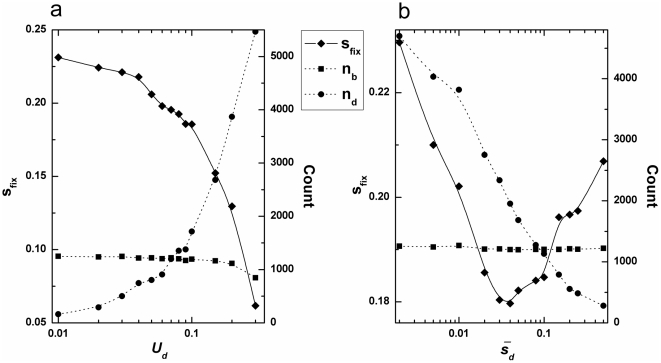
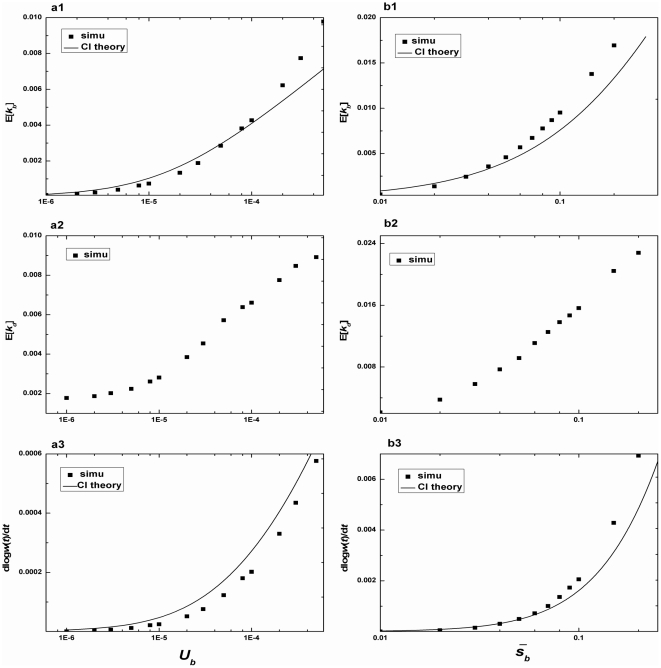
We study the dynamics of adaptation in asexual populations that undergo both beneficial and deleterious mutations. In particular, how the deleterious mutations affect the fixation of beneficial mutations was investigated. Using extensive Monte Carlo simulations, we find that in the "strong-selection weak mutation (SSWM)" regime or in the "clonal interference (CI)" regime, deleterious mutations rarely influence the distribution of "selection coefficients of the fixed mutations (SCFM)"; while in the "multiple mutations" regime, the accumulation of deleterious mutations would lead to a decrease in fitness significantly. We conclude that the effects of deleterious mutations on adaptation depend largely on the supply of beneficial mutations. And interestingly, the lowest adaptation rate occurs for a moderate value of selection coefficient of deleterious mutations.
我们研究了在既能发生有益突变又能发生有害突变的无性种群中的适应动力学。特别地,我们研究了有害突变如何影响有益突变的固定。通过广泛的蒙特卡罗模拟,我们发现,在“强选择弱突变(SSWM)”或“克隆干扰(CI)”的条件下,有害突变很少会影响“固定突变的选择系数(SCFM)”的分布;而在“多次突变”的条件下,有害突变的积累会导致适应性显著下降。我们的结论是,有害突变对适应的影响在很大程度上取决于有益突变的供应。有趣的是,对于中等有害突变选择系数的值,适应率最低。