Godbole Abhijit M, Njar Vincent C O
Department of Pharmaceutical Sciences, Jefferson School of Pharmacy, Thomas Jefferson University, 130 South 9th Street, Edison Building, Suite 1510F, Philadelphia, PA 19107, USA.
Prostate Cancer. 2011;2011:918707. doi: 10.1155/2011/918707. Epub 2011 Oct 12.
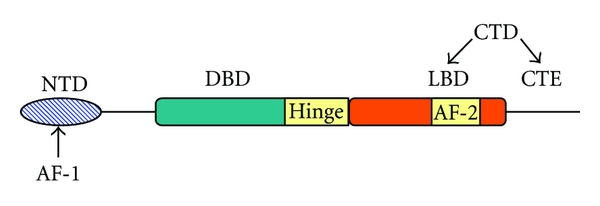
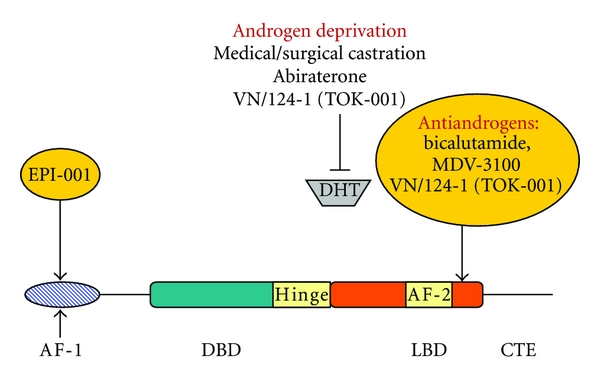
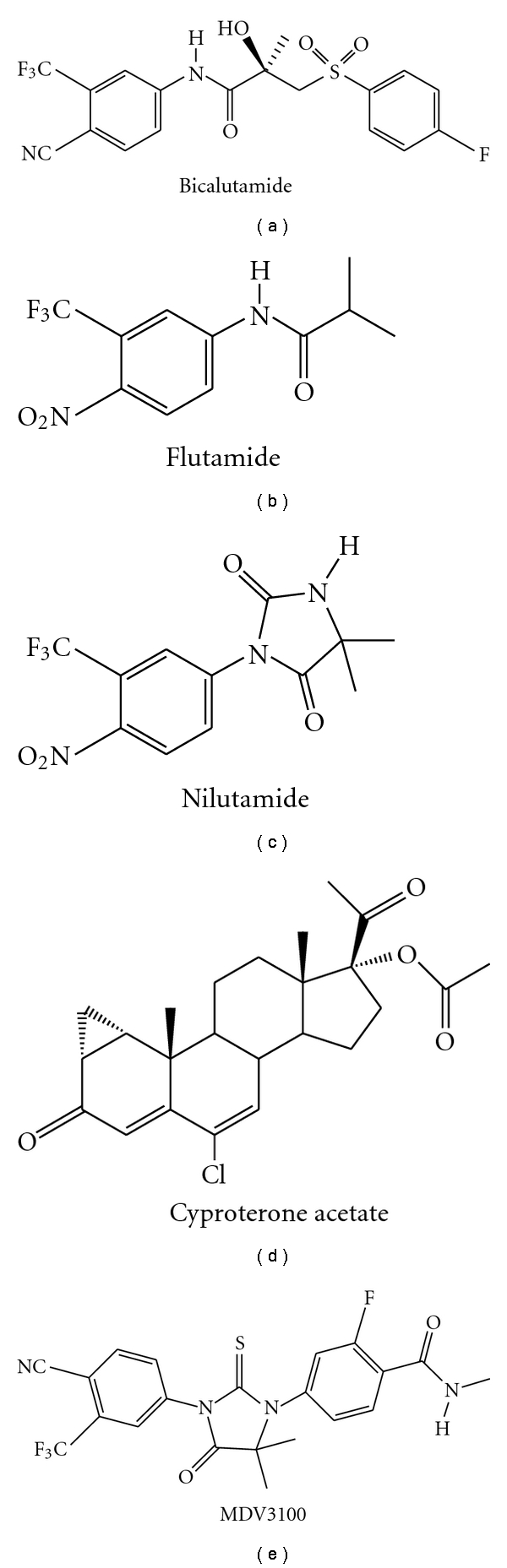
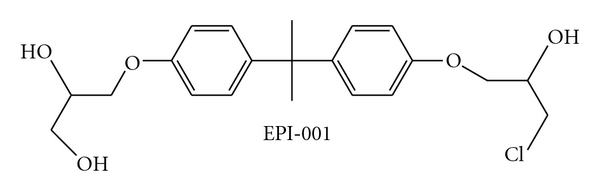
Prostate cancer is the most common cancer in men in the United States, and it is the second leading cause of cancer-related death in American men. The androgen receptor (AR), a receptor of nuclear family and a transcription factor, is the most important target in this disease. While most efforts in the clinic are currently directed at lowering levels of androgens that activate AR, resistance to androgen deprivation eventually develops. Most prostate cancer deaths are attributable to this castration-resistant form of prostate cancer (CRPC). Recent work has shed light on the importance of epigenetic events including facilitation of AR signaling by histone-modifying enzymes, posttranslational modifications of AR such as sumoylation. Herein, we provide an overview of the structure of human AR and its key structural domains that can be used as targets to develop novel antiandrogens. We also summarize recent findings about the antiandrogens and the epigenetic factors that modulate the action of AR.
前列腺癌是美国男性中最常见的癌症,也是美国男性癌症相关死亡的第二大主要原因。雄激素受体(AR)是核家族受体和转录因子,是这种疾病中最重要的靶点。虽然目前临床上的大多数努力都旨在降低激活AR的雄激素水平,但最终会出现对雄激素剥夺的抗性。大多数前列腺癌死亡都归因于这种去势抵抗性前列腺癌(CRPC)。最近的研究揭示了表观遗传事件的重要性,包括组蛋白修饰酶促进AR信号传导、AR的翻译后修饰如SUMO化。在此,我们概述了人类AR的结构及其关键结构域,这些结构域可作为开发新型抗雄激素药物的靶点。我们还总结了关于抗雄激素药物和调节AR作用的表观遗传因素的最新发现。