Department of Psychology, University of Amsterdam, Amsterdam, The Netherlands.
PLoS One. 2011;6(11):e27407. doi: 10.1371/journal.pone.0027407. Epub 2011 Nov 17.
Mental disorders are highly comorbid: people having one disorder are likely to have another as well. We explain empirical comorbidity patterns based on a network model of psychiatric symptoms, derived from an analysis of symptom overlap in the Diagnostic and Statistical Manual of Mental Disorders-IV (DSM-IV).
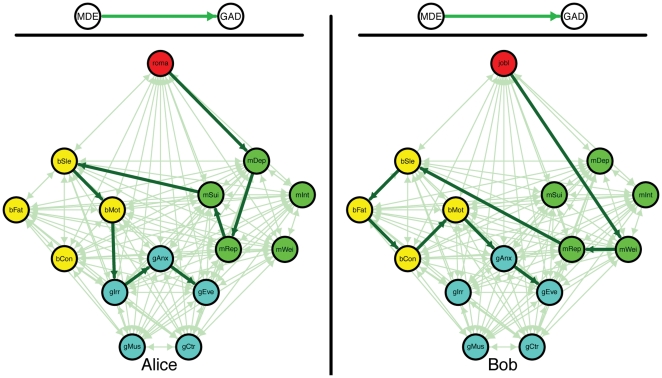
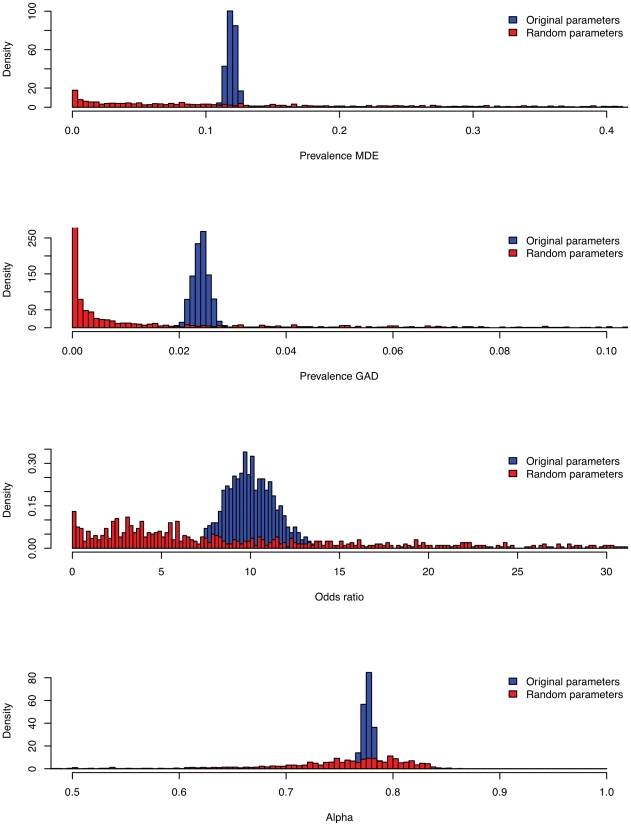
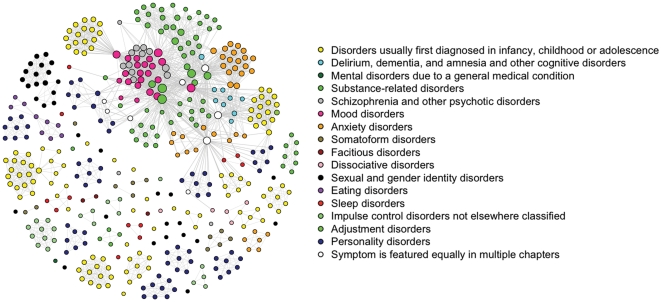
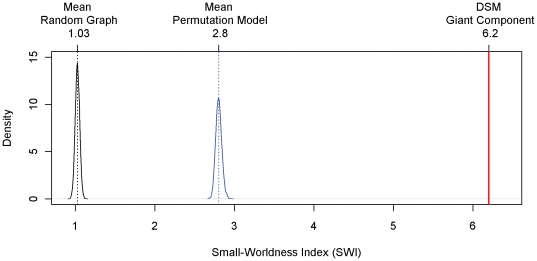
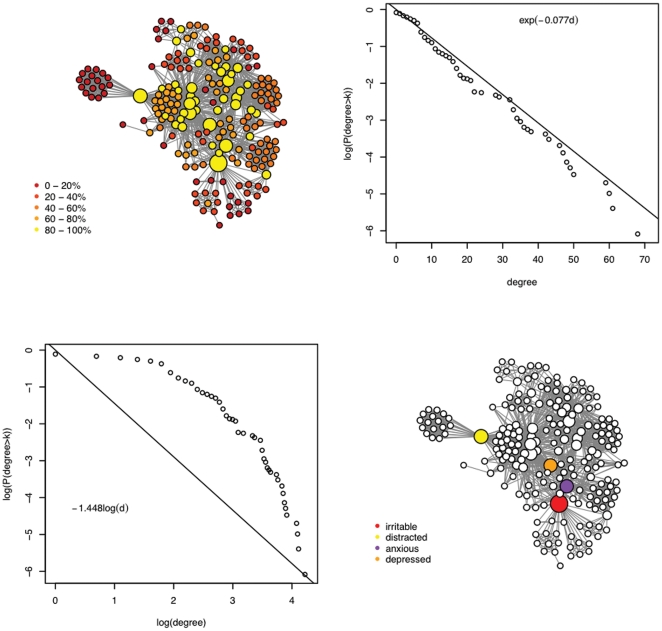
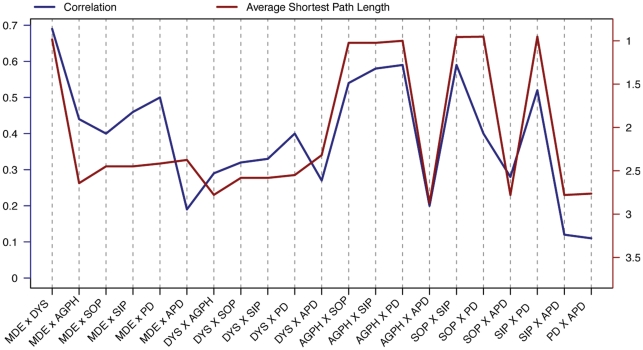
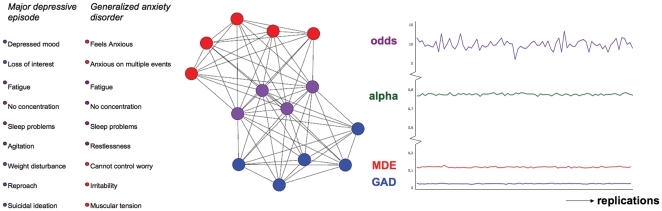
We show that a) half of the symptoms in the DSM-IV network are connected, b) the architecture of these connections conforms to a small world structure, featuring a high degree of clustering but a short average path length, and c) distances between disorders in this structure predict empirical comorbidity rates. Network simulations of Major Depressive Episode and Generalized Anxiety Disorder show that the model faithfully reproduces empirical population statistics for these disorders.
In the network model, mental disorders are inherently complex. This explains the limited successes of genetic, neuroscientific, and etiological approaches to unravel their causes. We outline a psychosystems approach to investigate the structure and dynamics of mental disorders.
精神障碍高度共病:患有一种障碍的人也可能患有另一种障碍。我们基于精神病症状的网络模型解释经验性共病模式,该模型源自对《精神障碍诊断与统计手册-IV》(DSM-IV)中症状重叠的分析。
我们表明,a)DSM-IV 网络中的一半症状是相互关联的,b)这些连接的结构符合小世界结构,具有高度的聚类,但平均路径长度较短,c)该结构中障碍之间的距离预测经验性共病率。对重度抑郁症发作和广泛性焦虑症的网络模拟表明,该模型忠实地再现了这些障碍的经验人群统计数据。
在网络模型中,精神障碍本质上是复杂的。这解释了遗传、神经科学和病因学方法在揭示其病因方面的有限成功。我们概述了一种心理系统方法来研究精神障碍的结构和动态。