Department of Psychology, University of Houston, 126 Heyne Building, Houston, TX 77204-5502, USA.
J Anxiety Disord. 2012 Jan;26(1):173-81. doi: 10.1016/j.janxdis.2011.10.007. Epub 2011 Nov 6.
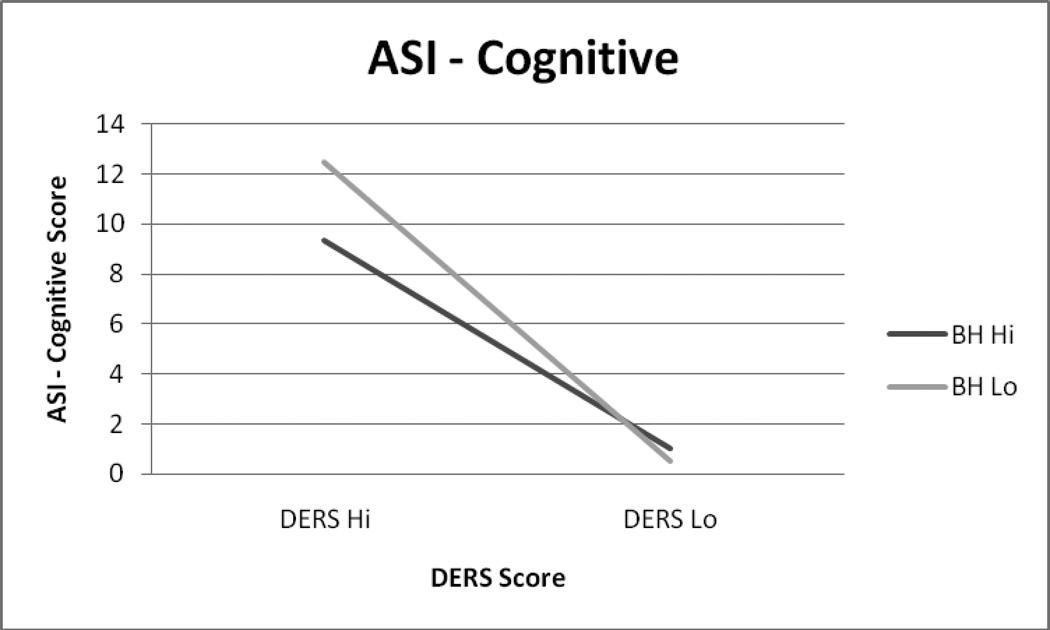
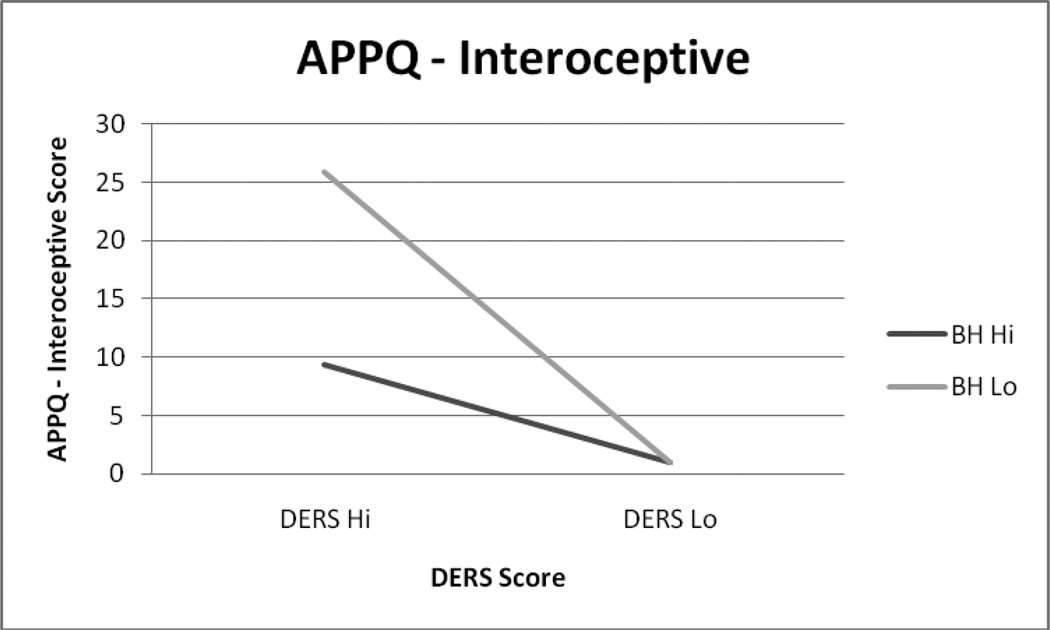
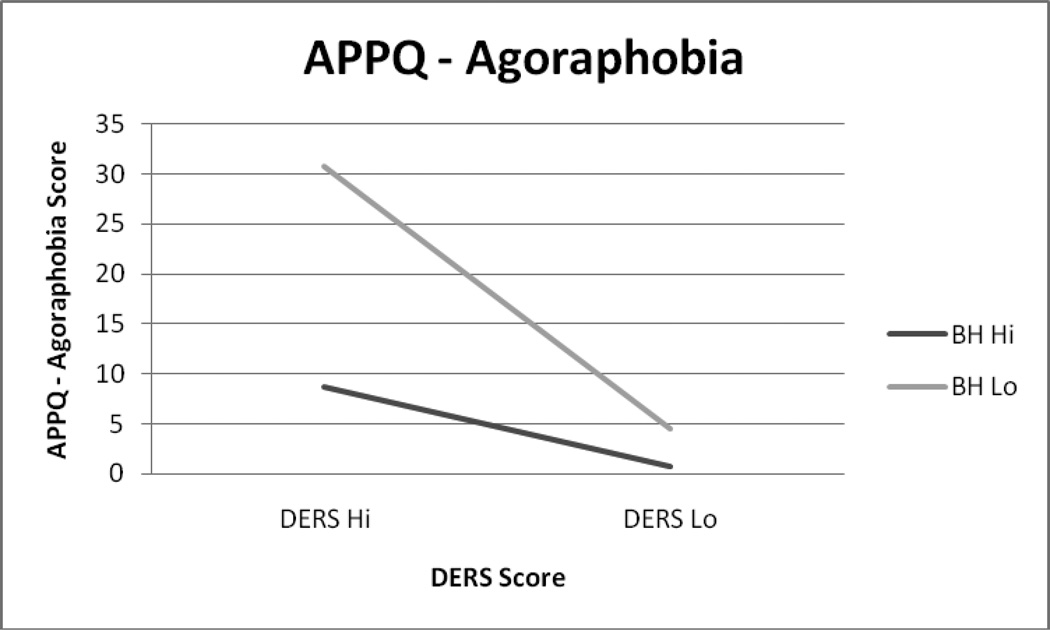
The current study investigated the main and interactive effects of emotion dysregulation and distress tolerance in relation to panic-relevant variables among daily smokers. The sample consisted of 172 adults (61.2% male; M(age)=31.58, SD=11.51), who reported smoking an average of 15.99 cigarettes per day (SD=10.00). Results indicated that both emotion dysregulation and distress tolerance were significantly related to interoceptive fear and agoraphobia. Additionally, emotion dysregulation, but not distress tolerance, was significantly related to anxiety sensitivity. All effects were evident above and beyond the variance accounted for by average cigarettes per day, tobacco-related physical illness, and panic attack history. The interaction between emotion dysregulation and distress tolerance significantly predicted interoceptive and agoraphobic fears as well as the cognitive component of anxiety sensitivity. Such findings underscore the importance of emotion dysregulation and distress tolerance in regard to panic-specific fear and expectancies about anxiety-related sensations among daily smokers.
本研究考察了情绪调节和痛苦耐受力在与每日吸烟者的恐慌相关变量之间的主要和交互作用。样本包括 172 名成年人(61.2%为男性;M(年龄)=31.58,SD=11.51),他们平均每天吸烟 15.99 支(SD=10.00)。结果表明,情绪调节和痛苦耐受力都与内脏恐惧和广场恐怖症显著相关。此外,情绪调节而不是痛苦耐受力与焦虑敏感性显著相关。所有效应都明显超出了平均每天吸烟量、与烟草相关的身体疾病和惊恐发作史所解释的方差。情绪调节和痛苦耐受力之间的交互作用显著预测了内脏恐惧和广场恐怖症以及焦虑敏感性的认知成分。这些发现强调了情绪调节和痛苦耐受力在每日吸烟者的恐慌相关恐惧和对焦虑相关感觉的预期中的重要性。