Department of Medicine, University of Massachusetts Medical School, Worcester, MA 01605, USA.
Hepatology. 2012 Feb;55(2):622-33. doi: 10.1002/hep.25497.
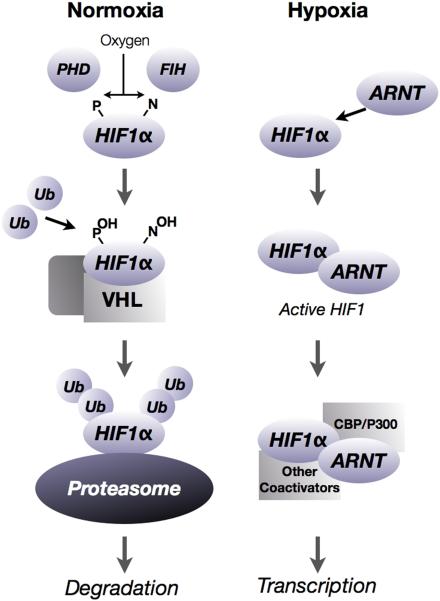
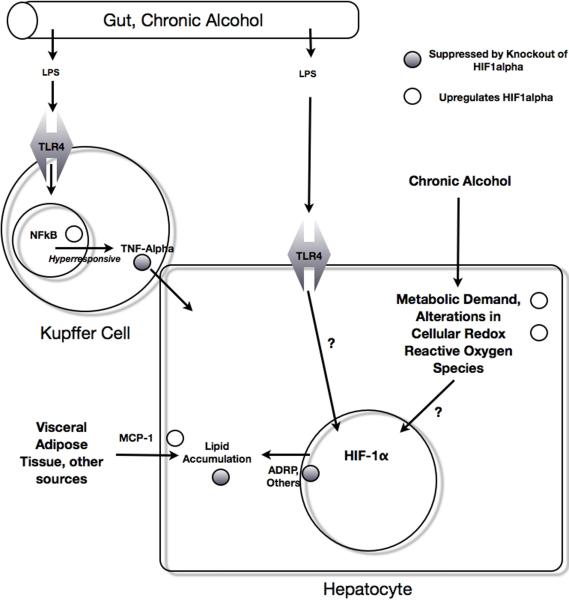
Hypoxia has been shown to have a role in the pathogenesis of several forms of liver disease. The hypoxia inducible factors (HIFs) are a family of evolutionarily conserved transcriptional regulators that affect a homeostatic response to low oxygen tension and have been identified as key mediators of angiogenesis, inflammation, and metabolism. In this review we summarize the evidence for a role of HIFs across a range of hepatic pathophysiology. We describe regulation of the HIFs and review investigations that demonstrate a role for HIFs in the development of liver fibrosis, activation of innate immune pathways, hepatocellular carcinoma, as well as other liver diseases in both human disease as well as murine models.
缺氧在多种形式的肝病发病机制中起着重要作用。缺氧诱导因子(HIFs)是一组进化上保守的转录调节因子,它们影响对低氧张力的稳态反应,并已被确定为血管生成、炎症和代谢的关键介质。在这篇综述中,我们总结了 HIF 在一系列肝病理生理学中的作用证据。我们描述了 HIF 的调节,并回顾了表明 HIF 在肝纤维化发展、先天免疫途径激活、肝细胞癌以及人类疾病和小鼠模型中的其他肝病中的作用的研究。