Department of Ecology and Evolution, Université de Lausanne, Biophore, Lausanne, CH-1015, Switzerland.
BMC Evol Biol. 2011 Nov 30;11:347. doi: 10.1186/1471-2148-11-347.
Genetic, phenotypic and ecological divergence within a lineage is the result of past and ongoing evolutionary processes, which lead ultimately to diversification and speciation. Integrative analyses allow linking diversification to geological, climatic, and ecological events, and thus disentangling the relative importance of different evolutionary drivers in generating and maintaining current species richness.
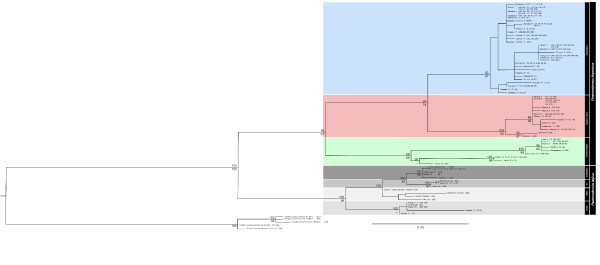
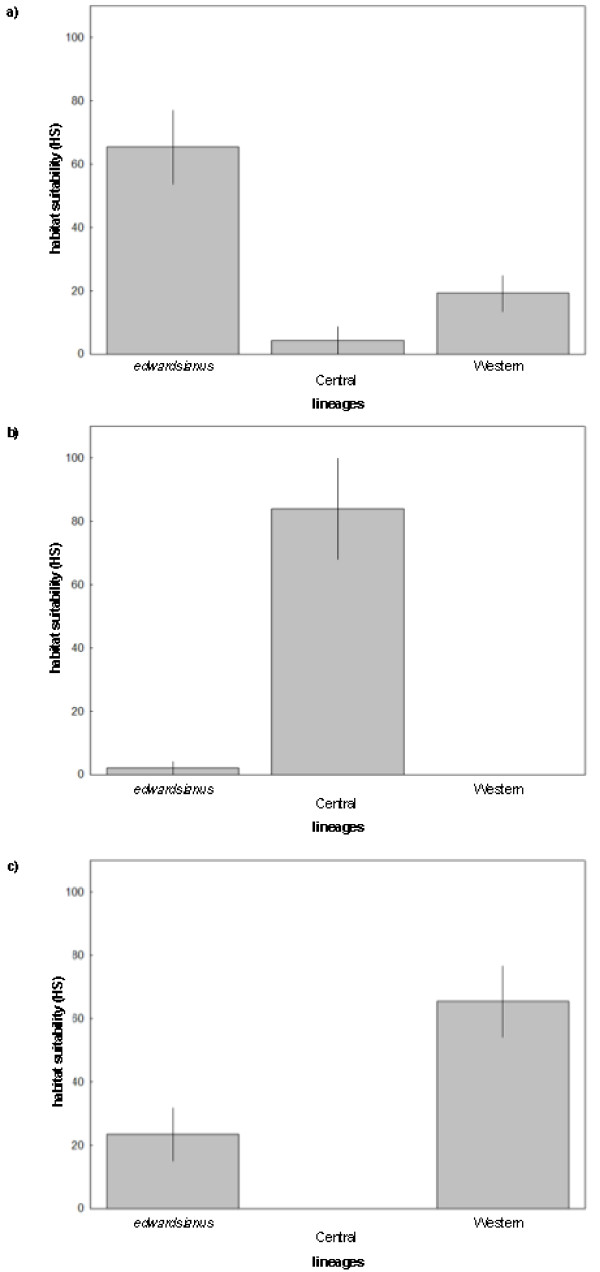
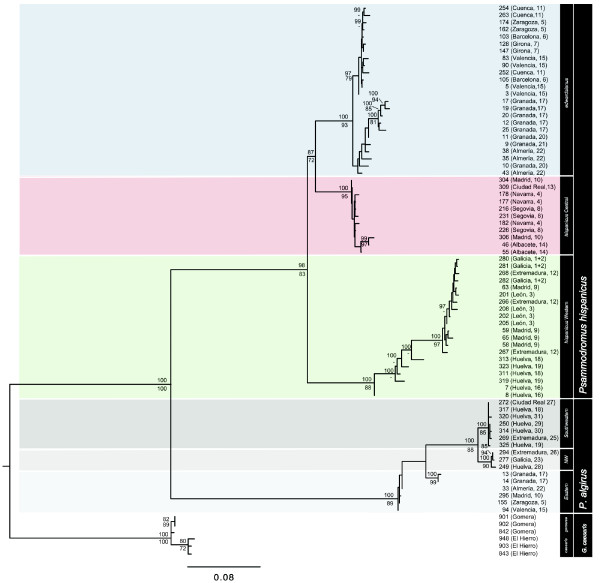
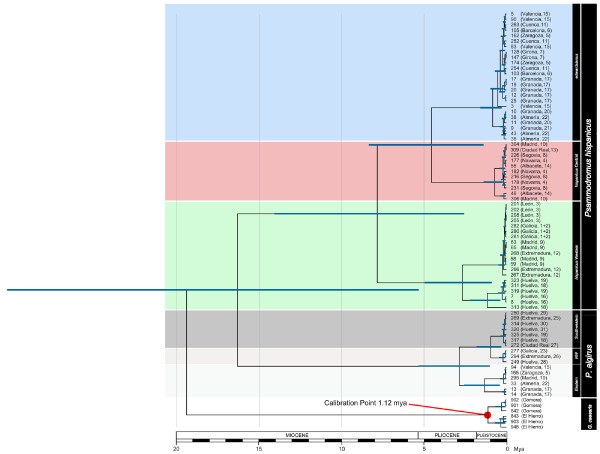
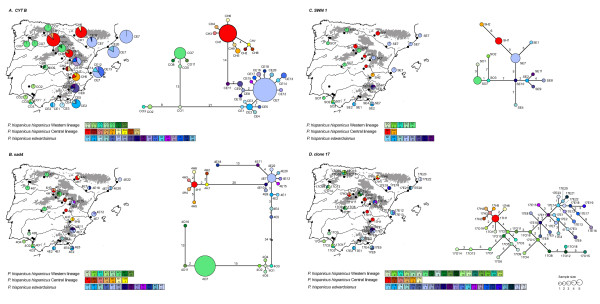
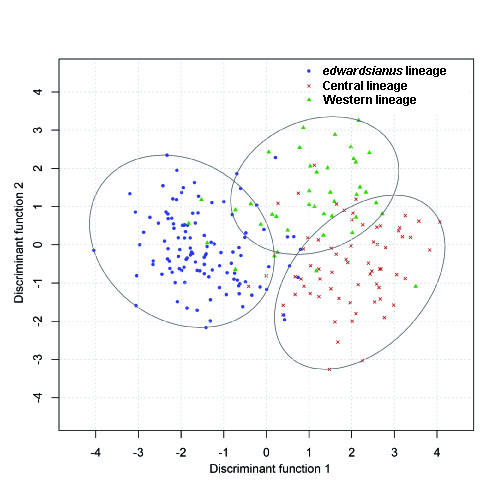
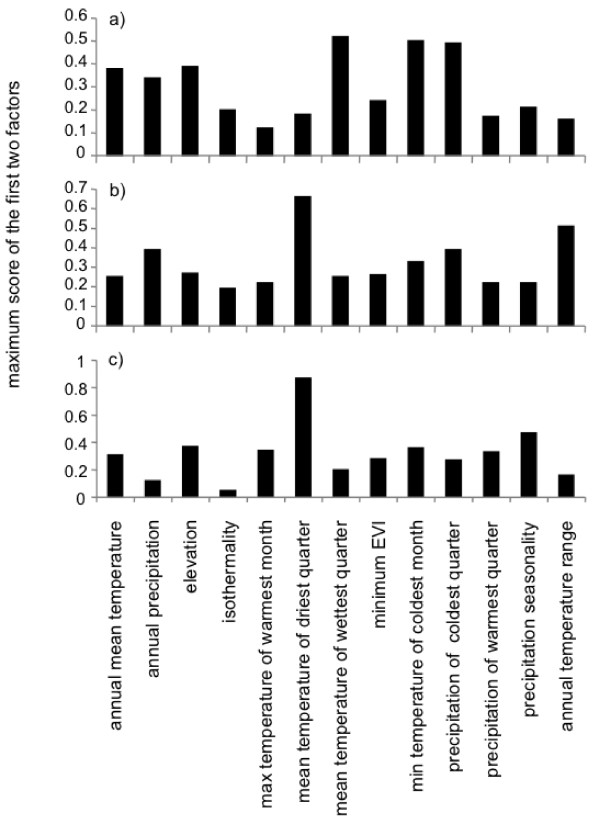
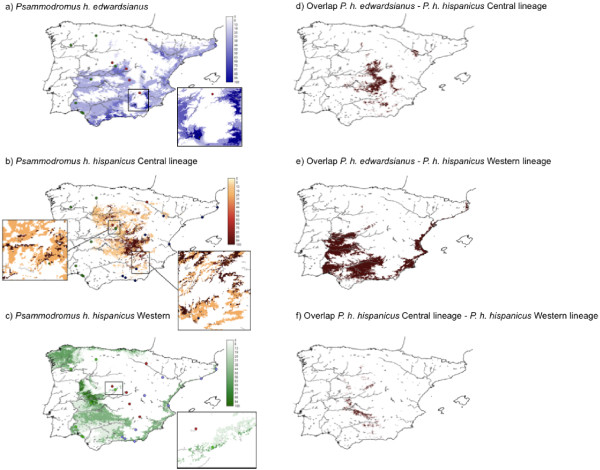
Here, we use phylogenetic, phenotypic, geographic, and environmental data to investigate diversification in the Spanish sand racer (Psammodromus hispanicus). Phylogenetic, molecular clock dating, and phenotypic analyses show that P. hispanicus consists of three lineages. One lineage from Western Spain diverged 8.3 (2.9-14.7) Mya from the ancestor of Psammodromus hispanicus edwardsianus and P. hispanicus hispanicus Central lineage. The latter diverged 4.8 (1.5-8.7) Mya. Molecular clock dating, together with population genetic analyses, indicate that the three lineages experienced northward range expansions from southern Iberian refugia during Pleistocene glacial periods. Ecological niche modelling shows that suitable habitat of the Western lineage and P. h. edwardsianus overlap over vast areas, but that a barrier may hinder dispersal and genetic mixing of populations of both lineages. P. h. hispanicus Central lineage inhabits an ecological niche that overlaps marginally with the other two lineages.
Our results provide evidence for divergence in allopatry and niche conservatism between the Western lineage and the ancestor of P. h. edwardsianus and P. h. hispanicus Central lineage, whereas they suggest that niche divergence is involved in the origin of the latter two lineages. Both processes were temporally separated and may be responsible for the here documented genetic and phenotypic diversity of P. hispanicus. The temporal pattern is in line with those proposed for other animal lineages. It suggests that geographic isolation and vicariance played an important role in the early diversification of the group, and that lineage diversification was further amplified through ecological divergence.
谱系内的遗传、表型和生态分歧是过去和正在进行的进化过程的结果,这些过程最终导致了多样化和物种形成。综合分析可以将多样化与地质、气候和生态事件联系起来,从而厘清不同进化驱动力在产生和维持当前物种丰富度方面的相对重要性。
在这里,我们使用系统发育、表型、地理和环境数据来研究西班牙沙蛇(Psammodromus hispanicus)的多样化。系统发育、分子钟年代测定和表型分析表明,P. hispanicus 由三个谱系组成。来自西班牙西部的一个谱系与 Psammodromus hispanicus edwardsianus 和 P. hispanicus hispanicus 中央谱系的祖先分化了 8.3(2.9-14.7)Mya。后者分化了 4.8(1.5-8.7)Mya。分子钟年代测定和种群遗传分析表明,这三个谱系在更新世冰期期间从伊比利亚南部避难所向北扩展。生态位模型表明,西部谱系和 P. h. edwardsianus 的适宜栖息地在广阔的地区重叠,但可能存在障碍阻碍两个谱系的种群扩散和基因混合。P. h. hispanicus 中央谱系的栖息地与其他两个谱系略有重叠。
我们的研究结果为西部谱系与 P. h. edwardsianus 和 P. h. hispanicus 中央谱系的祖先之间的异地分歧和生态位保守提供了证据,而这表明生态位分歧参与了后两个谱系的起源。这两个过程在时间上是分开的,可能是导致 P. hispanicus 目前遗传和表型多样性的原因。这种时间模式与其他动物谱系提出的模式一致。这表明地理隔离和地理隔离在该组的早期多样化中发挥了重要作用,谱系多样化通过生态分歧进一步放大。