Biomedical Engineering Interdepartmental Program, University of California, Los Angeles, CA, USA.
J Neural Eng. 2012 Feb;9(1):016004. doi: 10.1088/1741-2560/9/1/016004. Epub 2011 Dec 12.
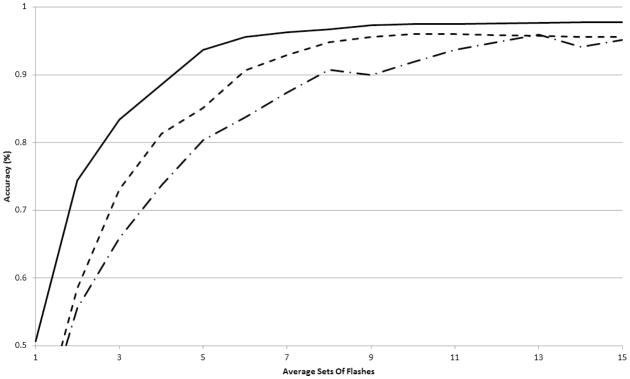
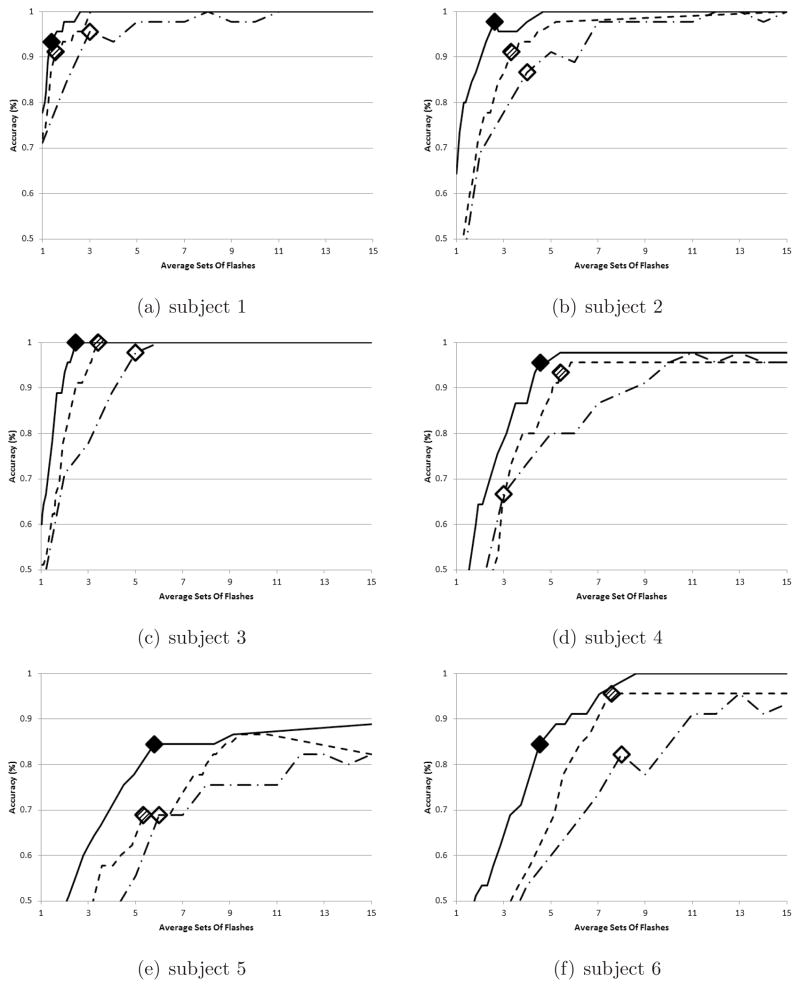
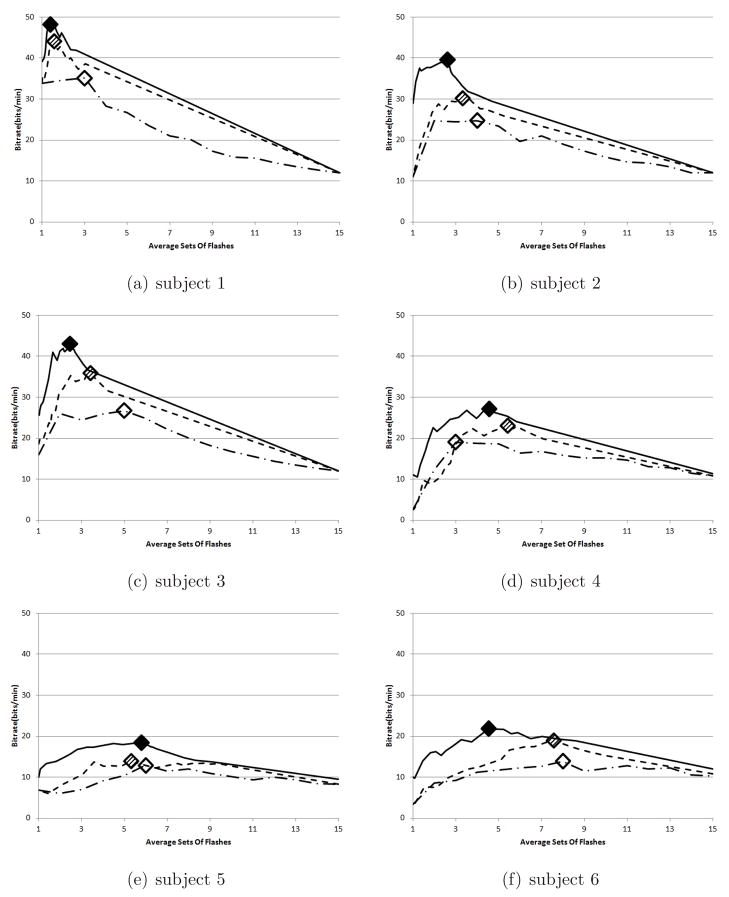
The P300 speller is an example of a brain-computer interface that can restore functionality to victims of neuromuscular disorders. Although the most common application of this system has been communicating language, the properties and constraints of the linguistic domain have not to date been exploited when decoding brain signals that pertain to language. We hypothesized that combining the standard stepwise linear discriminant analysis with a Naive Bayes classifier and a trigram language model would increase the speed and accuracy of typing with the P300 speller. With integration of natural language processing, we observed significant improvements in accuracy and 40-60% increases in bit rate for all six subjects in a pilot study. This study suggests that integrating information about the linguistic domain can significantly improve signal classification.
P300 拼写器是一种脑机接口,可以为神经肌肉疾病患者恢复功能。尽管该系统最常见的应用是语言交流,但迄今为止,在解码与语言相关的脑信号时,尚未利用语言领域的特性和约束条件。我们假设,将标准逐步线性判别分析与朴素贝叶斯分类器和三进制语言模型相结合,可以提高 P300 拼写器的打字速度和准确率。通过自然语言处理的集成,我们在一项试点研究中观察到,所有 6 名受试者的准确率都有显著提高,比特率提高了 40%到 60%。这项研究表明,整合语言领域的信息可以显著改善信号分类。