• 文献检索
  • 文档翻译
  • 深度研究
  • 学术资讯
  • Suppr Zotero 插件Zotero 插件
  • 邀请有礼
  • 套餐&价格
  • 历史记录
应用&插件
Suppr Zotero 插件Zotero 插件浏览器插件Mac 客户端Windows 客户端微信小程序
定价
高级版会员购买积分包购买API积分包
服务
文献检索文档翻译深度研究API 文档MCP 服务
关于我们
关于 Suppr公司介绍联系我们用户协议隐私条款
关注我们

Suppr 超能文献

核心技术专利:CN118964589B侵权必究
粤ICP备2023148730 号-1Suppr @ 2026

文献检索

告别复杂PubMed语法,用中文像聊天一样搜索,搜遍4000万医学文献。AI智能推荐,让科研检索更轻松。

立即免费搜索

文件翻译

保留排版,准确专业,支持PDF/Word/PPT等文件格式,支持 12+语言互译。

免费翻译文档

深度研究

AI帮你快速写综述,25分钟生成高质量综述,智能提取关键信息,辅助科研写作。

立即免费体验

一种用于监测重症监护患者尿量的低成本设备。

A low cost device for monitoring the urine output of critical care patients.

机构信息

Department of Information and Communications Systems Engineering, University San Pablo CEU, and Cirtical Care Unit, University Hospital of Getafe, Boadilla del Monte 28668, Madrid, Spain.

出版信息

Sensors (Basel). 2010;10(12):10714-32. doi: 10.3390/s101210714. Epub 2010 Dec 2.

DOI:10.3390/s101210714
PMID:22163495
原文链接:https://pmc.ncbi.nlm.nih.gov/articles/PMC3231093/
Abstract

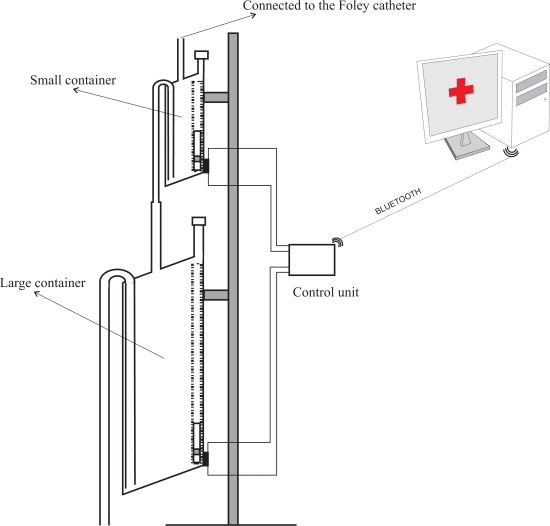
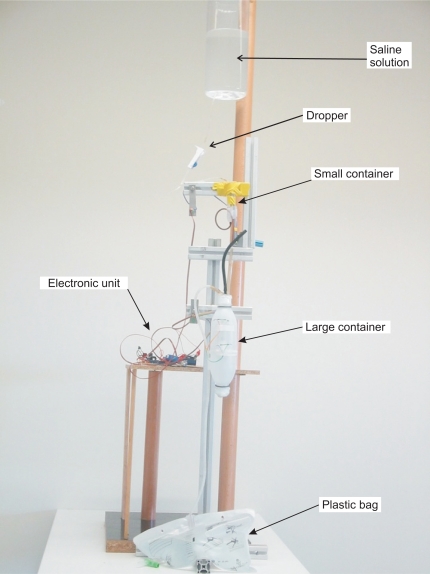
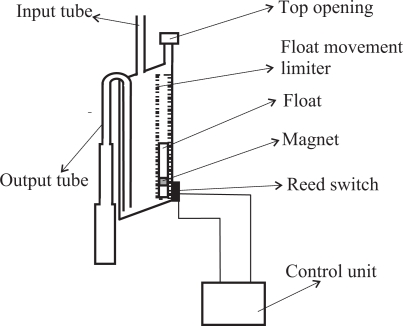
In critical care units most of the patients' physiological parameters are sensed by commercial monitoring devices. These devices can also supervise whether the values of the parameters lie within a pre-established range set by the clinician. The automation of the sensing and supervision tasks has discharged the healthcare staff of a considerable workload and avoids human errors, which are common in repetitive and monotonous tasks. Urine output is very likely the most relevant physiological parameter that has yet to be sensed or supervised automatically. This paper presents a low cost patent-pending device capable of sensing and supervising urine output. The device uses reed switches activated by a magnetic float in order to measure the amount of urine collected in two containers which are arranged in cascade. When either of the containers fills, it is emptied automatically using a siphon mechanism and urine begins to collect again. An electronic unit sends the state of the reed switches via Bluetooth to a PC that calculates the urine output from this information and supervises the achievement of therapeutic goals.

摘要

在重症监护病房,大多数患者的生理参数都是通过商用监测设备来感知的。这些设备还可以监测参数值是否在临床医生设定的预设范围内。感知和监督任务的自动化减轻了医护人员的相当大的工作量,并避免了在重复和单调的任务中常见的人为错误。尿流量很可能是最相关的生理参数,但尚未实现自动感知或监督。本文介绍了一种低成本的专利申请中设备,能够感知和监督尿流量。该设备使用磁浮子激活的干簧开关来测量两个级联排列的容器中收集的尿液量。当其中一个容器装满时,它会自动使用虹吸管机构排空,尿液开始再次收集。一个电子单元通过蓝牙将干簧开关的状态发送到 PC,PC 会根据这些信息计算出尿量,并监督治疗目标的实现。
https://cdn.ncbi.nlm.nih.gov/pmc/blobs/d6be/3231093/377c7ce223db/sensors-10-10714f7.jpg
https://cdn.ncbi.nlm.nih.gov/pmc/blobs/d6be/3231093/8c7d90a4ca8e/sensors-10-10714f1.jpg
https://cdn.ncbi.nlm.nih.gov/pmc/blobs/d6be/3231093/1845ea08ba3a/sensors-10-10714f2.jpg
https://cdn.ncbi.nlm.nih.gov/pmc/blobs/d6be/3231093/0efb974e8948/sensors-10-10714f3.jpg
https://cdn.ncbi.nlm.nih.gov/pmc/blobs/d6be/3231093/8e869da1e3b4/sensors-10-10714f4.jpg
https://cdn.ncbi.nlm.nih.gov/pmc/blobs/d6be/3231093/ed747b20e147/sensors-10-10714f5.jpg
https://cdn.ncbi.nlm.nih.gov/pmc/blobs/d6be/3231093/74b3acce7e52/sensors-10-10714f6.jpg
https://cdn.ncbi.nlm.nih.gov/pmc/blobs/d6be/3231093/377c7ce223db/sensors-10-10714f7.jpg
https://cdn.ncbi.nlm.nih.gov/pmc/blobs/d6be/3231093/8c7d90a4ca8e/sensors-10-10714f1.jpg
https://cdn.ncbi.nlm.nih.gov/pmc/blobs/d6be/3231093/1845ea08ba3a/sensors-10-10714f2.jpg
https://cdn.ncbi.nlm.nih.gov/pmc/blobs/d6be/3231093/0efb974e8948/sensors-10-10714f3.jpg
https://cdn.ncbi.nlm.nih.gov/pmc/blobs/d6be/3231093/8e869da1e3b4/sensors-10-10714f4.jpg
https://cdn.ncbi.nlm.nih.gov/pmc/blobs/d6be/3231093/ed747b20e147/sensors-10-10714f5.jpg
https://cdn.ncbi.nlm.nih.gov/pmc/blobs/d6be/3231093/74b3acce7e52/sensors-10-10714f6.jpg
https://cdn.ncbi.nlm.nih.gov/pmc/blobs/d6be/3231093/377c7ce223db/sensors-10-10714f7.jpg

相似文献

1
A low cost device for monitoring the urine output of critical care patients.一种用于监测重症监护患者尿量的低成本设备。
Sensors (Basel). 2010;10(12):10714-32. doi: 10.3390/s101210714. Epub 2010 Dec 2.
2
An automatic critical care urine meter.自动重症监护尿液测量仪。
Sensors (Basel). 2012 Sep 26;12(10):13109-25. doi: 10.3390/s121013109.
3
A device for automatically measuring and supervising the critical care patient's urine output.一种用于自动测量和监测重症监护患者尿量的设备。
Sensors (Basel). 2010;10(1):934-51. doi: 10.3390/s100100934. Epub 2010 Jan 26.
4
A new device to automate the monitoring of critical patients' urine output.一种用于自动监测危急病人尿量的新设备。
Biomed Res Int. 2014;2014:587593. doi: 10.1155/2014/587593. Epub 2014 Jan 28.
5
[Design of a multifunctional urine bag].[一种多功能尿袋的设计]
Zhonghua Shao Shang Za Zhi. 2019 Aug 20;35(8):626-628. doi: 10.3760/cma.j.issn.1009-2587.2019.08.017.
6
Blood glucose measurements in critically ill patients.危重症患者的血糖测量
J Diabetes Sci Technol. 2012 Jan 1;6(1):22-8. doi: 10.1177/193229681200600104.
7
Addressing the flaws of current critical alarms: a fuzzy constraint satisfaction approach.解决当前关键警报的缺陷:一种模糊约束满足方法。
Artif Intell Med. 2009 Nov;47(3):219-38. doi: 10.1016/j.artmed.2009.08.002. Epub 2009 Sep 30.
8
Medical device alarms.医疗设备警报
Biomed Tech (Berl). 2011 Apr;56(2):73-83. doi: 10.1515/BMT.2011.005. Epub 2011 Mar 3.
9
[Hemodynamic monitoring in the intensive care unit: pulmonary artery catheter versus PiCCO].[重症监护病房中的血流动力学监测:肺动脉导管与脉搏指示连续心输出量监测法]
Dtsch Med Wochenschr. 2011 Feb;136(8):376-80. doi: 10.1055/s-0031-1272539. Epub 2011 Feb 17.
10
Improvements in Patient Monitoring in the Intensive Care Unit: Survey Study.重症监护病房患者监测的改进:调查研究
J Med Internet Res. 2020 Jun 19;22(6):e19091. doi: 10.2196/19091.

引用本文的文献

1
Systematic Review of Automated Diuresis Measurement in Critically Ill Patients.危重症患者自动利尿测量的系统评价
Med Devices (Auckl). 2023 Dec 6;16:251-259. doi: 10.2147/MDER.S428379. eCollection 2023.
2
Development of a urinometer for automatic measurement of urine flow in catheterized patients.研制一种尿流计,用于自动测量导尿患者的尿液流量。
PLoS One. 2023 Aug 31;18(8):e0290319. doi: 10.1371/journal.pone.0290319. eCollection 2023.
3
Silicone Oil Decreases Biofilm Formation in a Capacitance-Based Automatic Urine Measurement System.

本文引用的文献

1
A device for automatically measuring and supervising the critical care patient's urine output.一种用于自动测量和监测重症监护患者尿量的设备。
Sensors (Basel). 2010;10(1):934-51. doi: 10.3390/s100100934. Epub 2010 Jan 26.
2
Addressing the flaws of current critical alarms: a fuzzy constraint satisfaction approach.解决当前关键警报的缺陷:一种模糊约束满足方法。
Artif Intell Med. 2009 Nov;47(3):219-38. doi: 10.1016/j.artmed.2009.08.002. Epub 2009 Sep 30.
3
Accuracy and ease of use of a novel electronic urine output monitoring device compared with standard manual urinometer in the intensive care unit.
硅油可减少基于电容的自动尿液测量系统中的生物膜形成。
Sensors (Basel). 2021 Jan 10;21(2):445. doi: 10.3390/s21020445.
4
Performance and user evaluation of a novel capacitance-based automatic urinometer compared with a manual standard urinometer after elective cardiac surgery.择期心脏手术后,一种新型基于电容的自动尿比重计与手动标准尿比重计的性能及用户评价比较
Crit Care. 2015 Apr 21;19(1):173. doi: 10.1186/s13054-015-0899-4.
5
An automatic critical care urine meter.自动重症监护尿液测量仪。
Sensors (Basel). 2012 Sep 26;12(10):13109-25. doi: 10.3390/s121013109.
新型电子尿液输出监测仪与重症监护病房标准手动尿比重计的准确性和易用性比较。
J Crit Care. 2009 Dec;24(4):629.e13-7. doi: 10.1016/j.jcrc.2008.12.008. Epub 2009 Feb 12.
4
Fluid resuscitation in major burns.大面积烧伤的液体复苏
ANZ J Surg. 2006 Jan-Feb;76(1-2):35-8. doi: 10.1111/j.1445-2197.2006.03641.x.
5
Sepsis and the kidney.脓毒症与肾脏
Crit Care Clin. 2005 Apr;21(2):211-22. doi: 10.1016/j.ccc.2005.01.002.
6
Intensive care unit physician staffing: financial modeling of the Leapfrog standard.重症监护病房医生配备:“跨越”标准的财务模型
Crit Care Med. 2004 Jun;32(6):1247-53. doi: 10.1097/01.ccm.0000128609.98470.8b.
7
Physician staffing patterns and clinical outcomes in critically ill patients: a systematic review.重症患者的医生人员配置模式与临床结局:一项系统综述。
JAMA. 2002 Nov 6;288(17):2151-62. doi: 10.1001/jama.288.17.2151.
8
Early goal-directed therapy in the treatment of severe sepsis and septic shock.早期目标导向治疗在严重脓毒症和脓毒性休克治疗中的应用
N Engl J Med. 2001 Nov 8;345(19):1368-77. doi: 10.1056/NEJMoa010307.
9
Intensive care unit physician staffing is associated with decreased length of stay, hospital cost, and complications after esophageal resection.重症监护病房医生的配备与食管切除术后住院时间缩短、医院成本降低及并发症减少相关。
Crit Care Med. 2001 Apr;29(4):753-8. doi: 10.1097/00003246-200104000-00012.
10
ICU nurse-to-patient ratio is associated with complications and resource use after esophagectomy.重症监护病房护士与患者的比例与食管癌切除术后的并发症及资源使用有关。
Intensive Care Med. 2000 Dec;26(12):1857-62. doi: 10.1007/s001340000720.