Department of Information and Communications Systems Engineering, University San Pablo CEU, 28668 Madrid, Spain.
Centre for Automation and Robotics CSIC-UPM, Carretera Campo Real Km 0,200, La Poveda, Arganda del Rey, 28500 Madrid, Spain.
Biomed Res Int. 2014;2014:587593. doi: 10.1155/2014/587593. Epub 2014 Jan 28.
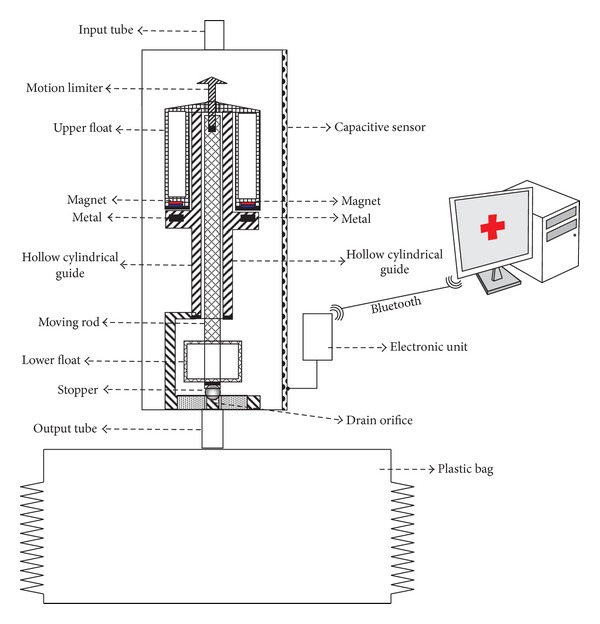
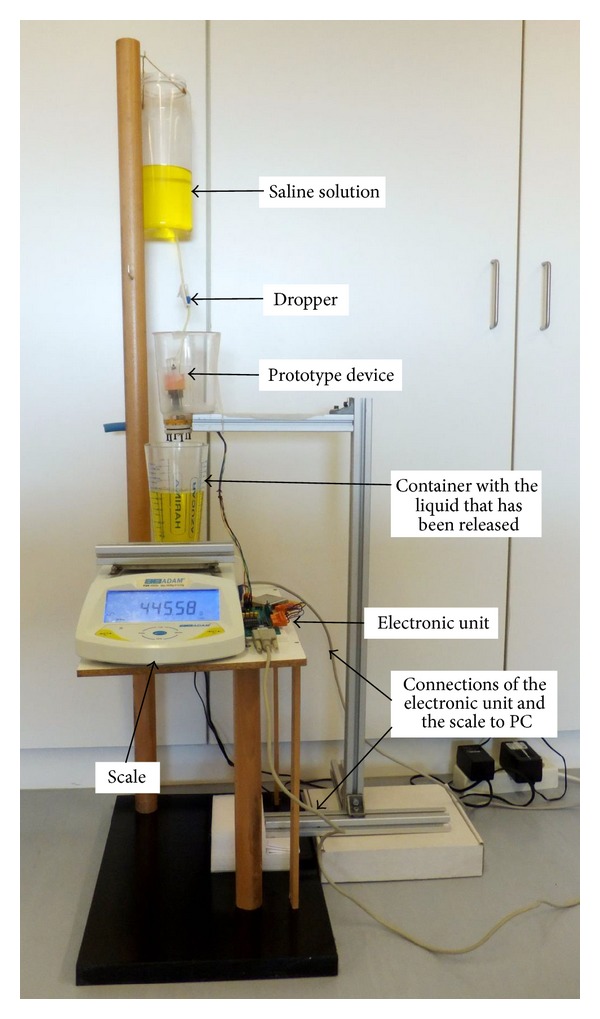
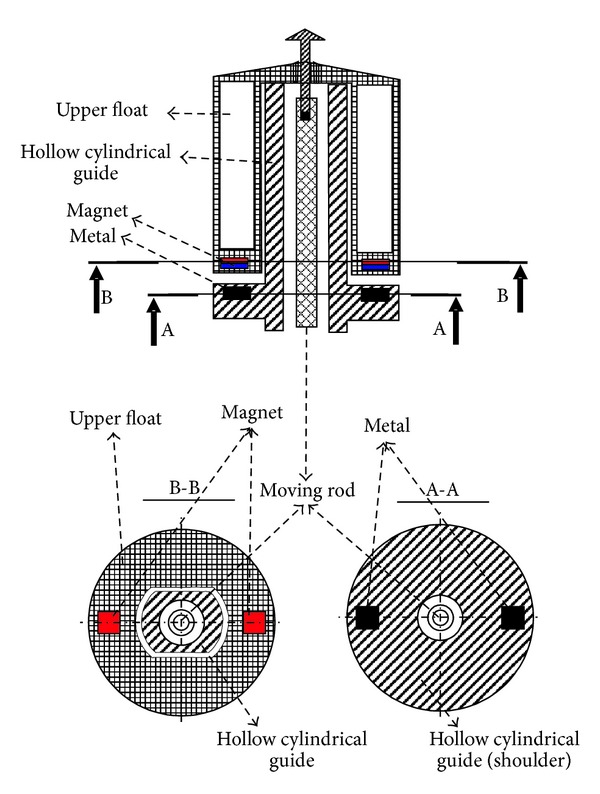
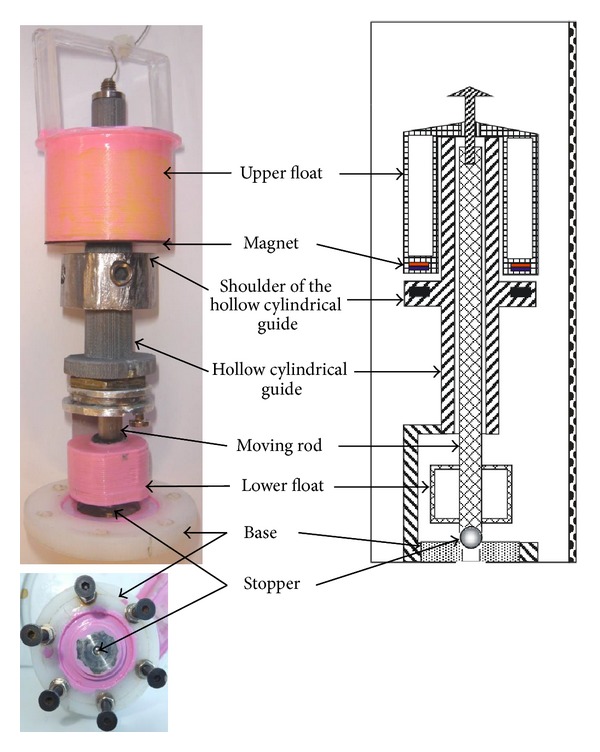
Urine output (UO) is usually measured manually each hour in acutely ill patients. This task consumes a substantial amount of time. Furthermore, in the literature there is evidence that more frequent (minute-by-minute) UO measurement could impact clinical decision making and improve patient outcomes. However, it is not feasible to manually take minute-by-minute UO measurements. A device capable of automatically monitoring UO could save precious time of the healthcare staff and improve patient outcomes through a more precise and continuous monitoring of this parameter. This paper presents a device capable of automatically monitoring UO. It provides minute by minute measures and it can generate alarms that warn of deviations from therapeutic goals. It uses a capacitive sensor for the measurement of the UO collected within a rigid container. When the container is full, it automatically empties without requiring any internal or external power supply or any intervention by the nursing staff. In vitro tests have been conducted to verify the proper operation and accuracy in the measures of the device. These tests confirm the viability of the device to automate the monitoring of UO.
尿液输出量(UO)通常在急性病患者中每小时手动测量一次。这项任务耗费大量时间。此外,文献中有证据表明,更频繁的(每分钟)UO 测量可以影响临床决策并改善患者预后。然而,手动进行每分钟的 UO 测量是不可行的。能够自动监测 UO 的设备可以为医护人员节省宝贵的时间,并通过更精确和连续的监测此参数来改善患者预后。本文介绍了一种能够自动监测 UO 的设备。它提供每分钟的测量值,并可以生成警报,警告治疗目标的偏差。它使用电容传感器测量在刚性容器内收集的 UO。当容器装满时,它会自动排空,而无需任何内部或外部电源或护理人员的任何干预。已经进行了体外测试以验证设备的正常运行和测量精度。这些测试证实了该设备能够自动监测 UO 的可行性。