Department of Chemistry, Swedish University of Agricultural Sciences, P.O. Box 7015, SE-750 07 Uppsala, Sweden.
Inorg Chem. 2012 Jan 2;51(1):425-38. doi: 10.1021/ic2018693. Epub 2011 Dec 14.
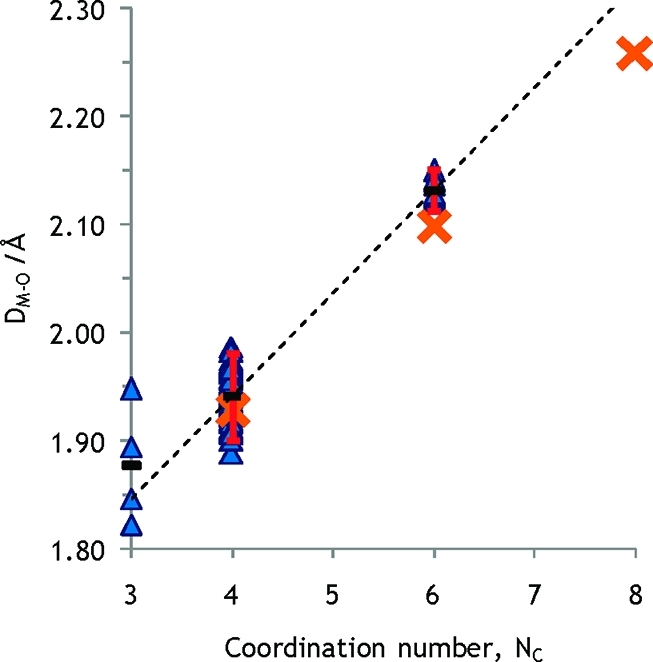
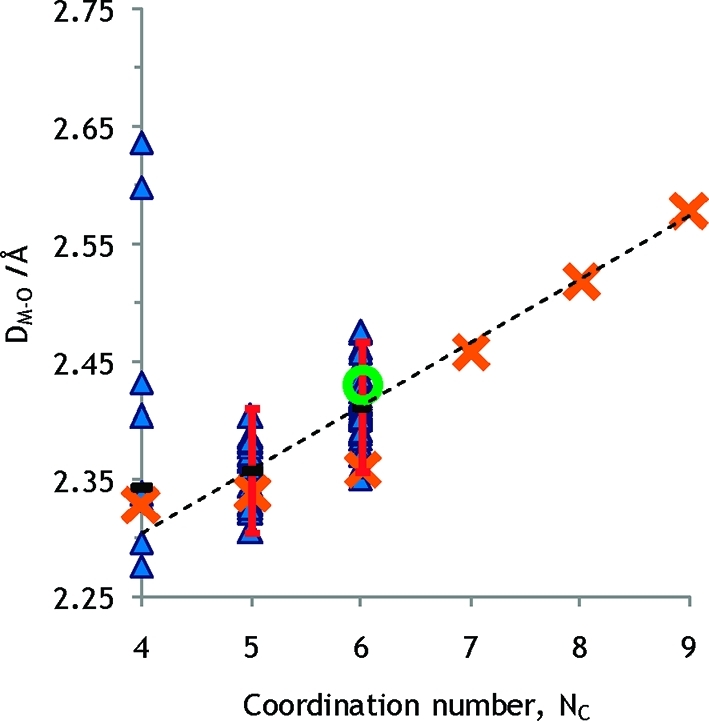
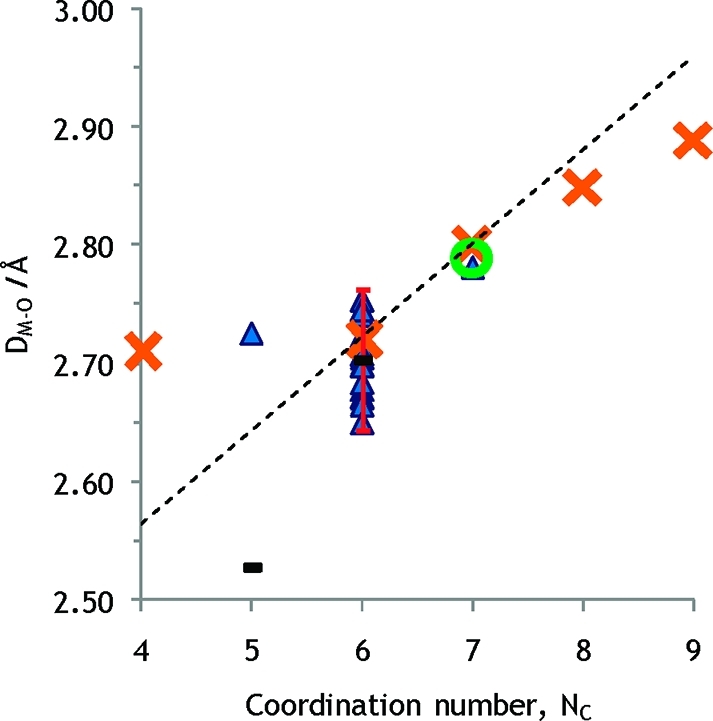
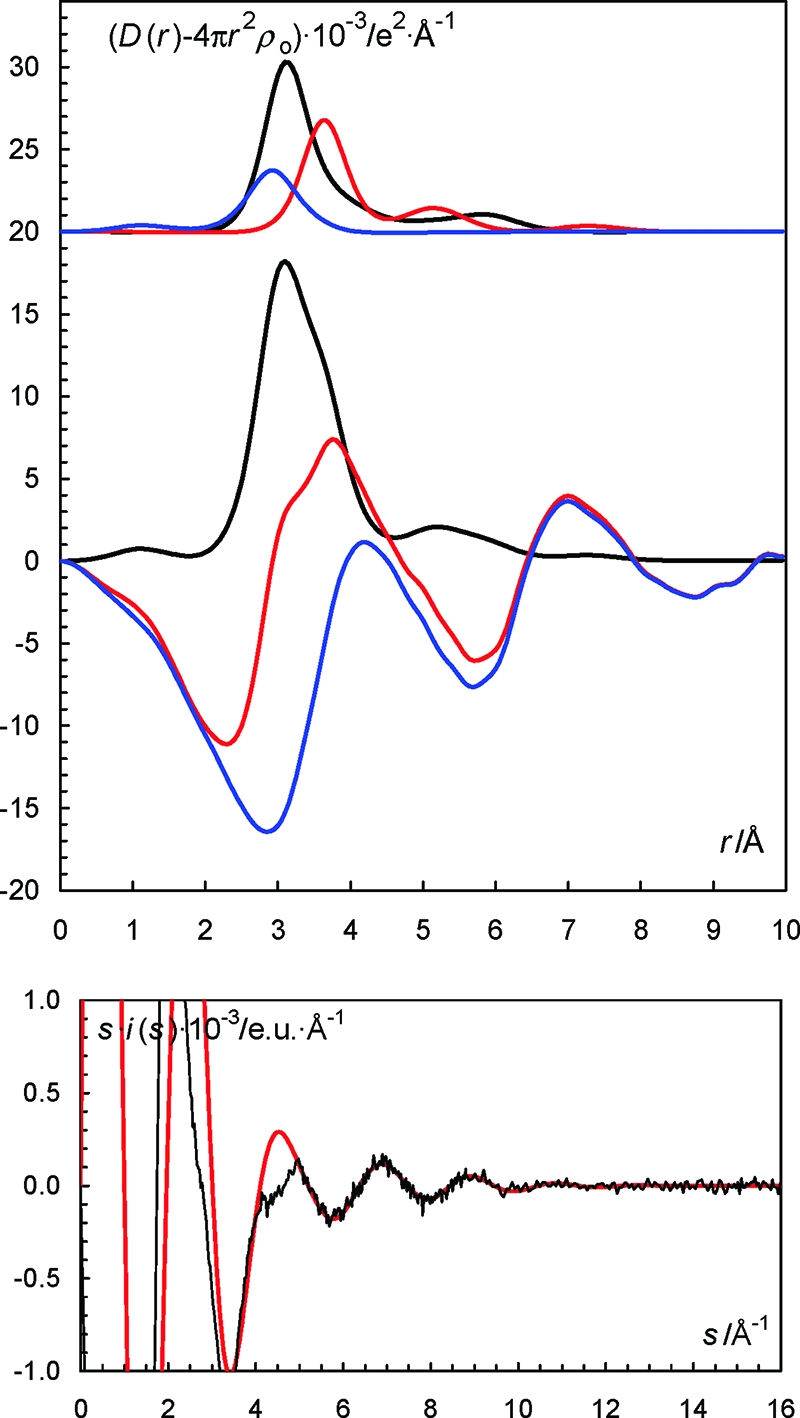
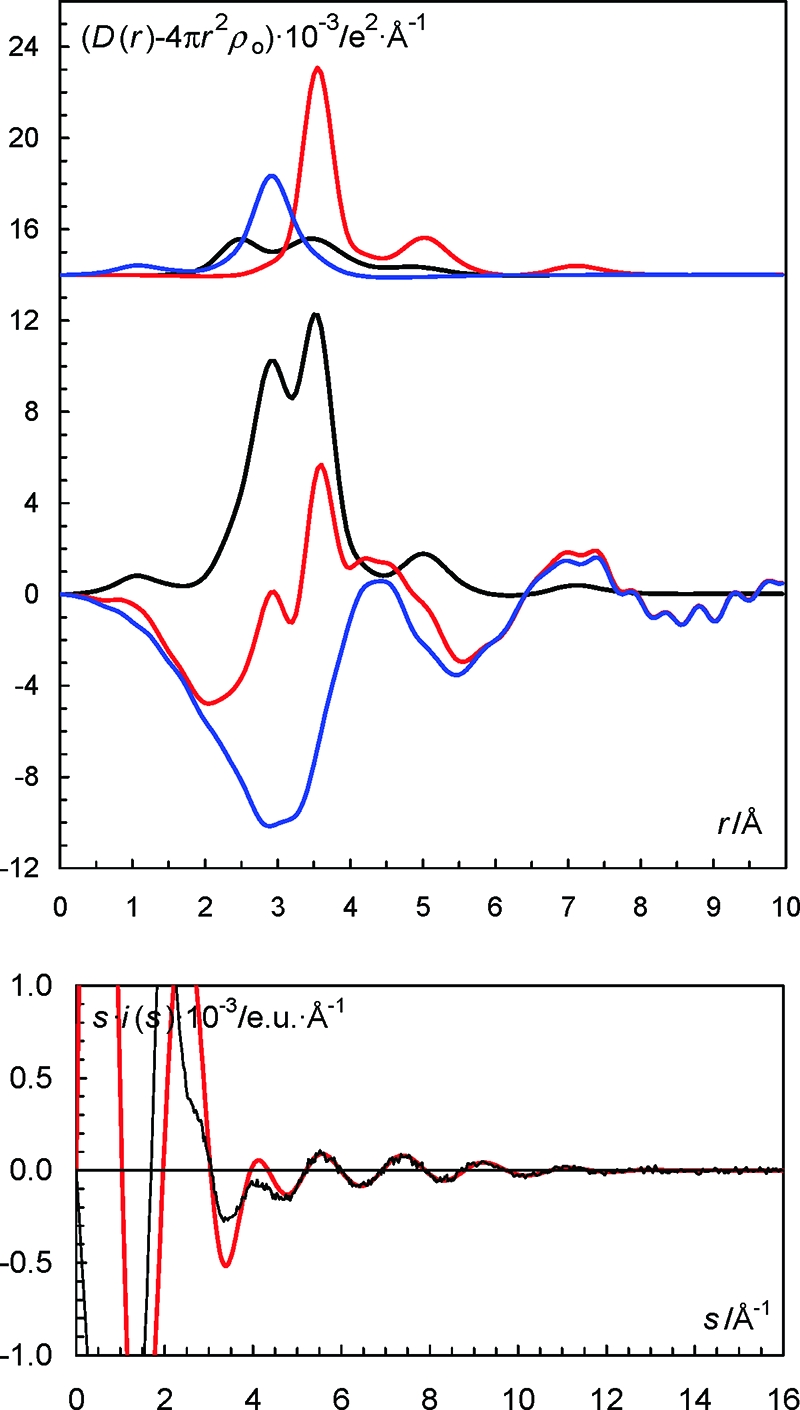
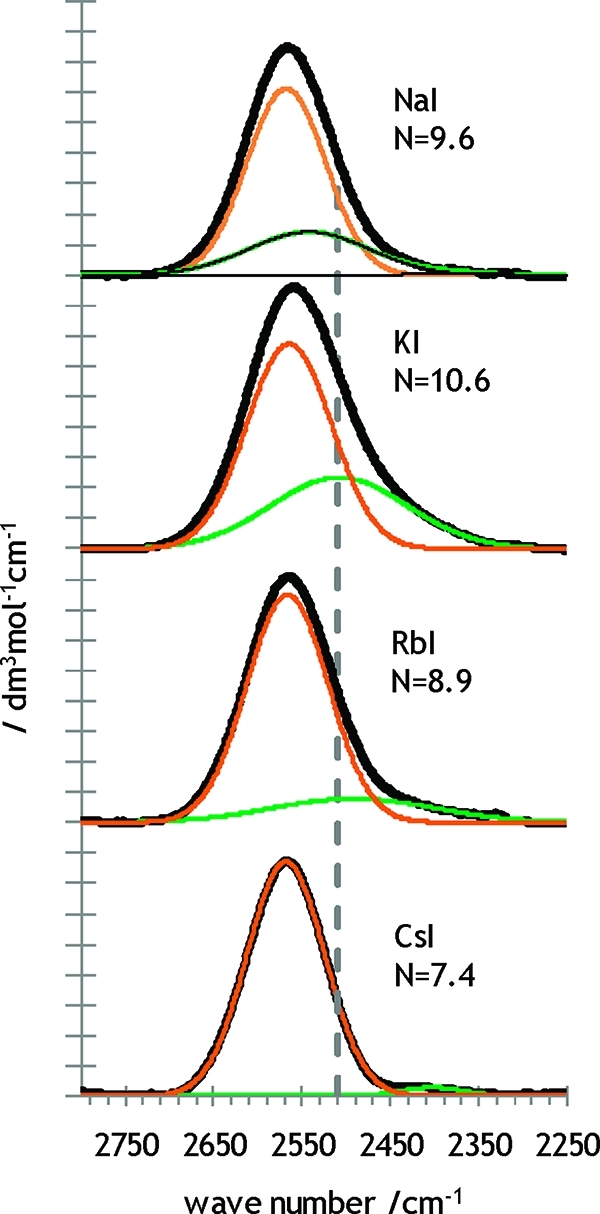
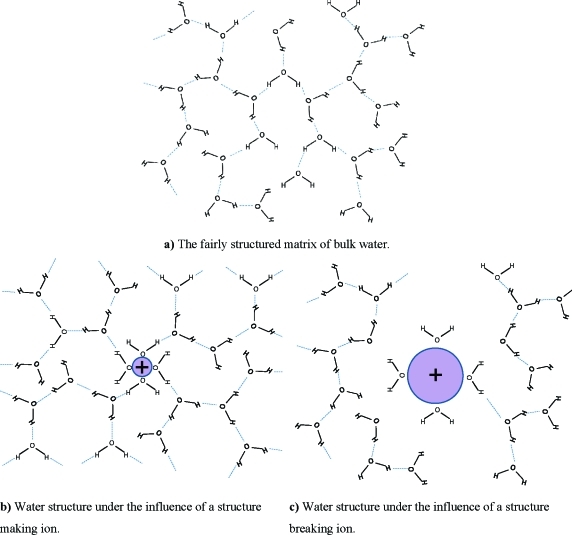
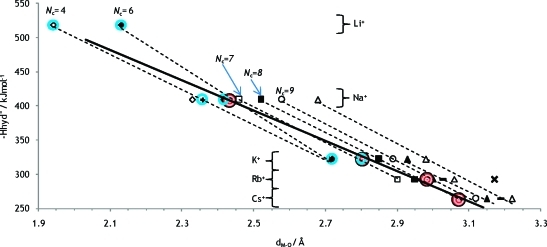
The hydration of the alkali metal ions in aqueous solution has been studied by large angle X-ray scattering (LAXS) and double difference infrared spectroscopy (DDIR). The structures of the dimethyl sulfoxide solvated alkali metal ions in solution have been determined to support the studies in aqueous solution. The results of the LAXS and DDIR measurements show that the sodium, potassium, rubidium and cesium ions all are weakly hydrated with only a single shell of water molecules. The smaller lithium ion is more strongly hydrated, most probably with a second hydration shell present. The influence of the rubidium and cesium ions on the water structure was found to be very weak, and it was not possible to quantify this effect in a reliable way due to insufficient separation of the O-D stretching bands of partially deuterated water bound to these metal ions and the O-D stretching bands of the bulk water. Aqueous solutions of sodium, potassium and cesium iodide and cesium and lithium hydroxide have been studied by LAXS and M-O bond distances have been determined fairly accurately except for lithium. However, the number of water molecules binding to the alkali metal ions is very difficult to determine from the LAXS measurements as the number of distances and the temperature factor are strongly correlated. A thorough analysis of M-O bond distances in solid alkali metal compounds with ligands binding through oxygen has been made from available structure databases. There is relatively strong correlation between M-O bond distances and coordination numbers also for the alkali metal ions even though the M-O interactions are weak and the number of complexes of potassium, rubidium and cesium with well-defined coordination geometry is very small. The mean M-O bond distance in the hydrated sodium, potassium, rubidium and cesium ions in aqueous solution have been determined to be 2.43(2), 2.81(1), 2.98(1) and 3.07(1) Å, which corresponds to six-, seven-, eight- and eight-coordination. These coordination numbers are supported by the linear relationship of the hydration enthalpies and the M-O bond distances. This correlation indicates that the hydrated lithium ion is four-coordinate in aqueous solution. New ionic radii are proposed for four- and six-coordinate lithium(I), 0.60 and 0.79 Å, respectively, as well as for five- and six-coordinate sodium(I), 1.02 and 1.07 Å, respectively. The ionic radii for six- and seven-coordinate K(+), 1.38 and 1.46 Å, respectively, and eight-coordinate Rb(+) and Cs(+), 1.64 and 1.73 Å, respectively, are confirmed from previous studies. The M-O bond distances in dimethyl sulfoxide solvated sodium, potassium, rubidium and cesium ions in solution are very similar to those observed in aqueous solution.
碱金属离子在水溶液中的水合作用已通过大角度 X 射线散射(LAXS)和双差分红外光谱(DDIR)进行了研究。已确定二甲亚砜溶剂化的碱金属离子在溶液中的结构,以支持水溶液中的研究。LAXS 和 DDIR 测量结果表明,钠离子、钾离子、铷离子和铯离子均弱水合,只有单层水分子。较小的锂离子更强水合,可能存在第二层水合壳。发现铷离子和铯离子对水结构的影响非常弱,由于与这些金属离子结合的部分氘化水的 O-D 伸缩带与主体水的 O-D 伸缩带之间的分离不充分,无法以可靠的方式定量这种影响。已通过 LAXS 研究了碘化钠、碘化钾、氢氧化钠和氢氧化锂的水溶液以及铯和锂离子,除了锂离子外,M-O 键距离都能相当准确地确定。由于距离的数量和温度因子强烈相关,因此很难从 LAXS 测量中确定与碱金属离子结合的水分子数量。已经对具有通过氧结合配体的固态碱金属化合物的 M-O 键距离进行了彻底分析,该分析是从可用的结构数据库中得出的。即使 M-O 相互作用较弱,且具有明确定义的配位几何形状的钾、铷和铯的配合物数量非常少,碱金属离子的 M-O 键距离与配位数之间也存在很强的相关性。已确定水合钠离子、钾离子、铷离子和铯离子在水溶液中的平均 M-O 键距离分别为 2.43(2)、2.81(1)、2.98(1)和 3.07(1) Å,分别对应六、七、八和八配位。水合焓和 M-O 键距离之间的线性关系支持这些配位数。这种相关性表明,锂离子在水溶液中为四配位。提出了四配位和六配位锂离子(0.60 和 0.79 Å)以及五配位和六配位钠离子(1.02 和 1.07 Å)的新离子半径。从先前的研究中证实了六配位和七配位 K(+)(1.38 和 1.46 Å)以及八配位 Rb(+) 和 Cs(+)(1.64 和 1.73 Å)的离子半径。在溶液中二甲亚砜溶剂化的钠离子、钾离子、铷离子和铯离子的 M-O 键距离与在水溶液中观察到的距离非常相似。