Institute for Translational Medicine and Therapeutics, Institute for Diabetes, Obesity, and Metabolism, and Cardiovascular Institute, University of Pennsylvania School of Medicine, Philadelphia, Pennsylvania, United States of America.
PLoS Genet. 2011 Dec;7(12):e1002393. doi: 10.1371/journal.pgen.1002393. Epub 2011 Dec 8.
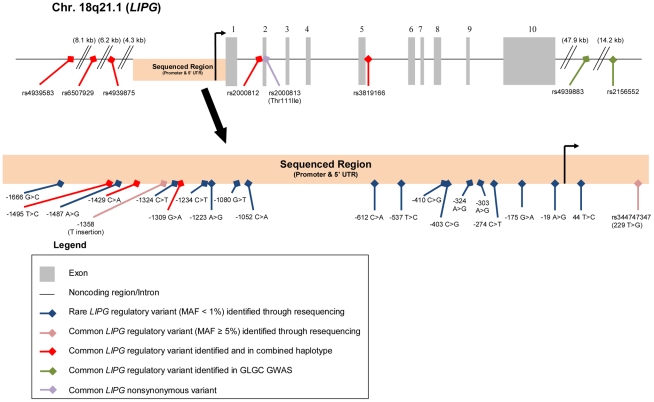
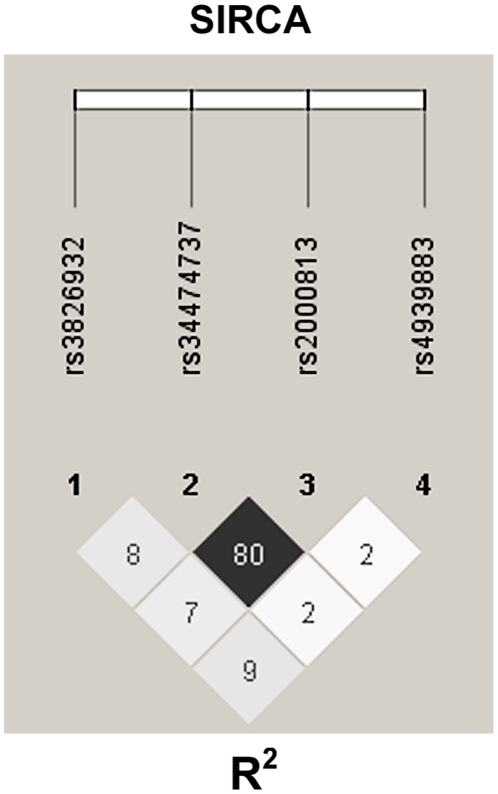
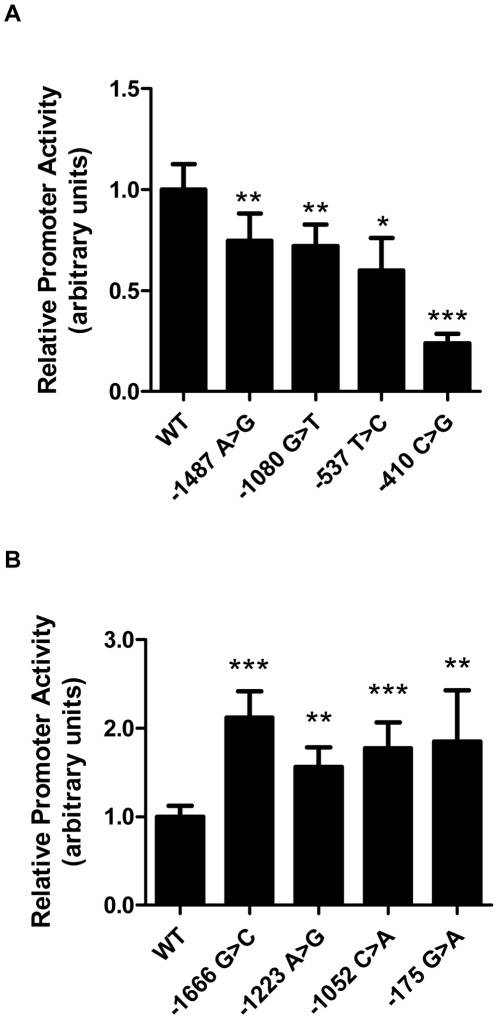
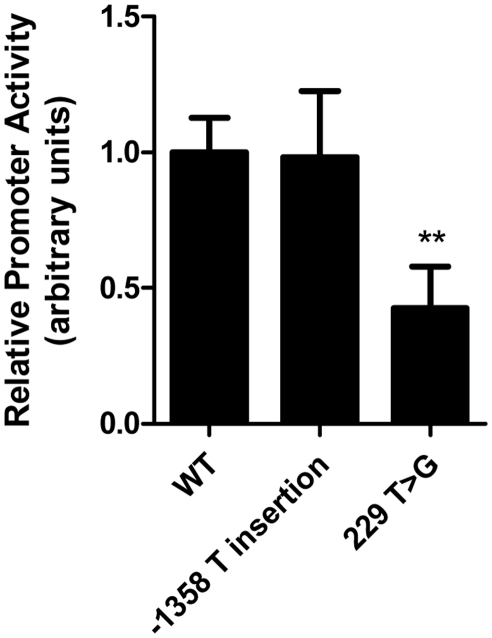
Genome-wide association studies (GWAS) have successfully identified loci associated with quantitative traits, such as blood lipids. Deep resequencing studies are being utilized to catalogue the allelic spectrum at GWAS loci. The goal of these studies is to identify causative variants and missing heritability, including heritability due to low frequency and rare alleles with large phenotypic impact. Whereas rare variant efforts have primarily focused on nonsynonymous coding variants, we hypothesized that noncoding variants in these loci are also functionally important. Using the HDL-C gene LIPG as an example, we explored the effect of regulatory variants identified through resequencing of subjects at HDL-C extremes on gene expression, protein levels, and phenotype. Resequencing a portion of the LIPG promoter and 5' UTR in human subjects with extreme HDL-C, we identified several rare variants in individuals from both extremes. Luciferase reporter assays were used to measure the effect of these rare variants on LIPG expression. Variants conferring opposing effects on gene expression were enriched in opposite extremes of the phenotypic distribution. Minor alleles of a common regulatory haplotype and noncoding GWAS SNPs were associated with reduced plasma levels of the LIPG gene product endothelial lipase (EL), consistent with its role in HDL-C catabolism. Additionally, we found that a common nonfunctional coding variant associated with HDL-C (rs2000813) is in linkage disequilibrium with a 5' UTR variant (rs34474737) that decreases LIPG promoter activity. We attribute the gene regulatory role of rs34474737 to the observed association of the coding variant with plasma EL levels and HDL-C. Taken together, the findings show that both rare and common noncoding regulatory variants are important contributors to the allelic spectrum in complex trait loci.
全基因组关联研究(GWAS)已成功鉴定出与血脂等定量性状相关的基因座。深度重测序研究正在用于编目 GWAS 基因座的等位基因谱。这些研究的目的是鉴定致病变异体和缺失的遗传率,包括由低频和稀有等位基因引起的遗传率,这些等位基因对表型有很大影响。虽然稀有变异体研究主要集中在非同义编码变异体上,但我们假设这些基因座中的非编码变异体也具有重要的功能。以 HDL-C 基因 LIPG 为例,我们探讨了通过对 HDL-C 极端个体进行重测序鉴定出的调控变异体对基因表达、蛋白质水平和表型的影响。我们对 HDL-C 极端个体的 LIPG 启动子和 5'UTR 进行了部分重测序,在两个极端个体中发现了几种罕见变异体。使用荧光素酶报告基因检测来测量这些罕见变异体对 LIPG 表达的影响。赋予基因表达相反影响的变异体在表型分布的相反极端富集。一个常见的调控单倍型的次要等位基因和非编码 GWAS SNP 与 LIPG 基因产物内皮脂肪酶(EL)的血浆水平降低有关,这与其在 HDL-C 分解代谢中的作用一致。此外,我们发现与 HDL-C 相关的常见无功能编码变异体(rs2000813)与 5'UTR 变异体(rs34474737)连锁不平衡,后者降低了 LIPG 启动子活性。我们将 rs34474737 的基因调控作用归因于编码变异体与血浆 EL 水平和 HDL-C 的观察到的关联。总之,这些发现表明,稀有和常见的非编码调控变异体都是复杂性状基因座等位基因谱的重要贡献者。