Department of Molecular Cell Biology, Leiden University Medical Center, Einthovenweg 20, 2333 ZC Leiden, The Netherlands.
Nucleic Acids Res. 2012 Apr;40(8):3443-55. doi: 10.1093/nar/gkr1234. Epub 2011 Dec 20.
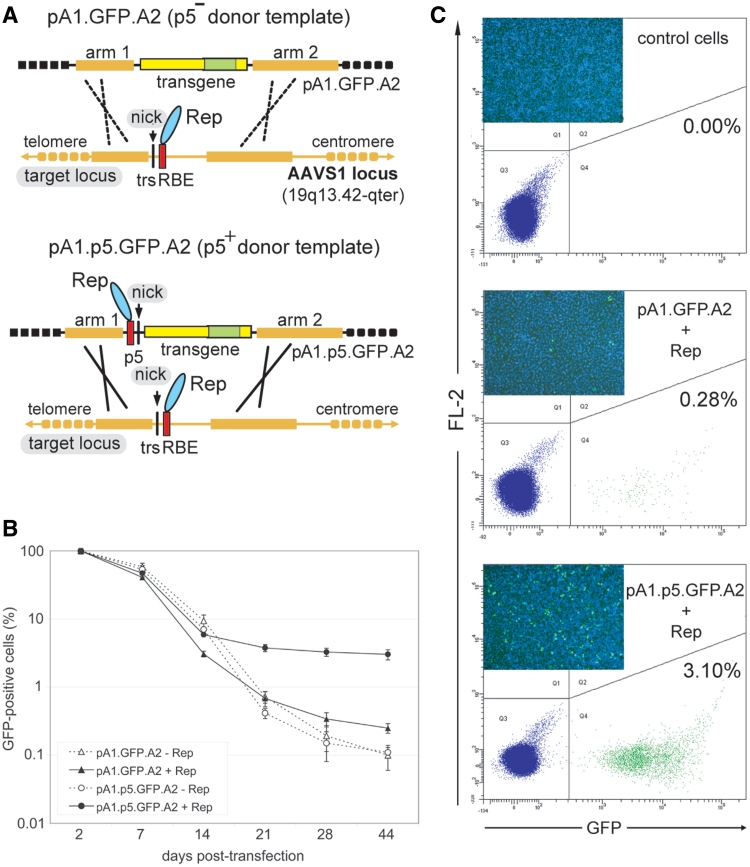
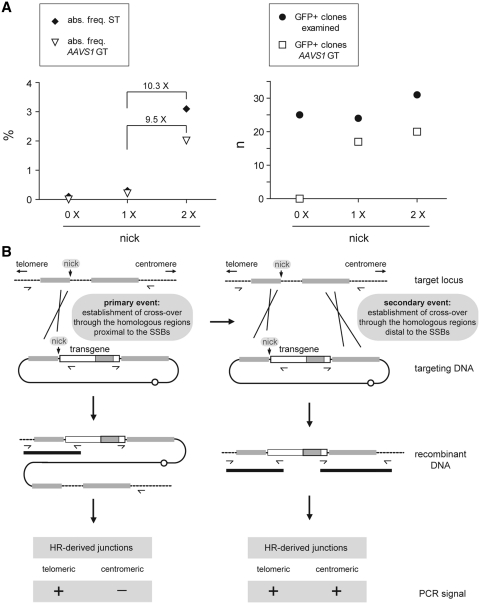
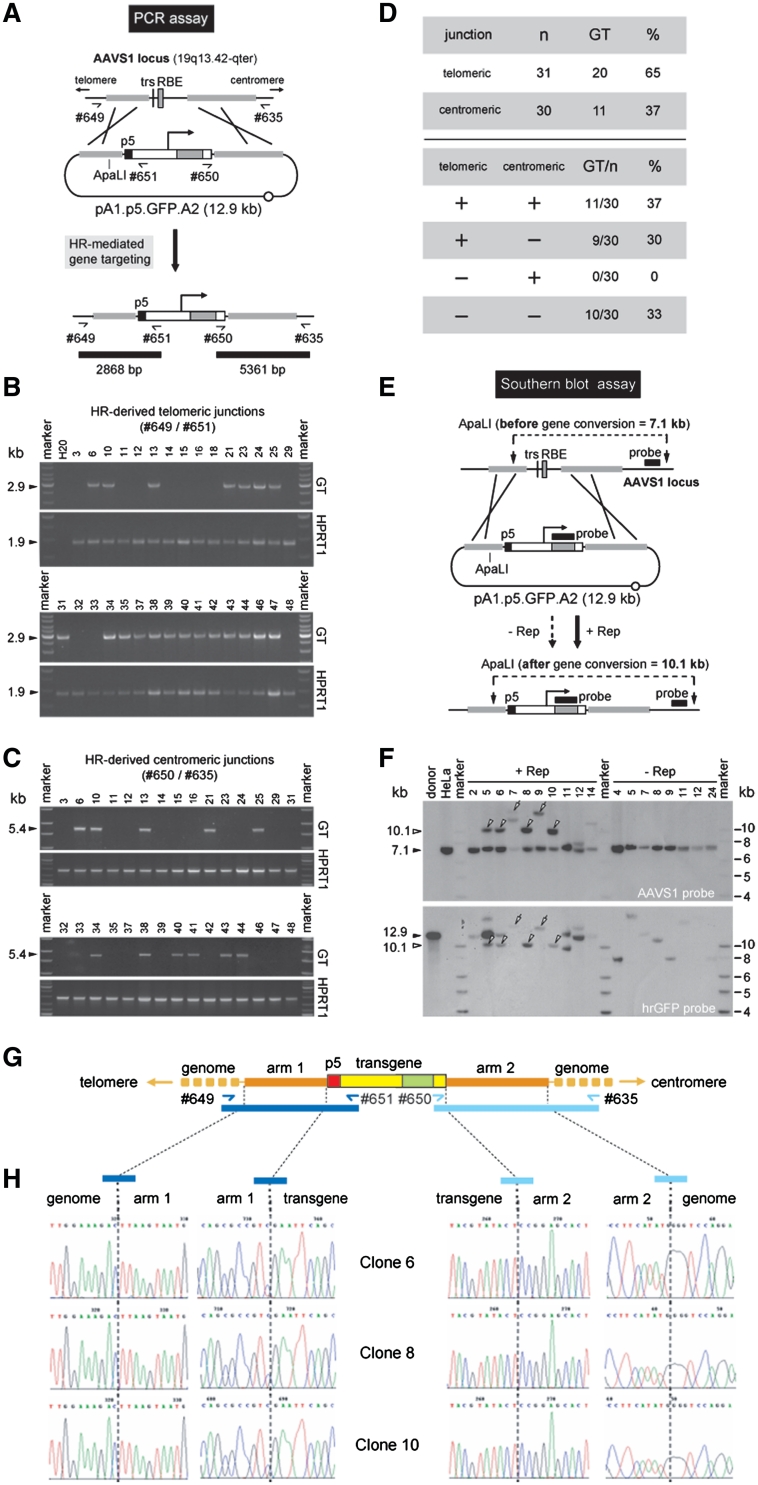
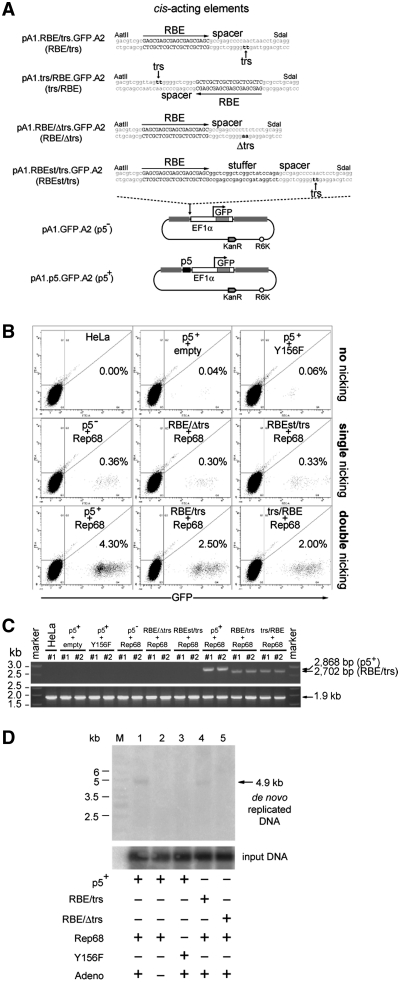
The exchange of genetic information between donor and acceptor DNA molecules by homologous recombination (HR) depends on the cleavage of phosphodiester bonds. Although double-stranded and single-stranded DNA breaks (SSBs) have both been invoked as triggers of HR, until very recently the focus has been primarily on the former type of DNA lesions mainly due to the paucity of SSB-based recombination models. Here, to investigate the role of nicked DNA molecules as HR-initiating substrates in human somatic cells, we devised a homology-directed gene targeting system based on exogenous donor and chromosomal target DNA containing recognition sequences for the adeno-associated virus sequence- and strand-specific endonucleases Rep78 and Rep68. We found that HR is greatly fostered if a SSB is not only introduced in the chromosomal acceptor but also in the donor DNA template. Our data are consistent with HR models postulating the occurrence of SSBs or single-stranded gaps in both donor and acceptor molecules during the genetic exchange process. These findings can guide the development of improved HR-based genome editing strategies in which sequence- and strand-specific endonucleolytic cleavage of the chromosomal target site is combined with that of the targeting vector.
供体和受体 DNA 分子之间通过同源重组 (HR) 交换遗传信息,这取决于磷酸二酯键的断裂。尽管双链和单链 DNA 断裂 (SSBs) 都被认为是 HR 的触发因素,但直到最近,研究的重点主要还是在前一种类型的 DNA 损伤上,主要是因为 SSB 为基础的重组模型相对较少。在这里,为了研究断裂的 DNA 分子作为人类体细胞中 HR 起始底物的作用,我们设计了一种基于外源供体和包含腺相关病毒序列特异性内切酶 Rep78 和 Rep68 识别序列的染色体靶 DNA 的同源定向基因靶向系统。我们发现,如果在染色体受体中不仅引入 SSB,而且在供体 DNA 模板中也引入 SSB,那么 HR 就会得到极大的促进。我们的数据与 HR 模型一致,该模型假设在遗传交换过程中,供体和受体分子中都发生 SSB 或单链缺口。这些发现可以指导改进的基于 HR 的基因组编辑策略的发展,其中染色体靶位点的序列和链特异性内切酶切割与靶向载体的切割相结合。