Chang Stewart T, Tchitchek Nicolas, Ghosh Debashis, Benecke Arndt, Katze Michael G
Department of Microbiology, University of Washington, Seattle WA, USA.
BMC Syst Biol. 2011 Dec 22;5:202. doi: 10.1186/1752-0509-5-202.
During respiratory viral infections host injury occurs due in part to inappropriate host responses. In this study we sought to uncover the host transcriptional responses underlying differences between high- and low-pathogenic infections.
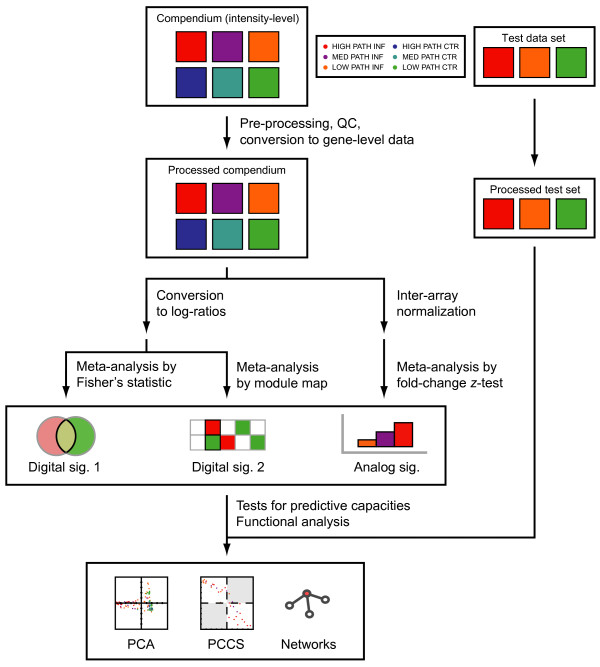
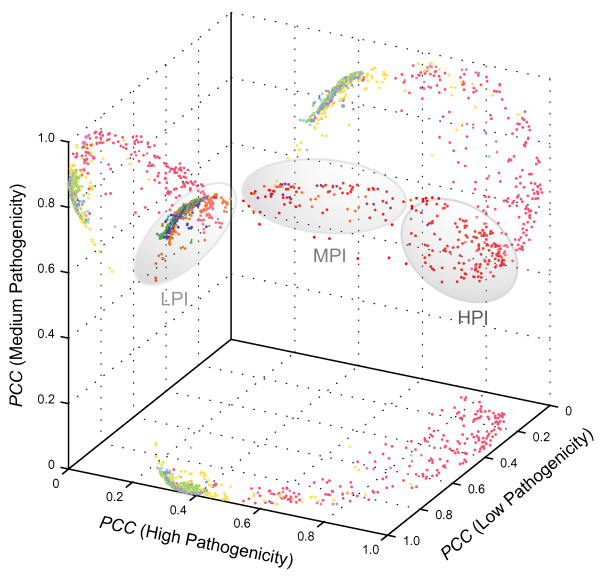
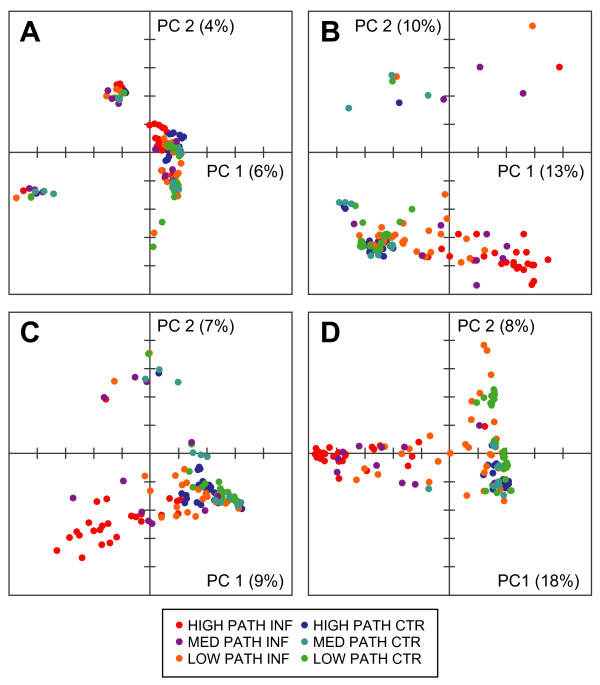
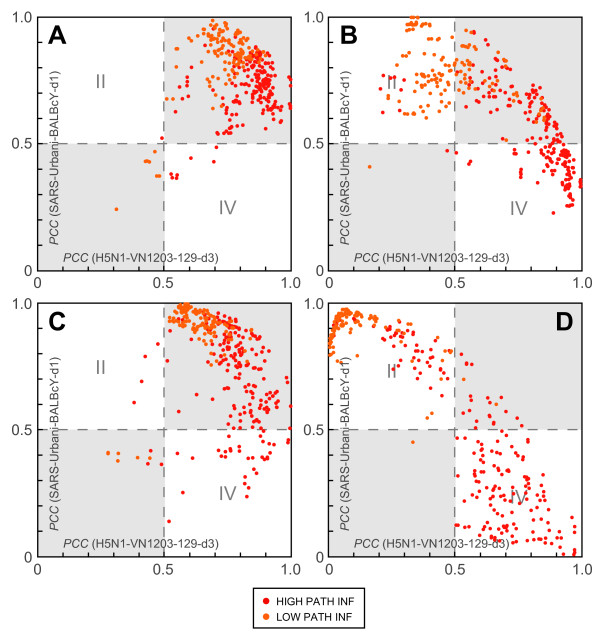
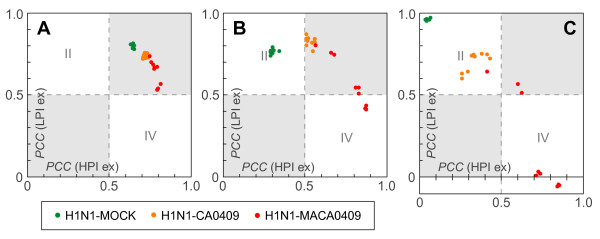
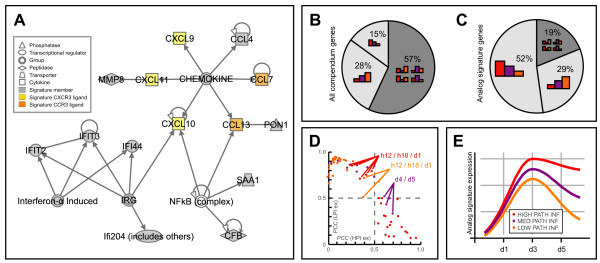
From a compendium of 12 studies that included responses to influenza A subtype H5N1, reconstructed 1918 influenza A virus, and SARS coronavirus, we used meta-analysis to derive multiple gene expression signatures. We compared these signatures by their capacity to segregate biological conditions by pathogenicity and predict pathogenicity in a test data set. The highest-performing signature was expressed as a continuum in low-, medium-, and high-pathogenicity samples, suggesting a direct, analog relationship between expression and pathogenicity. This signature comprised 57 genes including a subnetwork of chemokines, implicating dysregulated cell recruitment in injury.
Highly pathogenic viruses elicit expression of many of the same key genes as lower pathogenic viruses but to a higher degree. This increased degree of expression may result in the uncontrolled co-localization of inflammatory cell types and lead to irreversible host damage.
在呼吸道病毒感染期间,宿主损伤部分是由于不适当的宿主反应所致。在本研究中,我们试图揭示高致病性和低致病性感染之间差异背后的宿主转录反应。
从包含对甲型H5N1流感病毒、重建的1918年甲型流感病毒和严重急性呼吸综合征冠状病毒反应的12项研究的汇编中,我们使用荟萃分析得出多个基因表达特征。我们通过它们按致病性分离生物学条件的能力以及在测试数据集中预测致病性的能力来比较这些特征。表现最佳的特征在低致病性、中等致病性和高致病性样本中呈连续表达,表明表达与致病性之间存在直接的类似关系。该特征包含57个基因,包括一个趋化因子子网,提示细胞募集失调与损伤有关。
高致病性病毒引发的许多关键基因与低致病性病毒相同,但程度更高。这种表达程度的增加可能导致炎症细胞类型的失控共定位,并导致不可逆的宿主损伤。