Research Division, Hospital for Special Surgery, Weill Medical College of Cornell University, New York, NY 10021, USA.
Reg Anesth Pain Med. 2012 Jan-Feb;37(1):99-105. doi: 10.1097/AAP.0b013e31823ebc74.
Research in the field of anesthesiology relies heavily on longitudinal designs for answering questions about long-term efficacy and safety of various anesthetic and pain regimens. Yet, anesthesiology research is lagging in the use of advanced statistical methods for analyzing longitudinal data. The goal of this article was to increase awareness of the advantages of modern statistical methods and promote their use in anesthesia research.
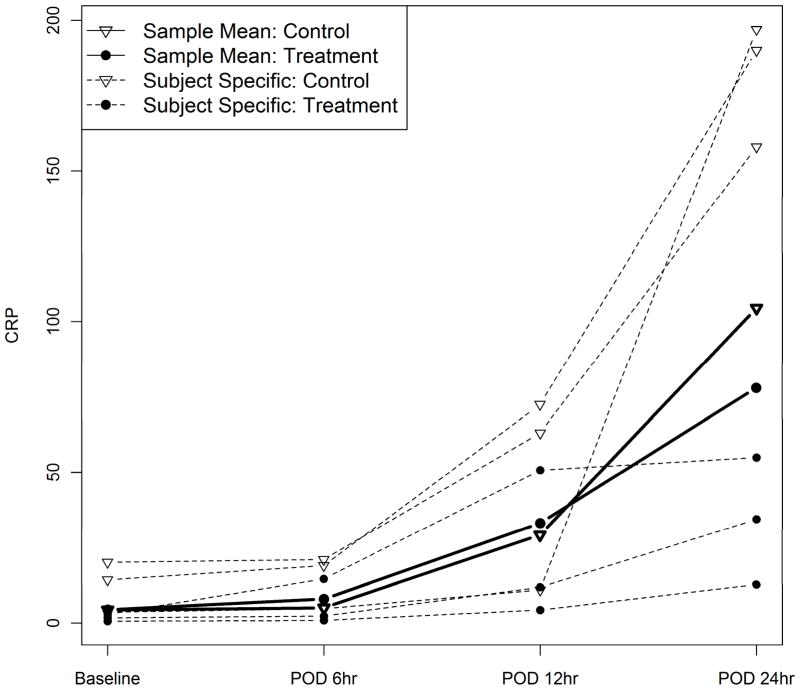
Here we introduce 2 modern and advanced statistical methods for analyzing longitudinal data: the generalized estimating equations (GEE) and mixed-effects models (MEM). These methods were compared with the conventional repeated-measures analysis of variance (RM-ANOVA) through a clinical example with 2 types of end points (continuous and binary). In addition, we compared GEE and MEM to RM-ANOVA through a simulation study with varying sample sizes, varying number of repeated measures, and scenarios with and without missing data.
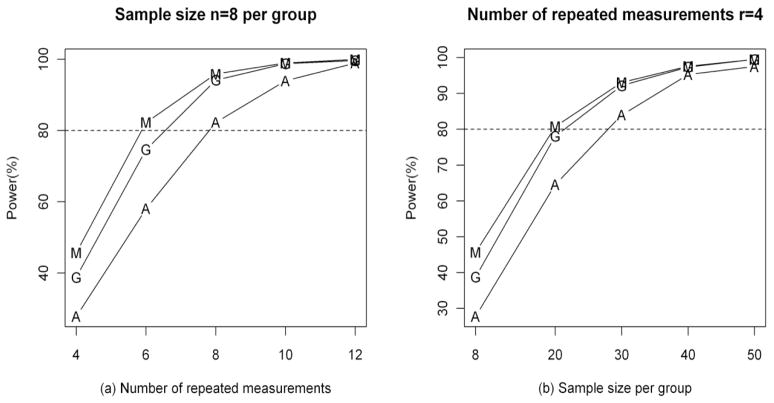
In the clinical study, the 3 methods are found to be similar in terms of statistical estimation, whereas the parameter interpretations are somewhat different. The simulation study shows that the methods of GEE and MEM are more efficient in that they are able to achieve higher power with smaller sample size or lower number of repeated measurements in both complete and missing data scenarios.
Based on their advantages over RM-ANOVA, GEE and MEM should be strongly considered for the analysis of longitudinal data. In particular, GEE should be used to explore overall average effects, and MEM should be used when subject-specific effects (in addition to overall average effects) are of primary interest.
麻醉学领域的研究主要依赖于纵向设计来回答关于各种麻醉和疼痛方案的长期疗效和安全性的问题。然而,麻醉学研究在分析纵向数据方面落后于先进的统计方法的使用。本文的目的是提高对现代统计方法的优势的认识,并促进其在麻醉研究中的应用。
在这里,我们介绍了两种用于分析纵向数据的现代先进统计方法:广义估计方程(GEE)和混合效应模型(MEM)。通过具有两种终点(连续和二进制)的临床实例,将这些方法与传统的重复测量方差分析(RM-ANOVA)进行比较。此外,我们通过具有不同样本量、不同重复测量次数以及具有和不具有缺失数据的场景的模拟研究,将 GEE 和 MEM 与 RM-ANOVA 进行了比较。
在临床研究中,这 3 种方法在统计估计方面发现是相似的,而参数解释有些不同。模拟研究表明,GEE 和 MEM 方法更有效,因为它们能够在完整和缺失数据场景中以较小的样本量或较低的重复测量次数达到更高的功效。
基于它们相对于 RM-ANOVA 的优势,GEE 和 MEM 应该被强烈考虑用于分析纵向数据。特别是,GEE 应该用于探索总体平均效应,而 MEM 应该用于当主要关注的是个体特定效应(除了总体平均效应之外)时。