Jackson Christopher, Ruzevick Jacob, Phallen Jillian, Belcaid Zineb, Lim Michael
Department of Neurosurgery, The Johns Hopkins University School of Medicine, Baltimore, MD 21287, USA.
Clin Dev Immunol. 2011;2011:732413. doi: 10.1155/2011/732413. Epub 2011 Dec 10.
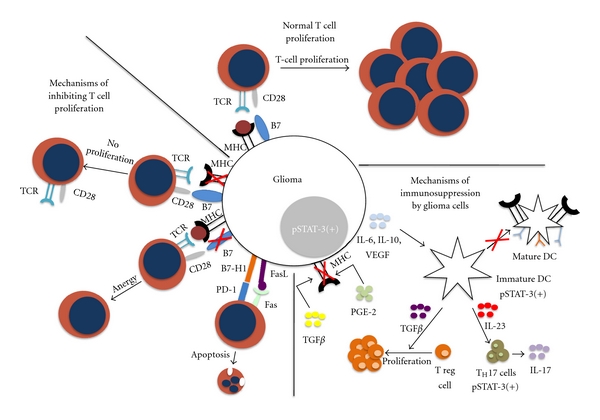
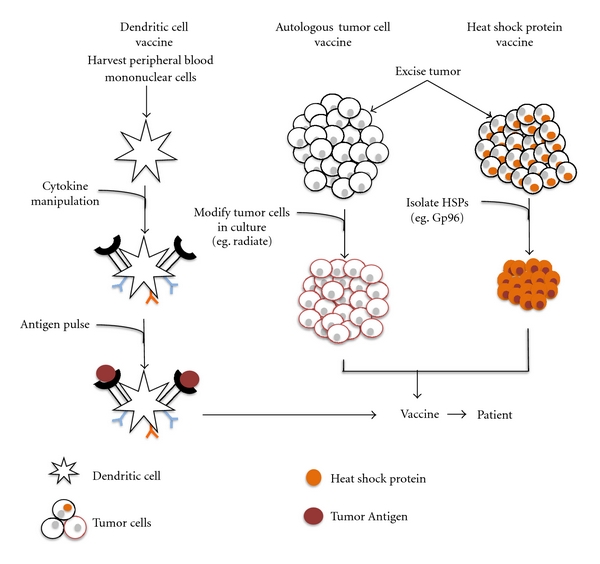
Glioblastoma multiforme (GBM) is the most common and aggressive primary brain tumor in adults. Despite intensive treatment, the prognosis for patients with GBM remains grim with a median survival of only 14.6 months. Immunotherapy has emerged as a promising approach for treating many cancers and affords the advantages of cellular-level specificity and the potential to generate durable immune surveillance. The complexity of the tumor microenvironment poses a significant challenge to the development of immunotherapy for GBM, as multiple signaling pathways, cytokines, and cell types are intricately coordinated to generate an immunosuppressive milieu. The development of new immunotherapy approaches frequently uncovers new mechanisms of tumor-mediated immunosuppression. In this review, we discuss many of the current approaches to immunotherapy and focus on the challenges presented by the tumor microenvironment.
多形性胶质母细胞瘤(GBM)是成人中最常见且侵袭性最强的原发性脑肿瘤。尽管进行了强化治疗,但GBM患者的预后仍然严峻,中位生存期仅为14.6个月。免疫疗法已成为治疗多种癌症的一种有前景的方法,具有细胞水平特异性的优势以及产生持久免疫监视的潜力。肿瘤微环境的复杂性对GBM免疫疗法的开发构成了重大挑战,因为多种信号通路、细胞因子和细胞类型相互错综复杂地协调作用,以产生免疫抑制环境。新免疫疗法的开发常常揭示肿瘤介导的免疫抑制的新机制。在本综述中,我们讨论了当前许多免疫疗法方法,并关注肿瘤微环境带来的挑战。