Department of Medicine and Rheumatology, Graduate School of Medical and Dental Sciences, Tokyo Medical and Dental University, 1-5-45, Yushima, Bunkyo-ku, Tokyo, 113-8519, Japan.
Arthritis Res Ther. 2011;13(5):R158. doi: 10.1186/ar3475. Epub 2011 Sep 29.
Chemerin is a chemotactic agonist identified as a ligand for ChemR23 that is expressed on macrophages and dendritic cells (DCs). In this study, we analyzed the expression of chemerin and ChemR23 in the synovium of rheumatoid arthritis (RA) patients and the stimulatory effects of chemerin on fibroblast-like synoviocytes (FLSs) from RA patients.
Chemerin and ChemR23 expression in the RA synovium was ascertained by immunohistochemistry and Western blot analysis. Chemerin expression on cultured FLSs was analyzed by ELISA. ChemR23 expression on FLSs was determined by immunocytochemistry and Western blot analysis. Cytokine production from FLSs was measured by ELISA. FLS cell motility was evaluated by utilizing a scrape motility assay. We also examined the stimulating effect of chemerin on the phosphorylation of mitogen-activated protein kinase (MAPK), p44/42 mitogen-activated protein kinase (ERK1/2), p38MAPK, c-Jun N-terminal kinase (JNK)1/2 and Akt, as well as on the degradation of regulator of NF-κB (IκBα) in FLSs, by Western blot analysis.
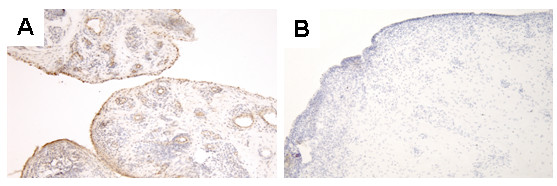
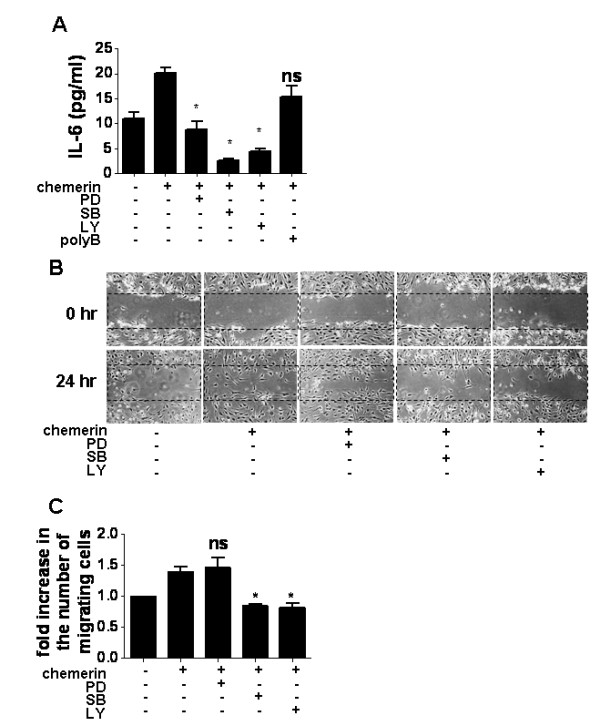
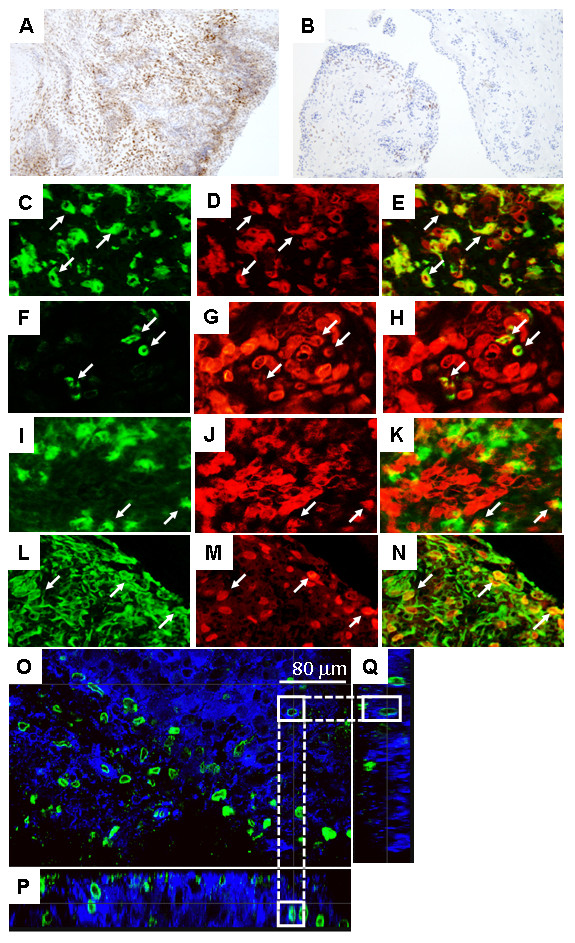
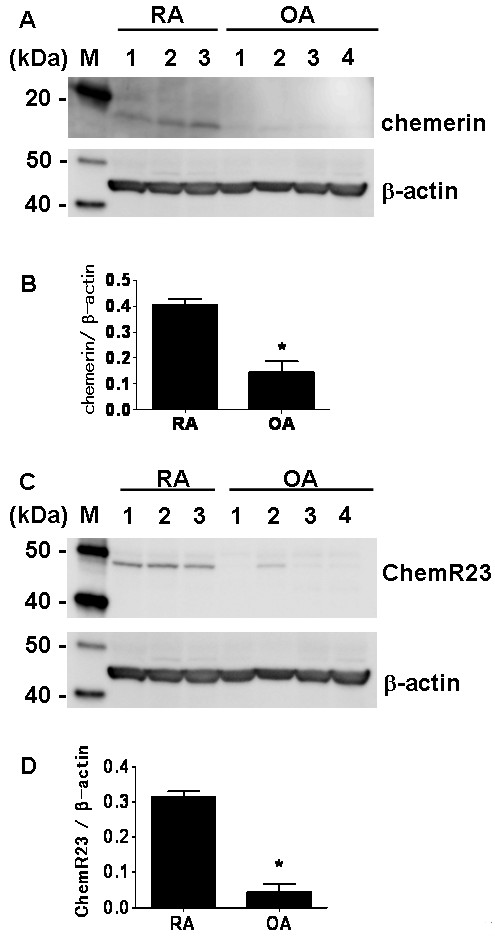
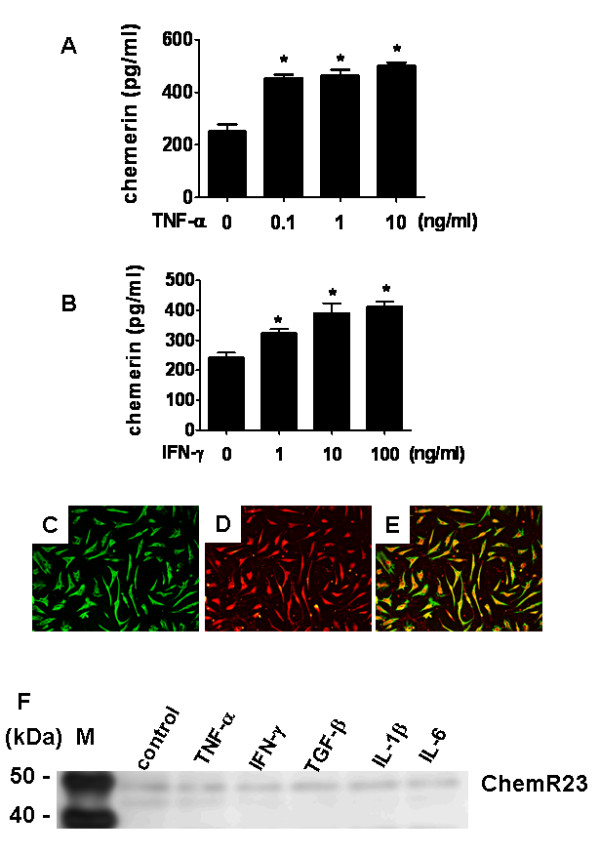
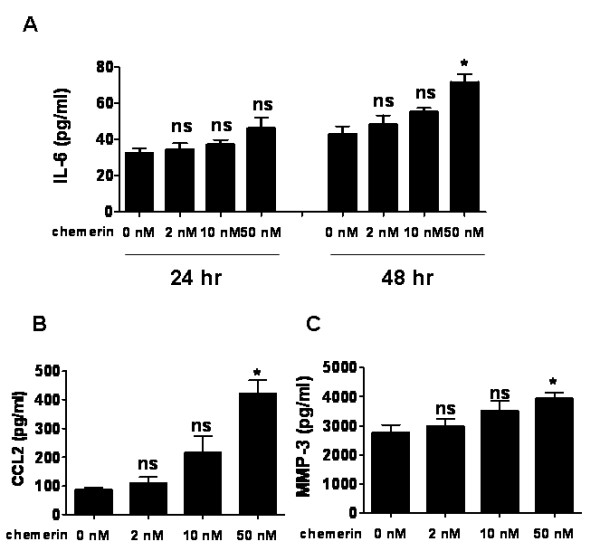
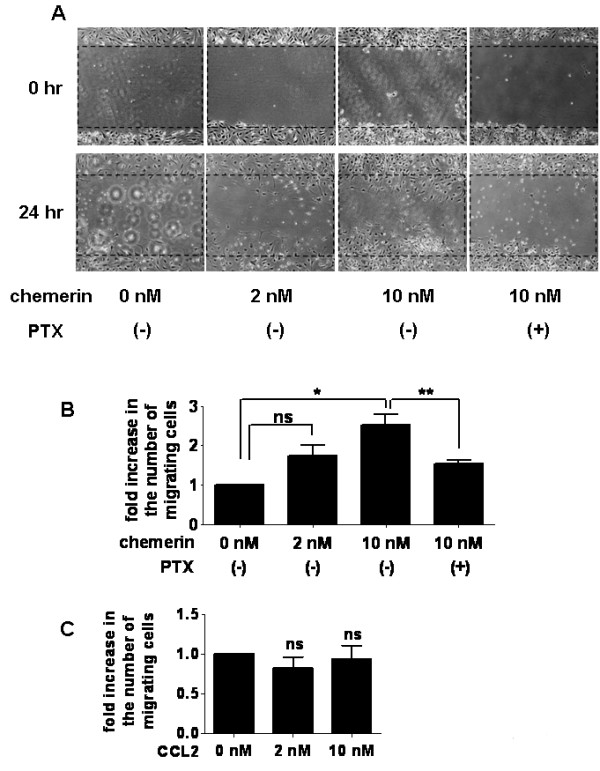
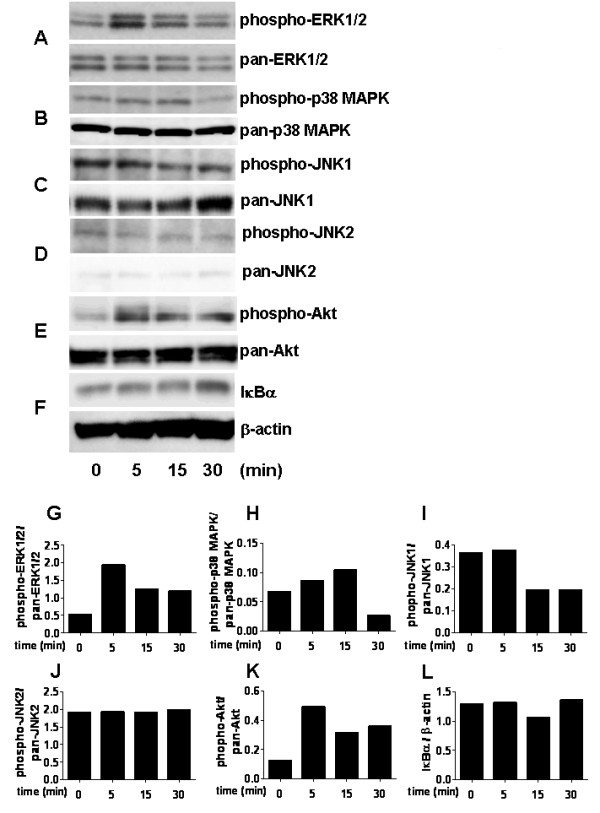
Chemerin was expressed on endothelial cells and synovial lining and sublining cells. ChemR23 was expressed on macrophages, immature DCs and FLSs and a few mature DCs in the RA synovium. Chemerin and ChemR23 were highly expressed in the RA synovium compared with osteoarthritis. Chemerin and ChemR23 were expressed on unstimulated FLSs. TNF-α and IFN-γ upregulated chemerin production. Chemerin enhanced the production of IL-6, chemokine (C-C motif) ligand 2 and matrix metalloproteinase 3 by FLSs, as well as increasing FLS motility. The stimulatory effects of chemerin on FLSs were mediated by activation of ERK1/2, p38MAPK and Akt, but not by JNK1/2. Degradation of IκB in FLSs was not promoted by chemerin stimulation. Inhibition of the ERK1/2, p38MAPK and Akt signaling pathways significantly suppressed chemerin-induced IL-6 production. Moreover, blockade of the p38MAPK and Akt pathways, but not the ERK1/2 pathway, inhibited chemerin-enhanced cell motility.
The interaction of chemerin and ChemR23 may play an important role in the pathogenesis of RA through the activation of FLSs.
趋化素是一种趋化激动剂,被鉴定为表达于巨噬细胞和树突状细胞(DCs)上的 ChemR23 的配体。在这项研究中,我们分析了趋化素和 ChemR23 在类风湿关节炎(RA)患者滑膜中的表达,以及趋化素对 RA 患者成纤维样滑膜细胞(FLS)的刺激作用。
通过免疫组织化学和 Western blot 分析确定 RA 滑膜中趋化素和 ChemR23 的表达。通过 ELISA 分析培养的 FLS 上的趋化素表达。通过免疫细胞化学和 Western blot 分析确定 FLS 上的 ChemR23 表达。通过 ELISA 测量 FLS 细胞产生的细胞因子。通过划痕迁移实验评估 FLS 细胞的迁移能力。我们还通过 Western blot 分析研究了趋化素对丝裂原活化蛋白激酶(MAPK)、p44/42 丝裂原活化蛋白激酶(ERK1/2)、p38MAPK、c-Jun N-末端激酶(JNK1/2)和 Akt 的磷酸化以及对 FLS 中 NF-κB 调节因子(IκBα)的降解的刺激作用。
趋化素在血管内皮细胞和滑膜衬里及下衬细胞上表达。ChemR23 在 RA 滑膜中的巨噬细胞、未成熟 DC 和 FLS 以及少数成熟 DC 上表达。与骨关节炎相比,趋化素和 ChemR23 在 RA 滑膜中高表达。趋化素和 ChemR23 在未刺激的 FLS 上表达。TNF-α 和 IFN-γ 上调趋化素的产生。趋化素增强了 FLS 产生的 IL-6、趋化因子(C-C 基序)配体 2 和基质金属蛋白酶 3,同时增加了 FLS 的迁移能力。趋化素对 FLS 的刺激作用是通过激活 ERK1/2、p38MAPK 和 Akt 介导的,但不是通过 JNK1/2 介导的。趋化素刺激并未促进 IκB 在 FLS 中的降解。ERK1/2、p38MAPK 和 Akt 信号通路的抑制显著抑制了趋化素诱导的 IL-6 产生。此外,阻断 p38MAPK 和 Akt 通路,而不是 ERK1/2 通路,抑制了趋化素增强的细胞迁移。
趋化素与 ChemR23 的相互作用可能通过激活 FLS 在 RA 的发病机制中发挥重要作用。