Department of Nutritional Sciences, Vienna, Austria.
PLoS One. 2011;6(12):e28654. doi: 10.1371/journal.pone.0028654. Epub 2011 Dec 14.
We investigated whether chemotherapy with the presence or absence of antibiotics against different kinds of cancer changed the gastrointestinal microbiota.
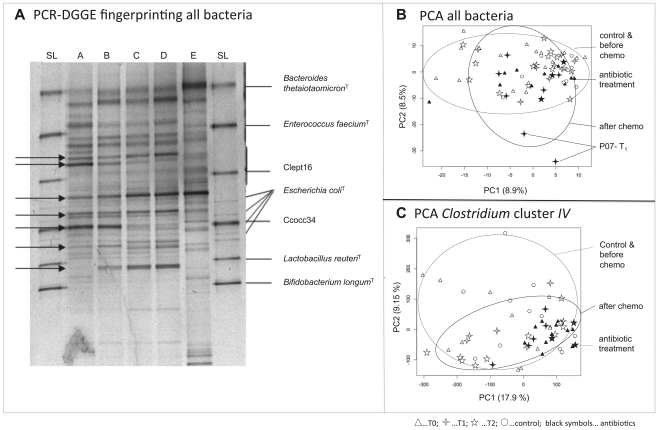
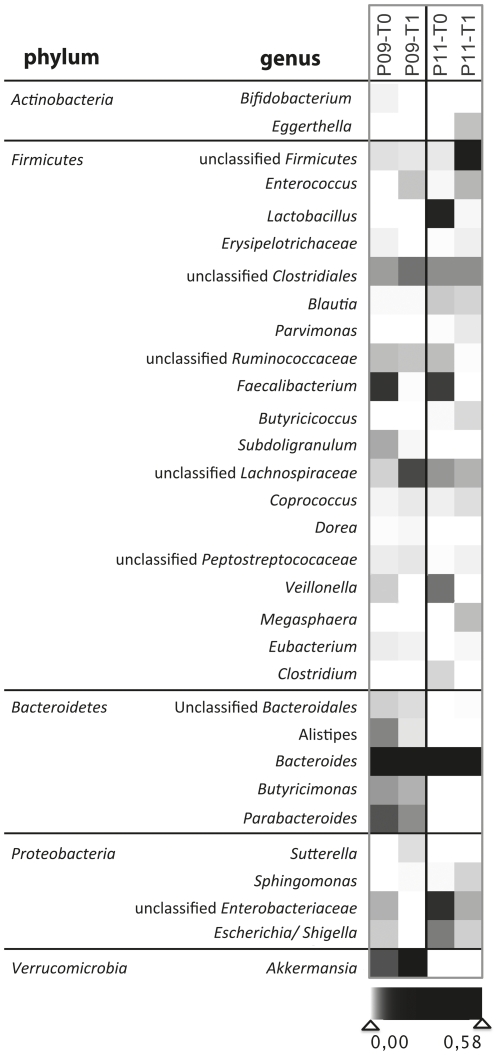
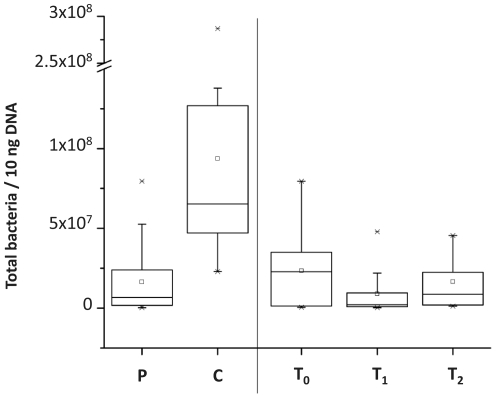
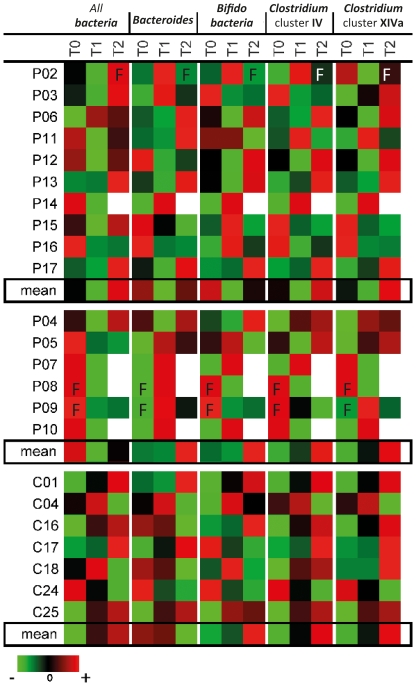
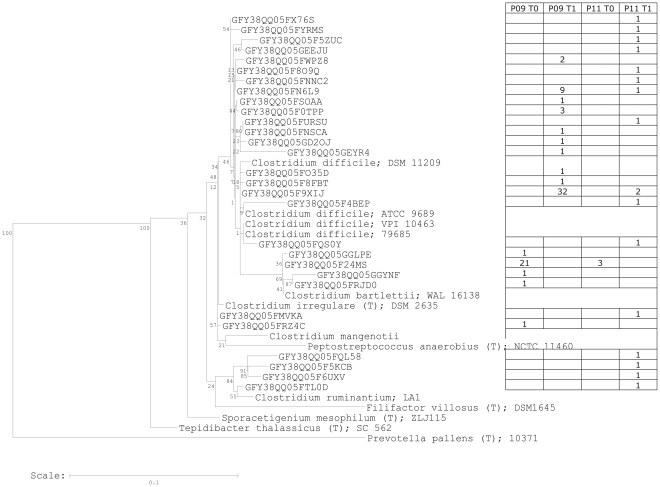
METHODOLOGY/PRINCIPAL FINDINGS: Feces of 17 ambulant patients receiving chemotherapy with or without concomitant antibiotics were analyzed before and after the chemotherapy cycle at four time points in comparison to 17 gender-, age- and lifestyle-matched healthy controls. We targeted 16S rRNA genes of all bacteria, Bacteroides, bifidobacteria, Clostridium cluster IV and XIVa as well as C. difficile with TaqMan qPCR, denaturing gradient gel electrophoresis (DGGE) fingerprinting and high-throughput sequencing. After a significant drop in the abundance of microbiota (p = 0.037) following a single treatment the microbiota recovered within a few days. The chemotherapeutical treatment marginally affected the Bacteroides while the Clostridium cluster IV and XIVa were significantly more sensitive to chemotherapy and antibiotic treatment. DGGE fingerprinting showed decreased diversity of Clostridium cluster IV and XIVa in response to chemotherapy with cluster IV diversity being particularly affected by antibiotics. The occurrence of C. difficile in three out of seventeen subjects was accompanied by a decrease in the genera Bifidobacterium, Lactobacillus, Veillonella and Faecalibacterium prausnitzii. Enterococcus faecium increased following chemotherapy.
CONCLUSIONS/SIGNIFICANCE: Despite high individual variations, these results suggest that the observed changes in the human gut microbiota may favor colonization with C. difficile and Enterococcus faecium. Perturbed microbiota may be a target for specific mitigation with safe pre- and probiotics.
我们研究了针对不同类型癌症的含或不含抗生素的化疗是否改变了胃肠道微生物群。
方法/主要发现:17 名接受化疗且伴有或不伴有抗生素治疗的门诊患者的粪便,在化疗周期前后的四个时间点与 17 名性别、年龄和生活方式相匹配的健康对照者进行了分析。我们使用 TaqMan qPCR、变性梯度凝胶电泳(DGGE)指纹图谱和高通量测序靶向所有细菌、拟杆菌、双歧杆菌、梭菌簇 IV 和 XIVa 以及艰难梭菌的 16S rRNA 基因。在单次治疗后,微生物群大量减少(p = 0.037),随后几天内微生物群恢复。化疗治疗对拟杆菌的影响微不足道,而梭菌簇 IV 和 XIVa 对化疗和抗生素治疗更敏感。DGGE 指纹图谱显示,化疗后梭菌簇 IV 和 XIVa 的多样性降低,簇 IV 的多样性受抗生素影响尤为明显。在 17 名患者中的 3 名中出现艰难梭菌时,双歧杆菌、乳杆菌、韦荣球菌和普拉梭菌属的数量减少。化疗后粪肠球菌增加。
结论/意义:尽管存在个体差异,但这些结果表明,观察到的人类肠道微生物群变化可能有利于艰难梭菌和粪肠球菌的定植。受干扰的微生物群可能是安全的预生物和益生菌特异性缓解的目标。