Trobec Katja, von Haehling Stephan, Anker Stefan D, Lainscak Mitja
J Cachexia Sarcopenia Muscle. 2011 Dec;2(4):191-200. doi: 10.1007/s13539-011-0043-5. Epub 2011 Oct 20.
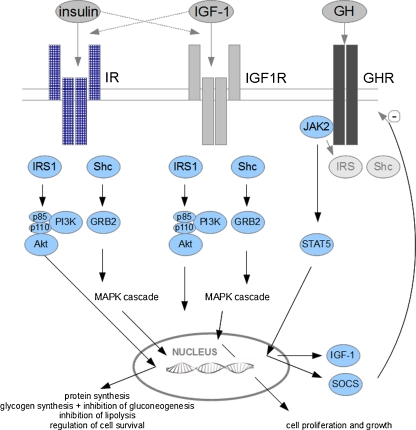
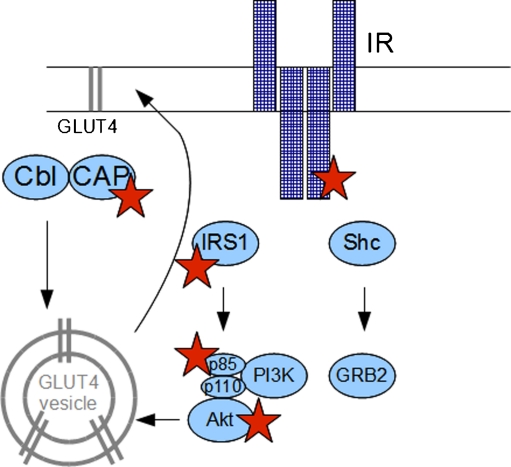
Cachexia is an irreversible process that can develop in the course of chronic disease. It is characterized by the remodeling of the metabolic, inflammatory, and endocrine pathways. Insulin, growth hormone (GH), and insulin-like growth factor 1 (IGF-1) are involved in glucose, protein, and fat metabolism, which regulates body composition. In body wasting and cachexia, their signaling is impaired and causes anabolic/catabolic imbalance. Important mechanisms include inflammatory cytokines and neurohormonal activation. Remodeled post-receptor insulin, GH, and IGF-1 pathways constitute a potential target for pharmacological treatment in the setting of body wasting and cachexia. Peroxisome proliferator-activated receptor gamma agonists, drugs inhibiting angiotensin II action (angiotensin II antagonists and inhibitors of angiotensin-converting enzyme), and testosterone, which interfere with post-receptor pathways of insulin, GH, and IGF-1, were investigated as pharmacological intervention targets and various clinically important implications were reported. There are several other potential targets, but their treatment feasibility and applicability is yet to be established.
恶病质是一种不可逆的过程,可在慢性疾病过程中发生。其特征在于代谢、炎症和内分泌途径的重塑。胰岛素、生长激素(GH)和胰岛素样生长因子1(IGF-1)参与葡萄糖、蛋白质和脂肪代谢,调节身体组成。在身体消瘦和恶病质中,它们的信号传导受损并导致合成代谢/分解代谢失衡。重要机制包括炎性细胞因子和神经激素激活。重塑后的胰岛素、GH和IGF-1受体后途径构成了身体消瘦和恶病质情况下药物治疗的潜在靶点。研究了过氧化物酶体增殖物激活受体γ激动剂、抑制血管紧张素II作用的药物(血管紧张素II拮抗剂和血管紧张素转换酶抑制剂)以及干扰胰岛素、GH和IGF-1受体后途径的睾酮作为药物干预靶点,并报道了各种临床重要意义。还有其他几个潜在靶点,但其治疗可行性和适用性尚未确定。