Divisions of Neurology and Neurosurgery, Department of Neurosciences, Medical University of South Carolina, 96 Jonathan Lucas Street, Charleston, SC 29425, USA.
Neurochem Res. 2012 Jun;37(6):1192-200. doi: 10.1007/s11064-011-0701-1. Epub 2012 Jan 10.
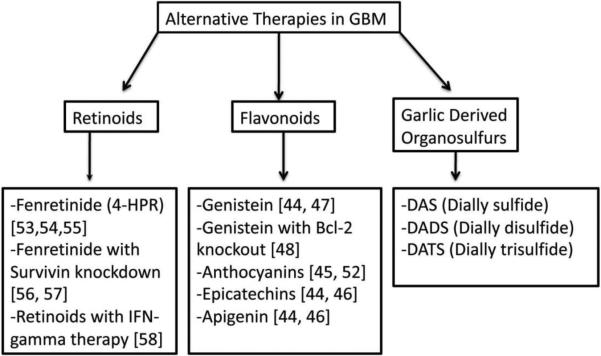
Glioblastoma multiforme (GBM) is recognized as the most common and lethal form of central nervous system cancer. Currently used surgical techniques, chemotherapeutic agents, and radiotherapy strategies have done very little in extending the life expectancies of patients diagnosed with GBM. The difficulty in treating this malignant disease lies both in its inherent complexity and numerous mechanisms of drug resistance. In this review, we summarize several of the primary mechanisms of drug resistance. We reviewed available published literature in the English language regarding drug resistance in glioblastoma. The reasons for drug resistance in glioblastoma include drug efflux, hypoxic areas of tumor cells, cancer stem cells, DNA damage repair, and miRNAs. Many potential therapies target these mechanisms, including a series of investigated alternative and plant-derived agents. Future research and clinical trials in glioblastoma patients should pursue combination of therapies to help combat drug resistance. The emerging new data on the potential of plant-derived therapeutics should also be closely considered and further investigated.
多形性胶质母细胞瘤(GBM)被认为是中枢神经系统最常见和最致命的癌症形式。目前使用的手术技术、化疗药物和放射治疗策略在延长 GBM 患者的预期寿命方面收效甚微。治疗这种恶性疾病的困难既在于其固有的复杂性,也在于其存在多种耐药机制。在这篇综述中,我们总结了几种主要的耐药机制。我们查阅了英文文献中关于胶质母细胞瘤耐药性的相关研究。胶质母细胞瘤耐药的原因包括药物外排、肿瘤细胞缺氧区、癌症干细胞、DNA 损伤修复和 miRNA。许多潜在的治疗方法针对这些机制,包括一系列经过研究的替代药物和植物衍生药物。未来针对胶质母细胞瘤患者的研究和临床试验应寻求联合治疗,以帮助对抗耐药性。还应密切考虑和进一步研究植物衍生疗法的潜在新数据。