Department of Pharmacology, University of Sao Paulo, Sao Paulo, SP, Brazil.
Clin Sci (Lond). 2012 Jun;122(11):535-43. doi: 10.1042/CS20110523.
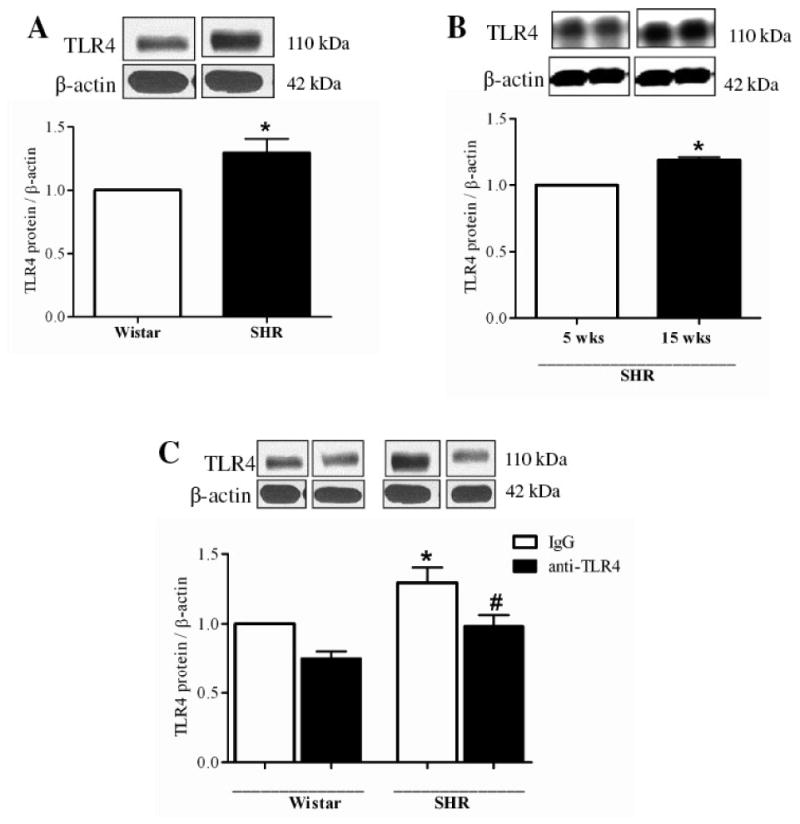
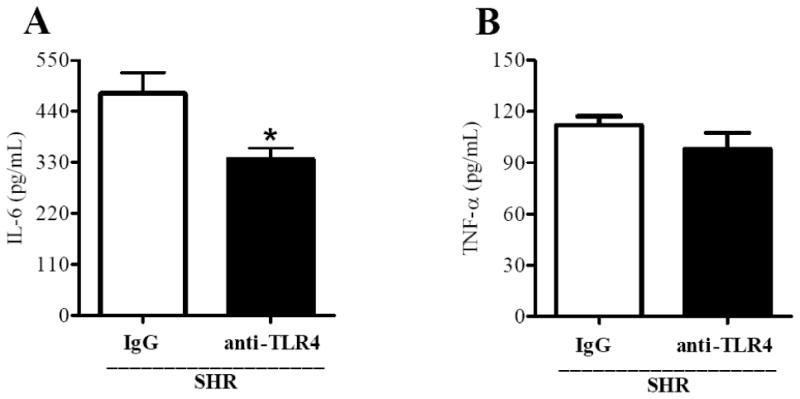
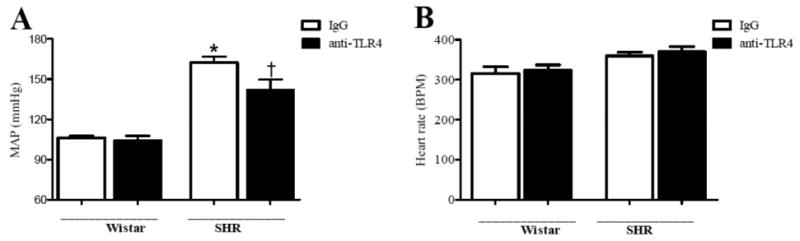
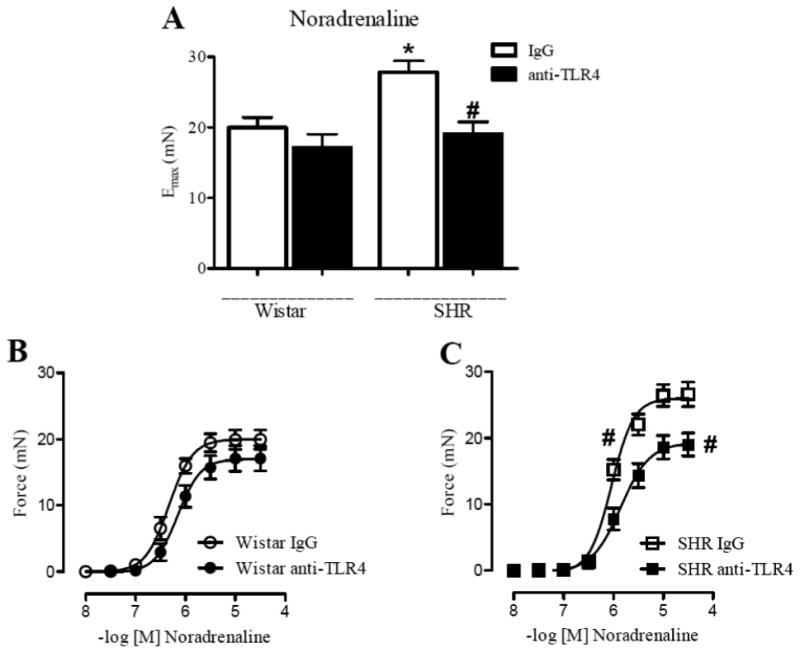
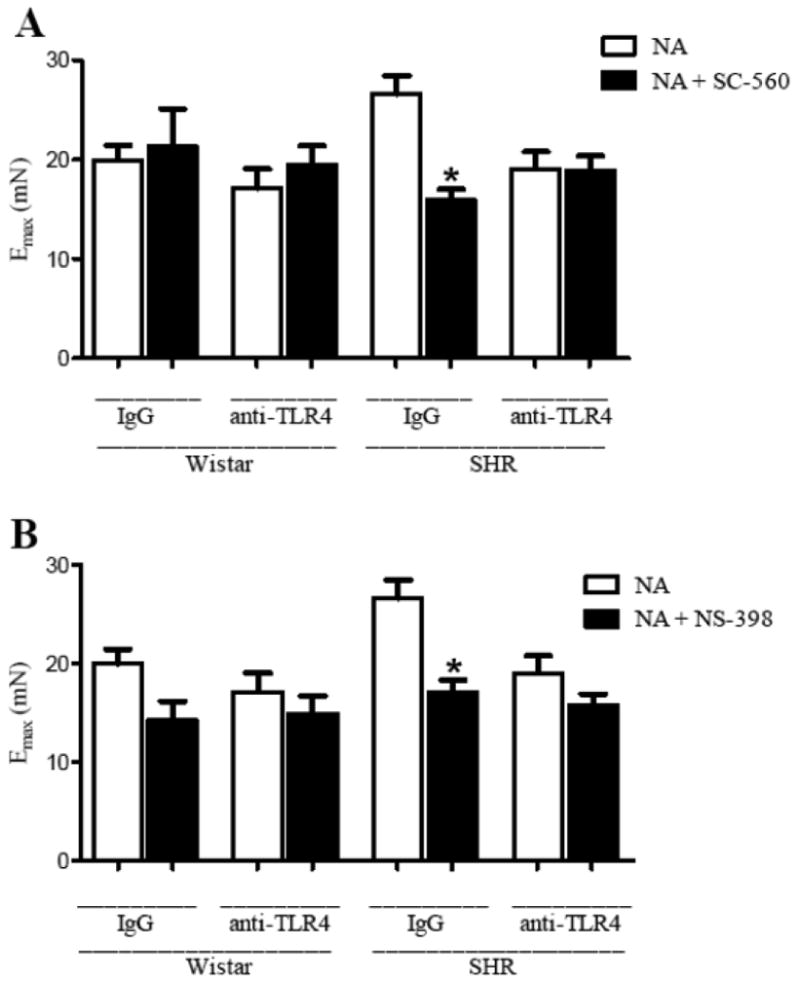
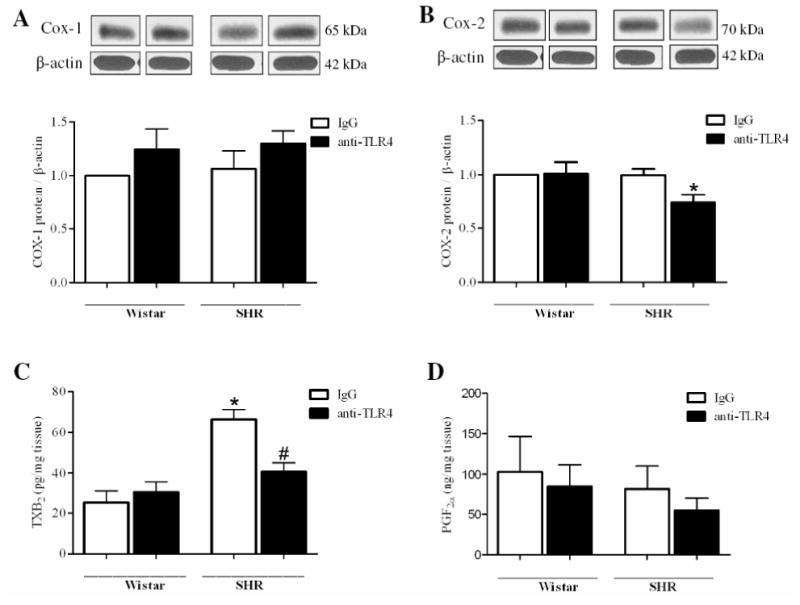
Activation of TLRs (Toll-like receptors) induces gene expression of proteins involved in the immune system response. TLR4 has been implicated in the development and progression of CVDs (cardio-vascular diseases). Innate and adaptive immunity contribute to hypertension-associated end-organ damage, although the mechanism by which this occurs remains unclear. In the present study, we hypothesize that inhibition of TLR4 decreases BP (blood pressure) and improves vascular contractility in resistance arteries from SHR (spontaneously hypertensive rats). TLR4 protein expression in mesenteric resistance arteries was higher in 15-week-old SHR than in age-matched Wistar controls or in 5-week-old SHR. To decrease the activation of TLR4, 15-week-old SHR and Wistar rats were treated with anti-TLR4 (anti-TLR4 antibody) or non-specific IgG control antibody for 15 days (1 μg per day, intraperitoneal). Treatment with anti-TLR4 decreased MAP (mean arterial pressure) as well as TLR4 protein expression in mesenteric resistance arteries and IL-6 (interleukin 6) serum levels from SHR when compared with SHR treated with IgG. No changes in these parameters were found in treated Wistar control rats. Mesenteric resistance arteries from anti-TLR4-treated SHR exhibited decreased maximal contractile response to NA (noradrenaline) compared with IgG-treated SHR. Inhibition of COX (cyclo-oxygenase)-1 and COX-2, enzymes related to inflammatory pathways, decreased NA responses only in mesenteric resistance arteries of SHR treated with IgG. COX-2 expression and TXA2 (thromboxane A2) release were decreased in SHR treated with anti-TLR4 compared with IgG-treated SHR. Our results suggest that TLR4 activation contributes to increased BP, low-grade inflammation and plays a role in the augmented vascular contractility displayed by SHR.
TLRs(Toll 样受体)的激活诱导参与免疫系统反应的蛋白质的基因表达。TLR4 与 CVDs(心血管疾病)的发展和进展有关。先天和适应性免疫有助于高血压相关的靶器官损伤,但发生这种情况的机制尚不清楚。在本研究中,我们假设抑制 TLR4 可降低 SHR(自发性高血压大鼠)阻力动脉中的血压并改善血管收缩性。与年龄匹配的 Wistar 对照或 5 周龄 SHR 相比,15 周龄 SHR 肠系膜阻力动脉中的 TLR4 蛋白表达更高。为了降低 TLR4 的激活,用抗 TLR4(抗 TLR4 抗体)或非特异性 IgG 对照抗体处理 15 周龄 SHR 和 Wistar 大鼠 15 天(每天 1μg,腹腔内)。与用 IgG 处理的 SHR 相比,用抗 TLR4 处理可降低 SHR 的 MAP(平均动脉压)以及肠系膜阻力动脉中的 TLR4 蛋白表达和血清 IL-6(白细胞介素 6)水平。在接受治疗的 Wistar 对照大鼠中未发现这些参数的变化。与用 IgG 处理的 SHR 相比,用抗 TLR4 处理的 SHR 的肠系膜阻力动脉对 NA(去甲肾上腺素)的最大收缩反应降低。抑制 COX(环氧化酶)-1 和 COX-2,与炎症途径相关的酶,仅在用 IgG 处理的 SHR 的肠系膜阻力动脉中降低了 NA 反应。与用 IgG 处理的 SHR 相比,用抗 TLR4 处理的 SHR 中的 COX-2 表达和 TXA2(血栓素 A2)释放降低。我们的结果表明,TLR4 的激活导致血压升高、低度炎症,并在 SHR 显示的增强的血管收缩性中发挥作用。