Institute of Marine Sciences, School of Biological Sciences, University of Portsmouth, Portsmouth, UK.
PLoS One. 2012;7(1):e29543. doi: 10.1371/journal.pone.0029543. Epub 2012 Jan 3.
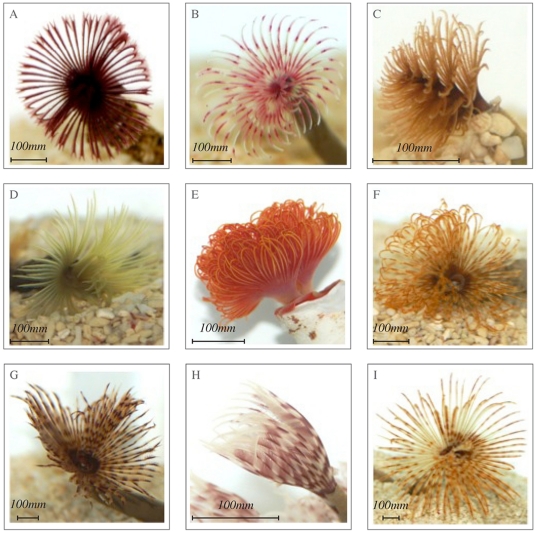
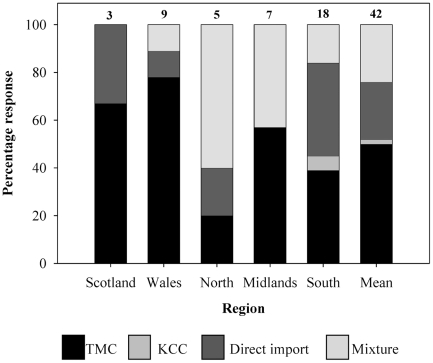
The marine aquarium industry has great potential to generate jobs in low-income coastal communities creating incentives for the maintenance of a healthy coral reef, if effectively managed. In the absence of current monitoring or legislation to govern the trade, baseline information regarding the species, number and source location of animals traded is missing despite being critical for its successful management and sustainability. An industry assessment to establish the number and provenance of species of ornamental polychaetes (sabellids and serpulids) traded was undertaken across UK wholesalers and retailers. Six geographical regions exporting fan worms were identified. Singapore contributed the highest percentage of imports, but of only one worm "type" whereas Bali, the second largest source, supplied five different worm "types". Over 50% of UK retailers were supplied by one wholesaler while the remainder were stocked by a mixture of one other wholesaler and/or direct imports from the source country. We estimate that up to 18,500 ornamental polychaetes (16,980 sabellids and 1,018 serpulids) are sold annually in the UK revealing a drastic underestimation of currently accepted trade figures. Incorrect identification (based on exporting region or visual characteristics) of traded animals exacerbates the inaccuracy in market quantification, although identification of preserved sabellids using published keys proved just as inconclusive with high within-species variability and the potential for new or cryptic species. A re-description of the polychaete groups traded using a combination of molecular and morphological techniques is necessary for effective identification and market quantification. This study provides the first assessment of ornamental polychaetes but more importantly highlights the issues surrounding the collection of baseline information necessary to manage the aquarium trade. We recommend that future management should be community based and site-specific with financial and educational support from NGOs, local governments and industry members.
如果得到有效管理,海洋水族馆行业在低收入沿海社区创造就业机会方面潜力巨大,这将激励人们维护健康的珊瑚礁。由于目前缺乏监测或法规来管理该行业,尽管这些信息对其成功管理和可持续性至关重要,但有关交易动物的物种、数量和来源地的基线信息却缺失了。在英国的批发商和零售商中,开展了一项评估,以确定交易的观赏多毛类动物(缨鳃虫和盘管虫)的数量和起源。确定了 6 个出口扇虫的地理区域。新加坡贡献了进口量的最高百分比,但只有一种“类型”的蠕虫,而第二大供应地巴厘岛供应了五种不同的“类型”的蠕虫。超过 50%的英国零售商由一家批发商供应,其余零售商则由另一家批发商的混合供应,或直接从原产国进口。我们估计,英国每年有多达 18500 只观赏多毛类动物(16980 只缨鳃虫和 1018 只盘管虫)被出售,这表明目前被接受的贸易数据被严重低估。交易动物的错误鉴定(基于出口地区或视觉特征)加剧了市场量化的不准确性,尽管使用已发表的鉴定关键特征对保存的缨鳃虫进行鉴定同样没有结果,因为物种内存在高度变异性和新种或隐种的可能性。使用分子和形态技术相结合对交易的多毛类动物进行重新描述,对于有效鉴定和市场量化是必要的。本研究首次评估了观赏多毛类动物,但更重要的是强调了收集管理水族馆贸易所需的基线信息所面临的问题。我们建议,未来的管理应该以社区为基础,并根据具体情况进行,非政府组织、地方政府和行业成员应提供财政和教育支持。