Chade Alejandro R
F1000 Med Rep. 2012;4:1. doi: 10.3410/M4-1. Epub 2012 Jan 3.
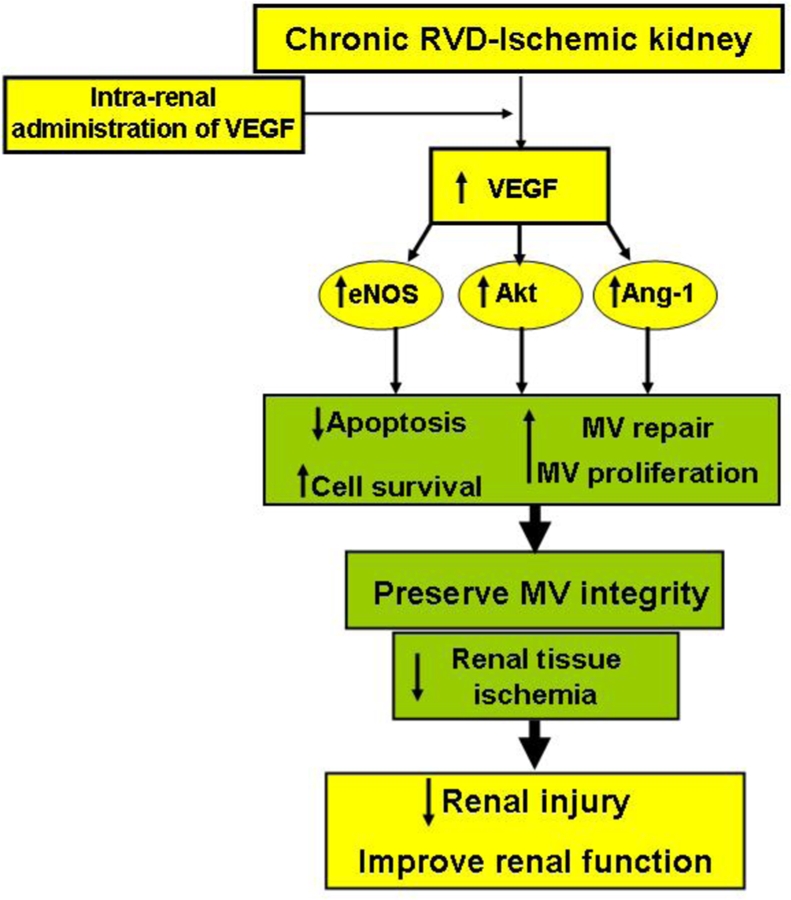
Vascular endothelial growth factor (VEGF) plays a central role in angiogenesis. A number of studies have focused on its role in health and disease and discussed the possibility of VEGF as both a therapeutic tool and target based on its specific actions on vascular proliferation and cell survival. On one side, anti-VEGF therapies are at the fore-front of treatment of many solid tumors, but blockade of VEGF carries collateral effects such as hypertension and renal damage largely due to abnormalities in the microvasculature. On the other hand, recent clinical and experimental evidence has shown the feasibility of using VEGF administration to protect ischemic tissues such as the myocardium or the kidney via stimulation of microvascular proliferation and repair. In this commentary, we discuss the possibility and potential mechanisms of using intra-renal administration of VEGF to preserve the renal microcirculation and, consequently, decrease progressive renal injury in chronic renovascular disease. Targeted administration of VEGF may constitute a novel stand-alone or co-adjuvant intervention with the potential to become a part of a comprehensive plan to protect renal function.
血管内皮生长因子(VEGF)在血管生成中起核心作用。许多研究聚焦于其在健康和疾病中的作用,并基于其对血管增殖和细胞存活的特定作用,探讨了VEGF作为治疗工具和靶点的可能性。一方面,抗VEGF疗法处于许多实体瘤治疗的前沿,但VEGF的阻断会带来诸如高血压和肾损伤等附带效应,这主要是由于微血管系统异常所致。另一方面,最近的临床和实验证据表明,通过刺激微血管增殖和修复,使用VEGF给药来保护缺血组织(如心肌或肾脏)是可行的。在这篇评论中,我们讨论了肾内给予VEGF以维持肾微循环并因此减少慢性肾血管疾病中进行性肾损伤的可能性和潜在机制。VEGF的靶向给药可能构成一种新的独立或辅助干预措施,有潜力成为保护肾功能综合计划的一部分。