Department of Neurology, University of Vermont, Burlington, Vermont, United States of America.
PLoS One. 2012;7(1):e29831. doi: 10.1371/journal.pone.0029831. Epub 2012 Jan 6.
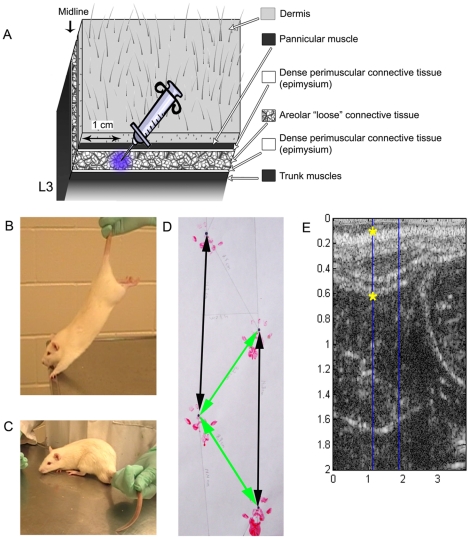
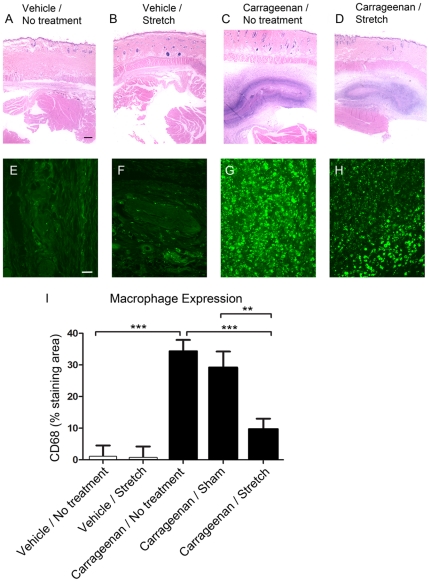
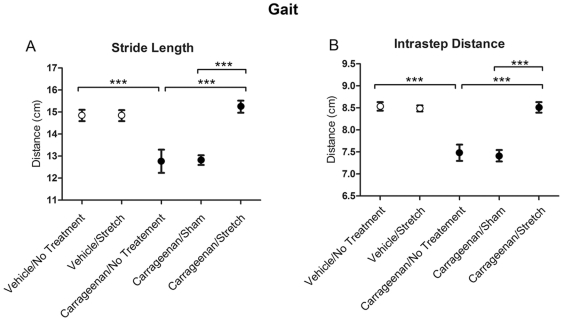
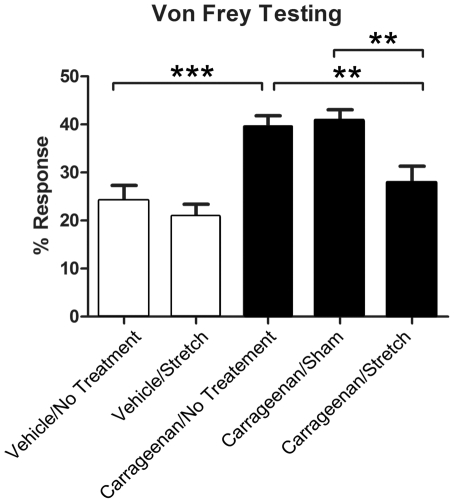
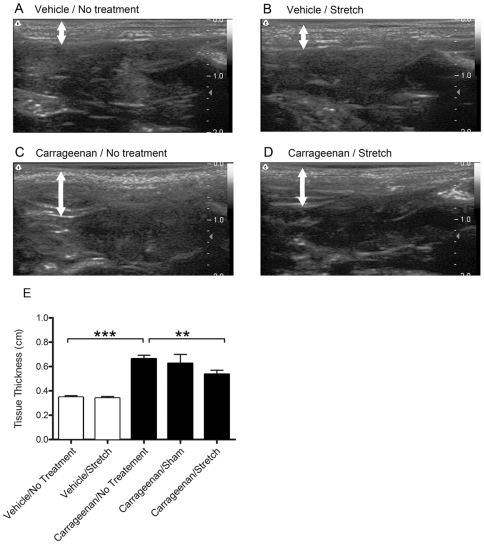
The role played by nonspecialized connective tissues in chronic non-specific low back pain is not well understood. In a recent ultrasound study, human subjects with chronic low back pain had altered connective tissue structure compared to human subjects without low back pain, suggesting the presence of inflammation and/or fibrosis in the low back pain subjects. Mechanical input in the form of static tissue stretch has been shown in vitro and in vivo to have anti-inflammatory and anti-fibrotic effects. To better understand the pathophysiology of lumbar nonspecialized connective tissue as well as potential mechanisms underlying therapeutic effects of tissue stretch, we developed a carrageenan-induced inflammation model in the low back of a rodent. Induction of inflammation in the lumbar connective tissues resulted in altered gait, increased mechanical sensitivity of the tissues of the low back, and local macrophage infiltration. Mechanical input was then applied to this model as in vivo tissue stretch for 10 minutes twice a day for 12 days. In vivo tissue stretch mitigated the inflammation-induced changes leading to restored stride length and intrastep distance, decreased mechanical sensitivity of the back and reduced macrophage expression in the nonspecialized connective tissues of the low back. This study highlights the need for further investigation into the contribution of connective tissue to low back pain and the need for a better understanding of how interventions involving mechanical stretch could provide maximal therapeutic benefit. This tissue stretch research is relevant to body-based treatments such as yoga or massage, and to some stretch techniques used with physical therapy.
非特异性结缔组织在慢性非特异性下腰痛中的作用尚不清楚。在最近的一项超声研究中,与无下腰痛的人类受试者相比,慢性下腰痛患者的结缔组织结构发生了改变,这表明下腰痛患者存在炎症和/或纤维化。体外和体内研究表明,静态组织拉伸产生的机械输入具有抗炎和抗纤维化作用。为了更好地了解腰椎非特异性结缔组织的病理生理学以及组织拉伸治疗效果的潜在机制,我们在啮齿动物的腰部开发了一种角叉菜胶诱导的炎症模型。诱导腰部结缔组织炎症会导致步态改变、腰部组织机械敏感性增加和局部巨噬细胞浸润。然后,将机械输入应用于该模型,作为每天两次、每次 10 分钟的体内组织拉伸,共 12 天。体内组织拉伸缓解了炎症引起的变化,导致步幅和步间距离恢复,背部机械敏感性降低,腰部非特异性结缔组织中巨噬细胞表达减少。这项研究强调了需要进一步研究结缔组织对下腰痛的贡献,以及需要更好地了解涉及机械拉伸的干预措施如何提供最大的治疗益处。这种组织拉伸研究与基于身体的治疗方法(如瑜伽或按摩)以及物理治疗中使用的一些拉伸技术有关。