Division of Preventive Medicine, 624 Medical Towers, University of Alabama at Birmingham, 1530 3rd Ave S, Birmingham, AL 35205-4410, USA.
Prev Chronic Dis. 2012;9:E36. doi: 10.5888/pcd9.110053. Epub 2012 Jan 12.
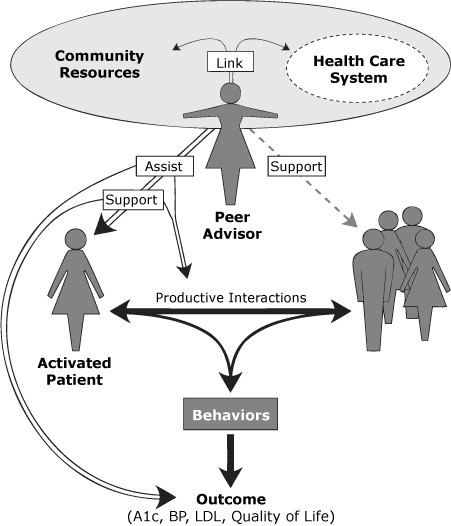
Peer support is a promising strategy for the reduction of diabetes-related health disparities; however, few studies describe the development of such strategies in enough detail to allow for replication. The objective of this article is to describe the development of a 1-year peer support intervention to improve diabetes self-management among African American adults with diabetes in Alabama's Black Belt.
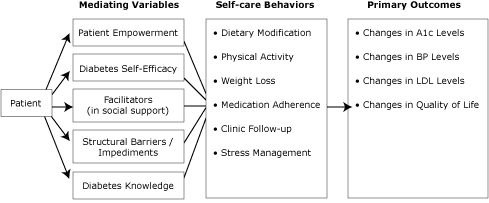
We used principles of intervention mapping, including literature review, interviews with key informants, and a discussion group with community health workers, to guide intervention development. Qualitative data were combined with behavioral constructs and principles of diabetes self-management to create a peer support intervention to be delivered by trained peer advisors. Feedback from a 1-month pilot was used to modify the training and intervention.
The resulting intervention includes a 2-day training for peer advisors, who were each paired with 3 to 6 clients. A one-on-one in-person needs assessment begins an intensive intervention phase conducted via telephone for 8 to 12 weeks, followed by a maintenance phase of at least once monthly contacts for the remainder of the intervention period. A peer support network and process measures collected monthly throughout the study supplement formal data collection points at baseline, 6 months, and 12 months.
Intervention mapping provided a useful framework for the development of culturally relevant diabetes peer support intervention for African Americans living in Alabama's Black Belt. The process described could be implemented by others in public health to develop or adapt programs suitable for their particular community or context.
同伴支持是减少糖尿病相关健康差异的一种有前途的策略;然而,很少有研究详细描述这种策略的发展,以便于复制。本文的目的是描述在阿拉巴马州黑人区开展为期一年的同伴支持干预措施的发展情况,以改善那里的非裔美国糖尿病患者的糖尿病自我管理能力。
我们使用干预映射的原则,包括文献综述、与关键信息提供者的访谈以及与社区卫生工作者的讨论小组,指导干预措施的制定。将定性数据与行为结构和糖尿病自我管理原则相结合,创建了由经过培训的同伴顾问提供的同伴支持干预措施。为期一个月的试点反馈用于修改培训和干预措施。
由此产生的干预措施包括为期两天的同伴顾问培训,每位顾问与 3 到 6 位客户配对。通过一对一的面对面需求评估开始进行为期 8 到 12 周的强化干预阶段,然后是至少每月一次的维持阶段,持续到干预期的剩余时间。同伴支持网络和过程措施在整个研究过程中每月收集一次,补充基线、6 个月和 12 个月的正式数据收集点。
干预映射为在阿拉巴马州黑人区生活的非裔美国人提供了一种有文化相关性的糖尿病同伴支持干预措施的有用框架。所描述的过程可以由其他人在公共卫生领域实施,以开发或适应该地区或环境的适合项目。