Arthritis Research UK Epidemiology Unit, Manchester Academic Health Science Centre, University of Manchester, Manchester, Stopford Building, Manchester M13 9PT, UK.
Ann Rheum Dis. 2012 Jul;71(7):1128-33. doi: 10.1136/annrheumdis-2011-200702. Epub 2012 Jan 12.
To explore the relationship of serious infection risk with current and prior oral glucocorticoid (GC) therapy in elderly patients with rheumatoid arthritis (RA).
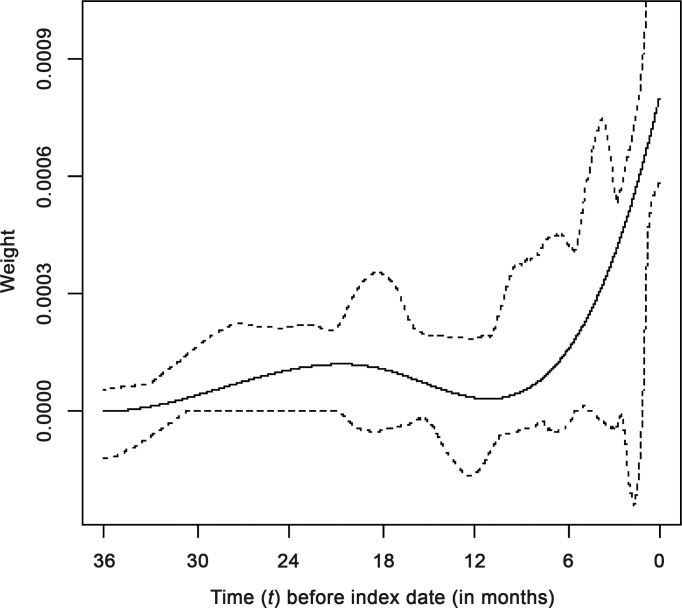
A case-control analysis matched 1947 serious infection cases to five controls, selected from 16207 RA patients aged ≥ 65 between 1985-2003 in Quebec, Canada. Adjusted odds ratios for infection associated with different GC patterns were estimated using conventional models and a weighted cumulative dose (WCD) model.
The WCD model predicted risks better than conventional models. Current and recent GC doses had highest impact on current risk. Doses taken up to 2.5 years ago were also associated with increased risk, albeit to a lesser extent. A current user of 5mg prednisolone had a 30%, 46% or 100% increased risk of serious infection when used continuously for the last 3 months, 6 months or 3 years, respectively, compared to a non-user. The risk associated with 5mg prednisolone taken for the last 3 years was similar to that associated with 30 mg taken for the last month. Discontinuing a two-year course of 10mg prednisolone six months ago halved the risk compared to ongoing use.
GC therapy is associated with infection risk in older patients with RA. The WCD model provided more accurate risk estimates than conventional models. Current and recent doses have greatest impact on infection risk, but the cumulative impact of doses taken in the last 2-3 years still affects risk. Knowing how risk depends on pattern of GC use will contribute to an improved benefit/harm assessment.
探讨严重感染风险与老年类风湿关节炎(RA)患者当前和既往口服糖皮质激素(GC)治疗的关系。
采用病例对照分析,将加拿大魁北克省 1985 年至 2003 年间年龄≥65 岁的 16207 例 RA 患者中 1947 例严重感染病例与 5 名对照相匹配。使用传统模型和加权累积剂量(WCD)模型估计与不同 GC 模式相关的感染调整优势比。
WCD 模型预测风险优于传统模型。当前和近期 GC 剂量对当前风险的影响最大。2.5 年前服用的剂量也与风险增加相关,但程度较轻。与非使用者相比,当前连续使用最后 3 个月、6 个月或 3 年的 5mg 泼尼松龙的患者,严重感染的风险分别增加 30%、46%或 100%。过去 3 年服用 5mg 泼尼松龙的风险与过去 1 个月服用 30mg 泼尼松龙的风险相似。与持续使用相比,停止 6 个月前服用的为期 2 年的 10mg 泼尼松龙疗程会使风险减半。
GC 治疗与老年 RA 患者的感染风险相关。WCD 模型比传统模型提供了更准确的风险估计。当前和近期剂量对感染风险的影响最大,但过去 2-3 年内服用的剂量的累积影响仍会影响风险。了解风险如何取决于 GC 使用模式将有助于改善获益/危害评估。