Smilow Neuroscience Program, New York University Langone Medical Center, New York, NY 10016, USA.
Neuron. 2012 Jan 12;73(1):92-107. doi: 10.1016/j.neuron.2011.10.016.
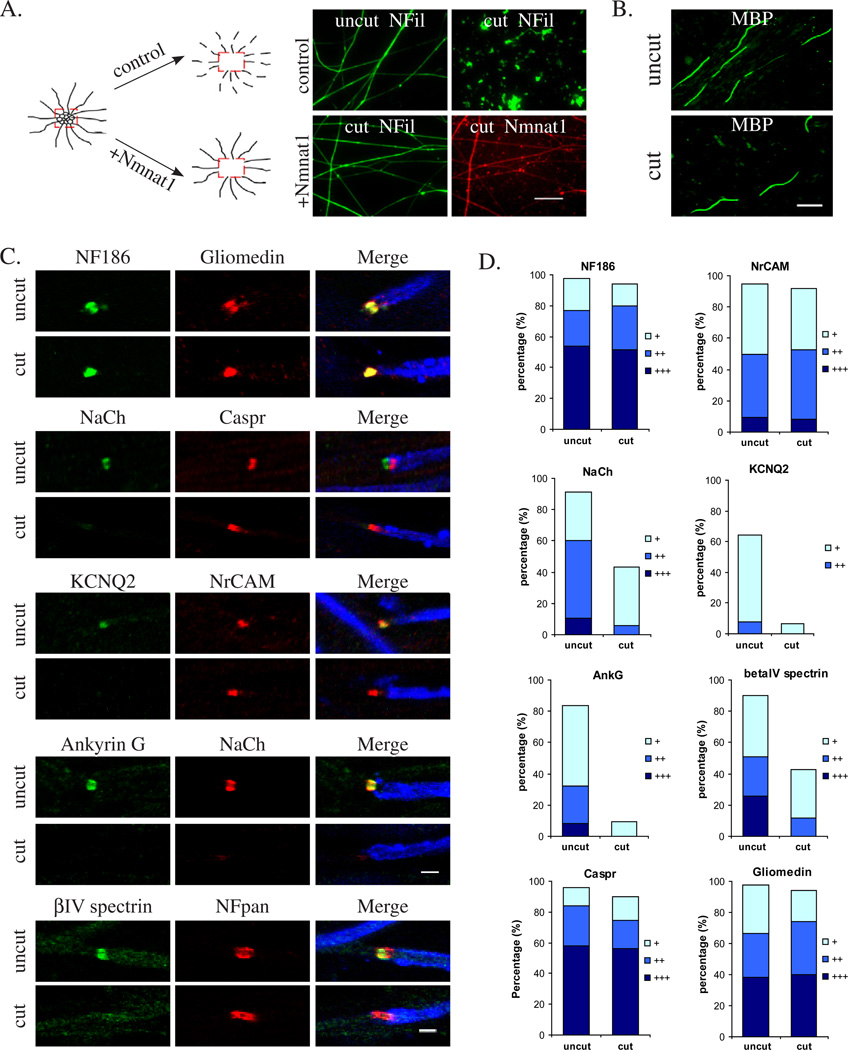
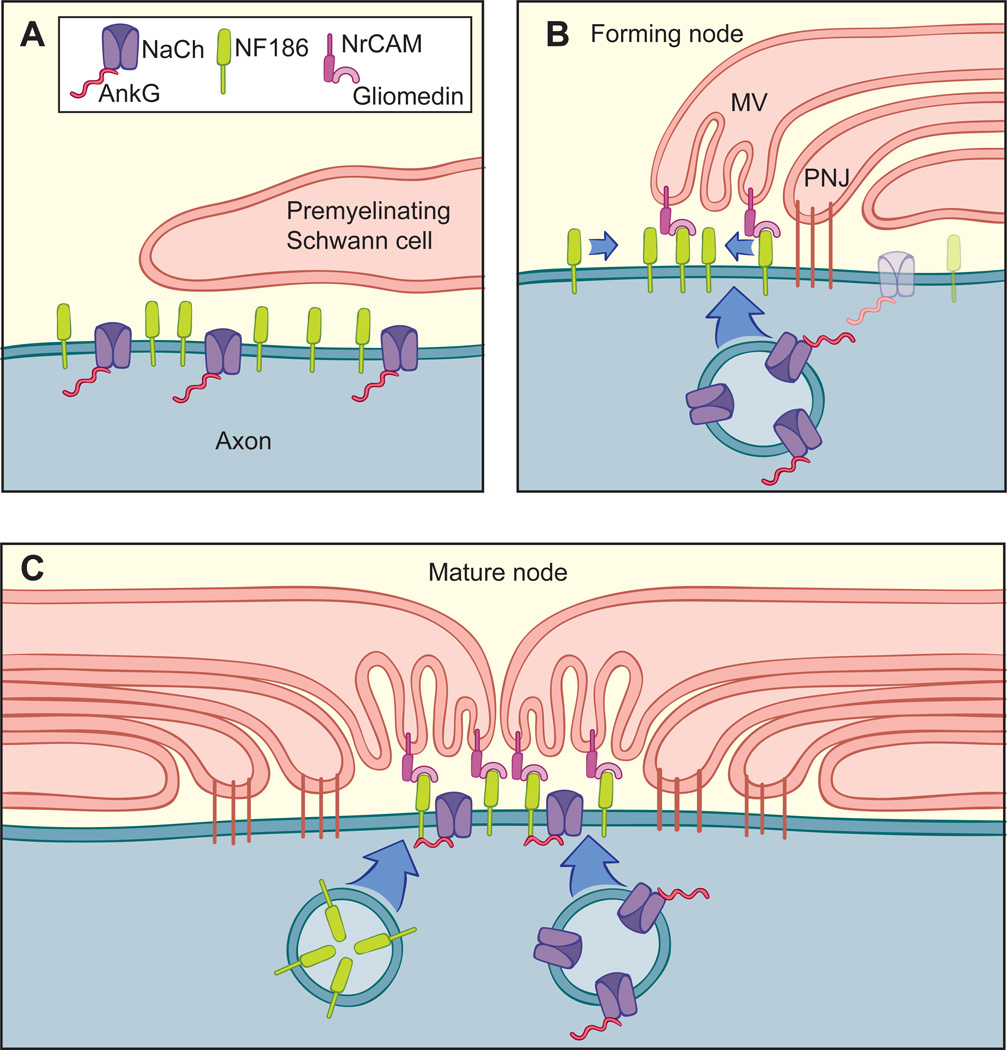
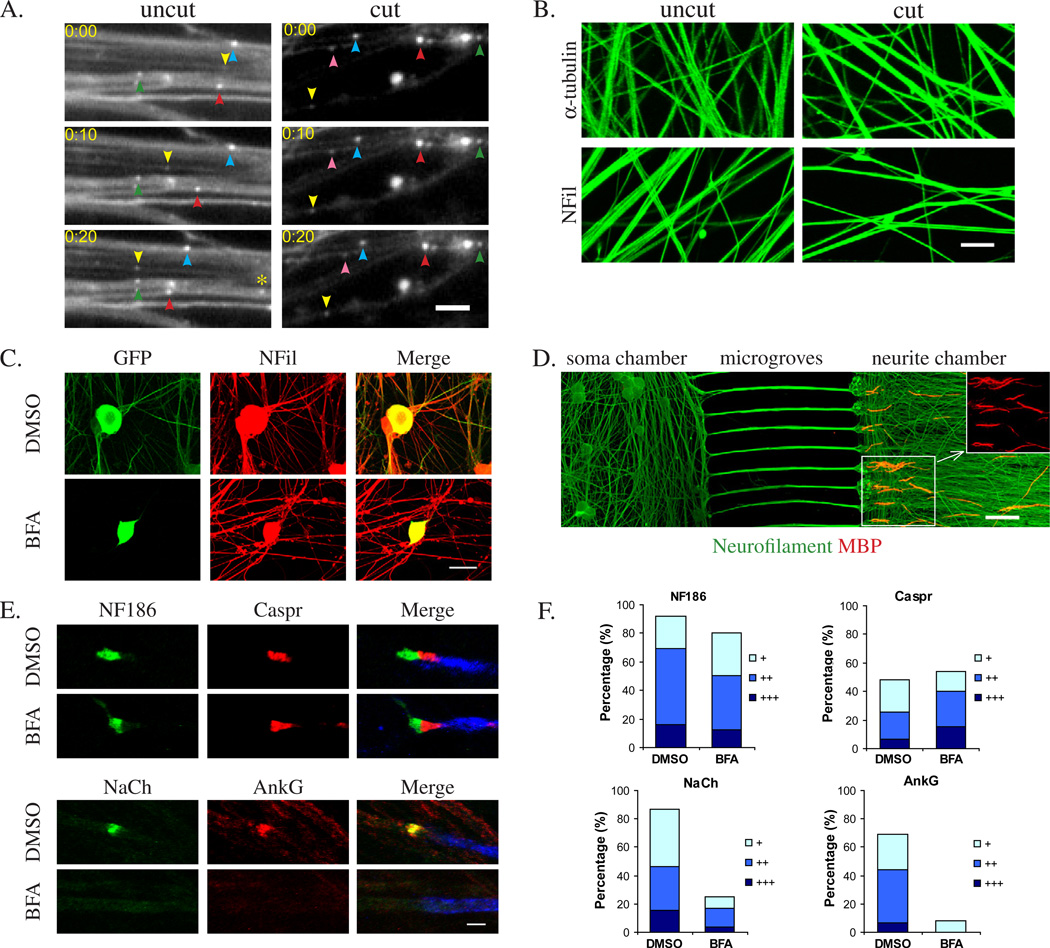
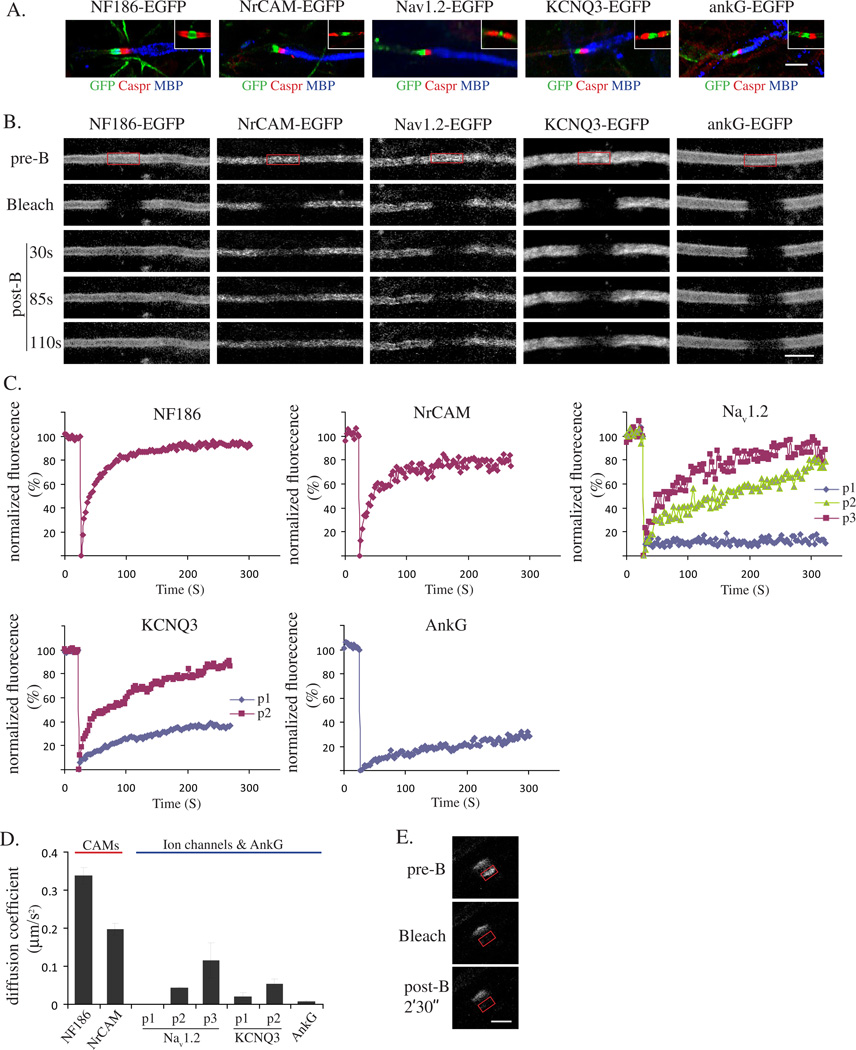
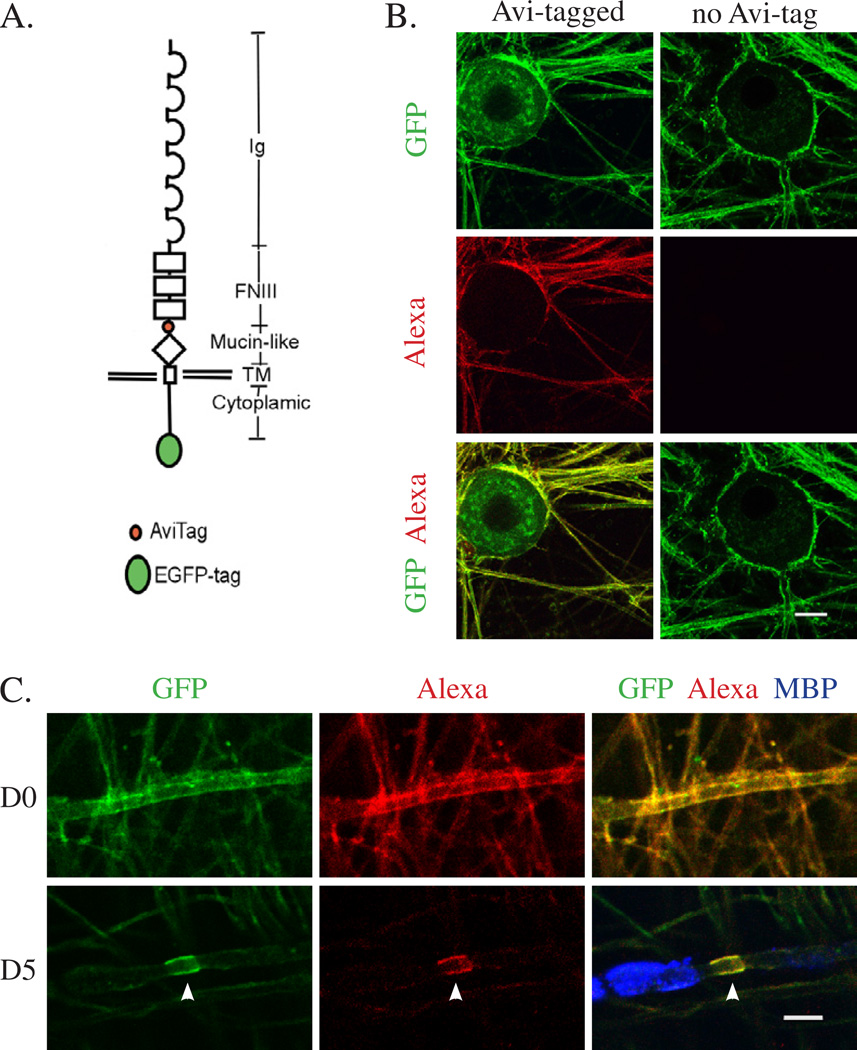
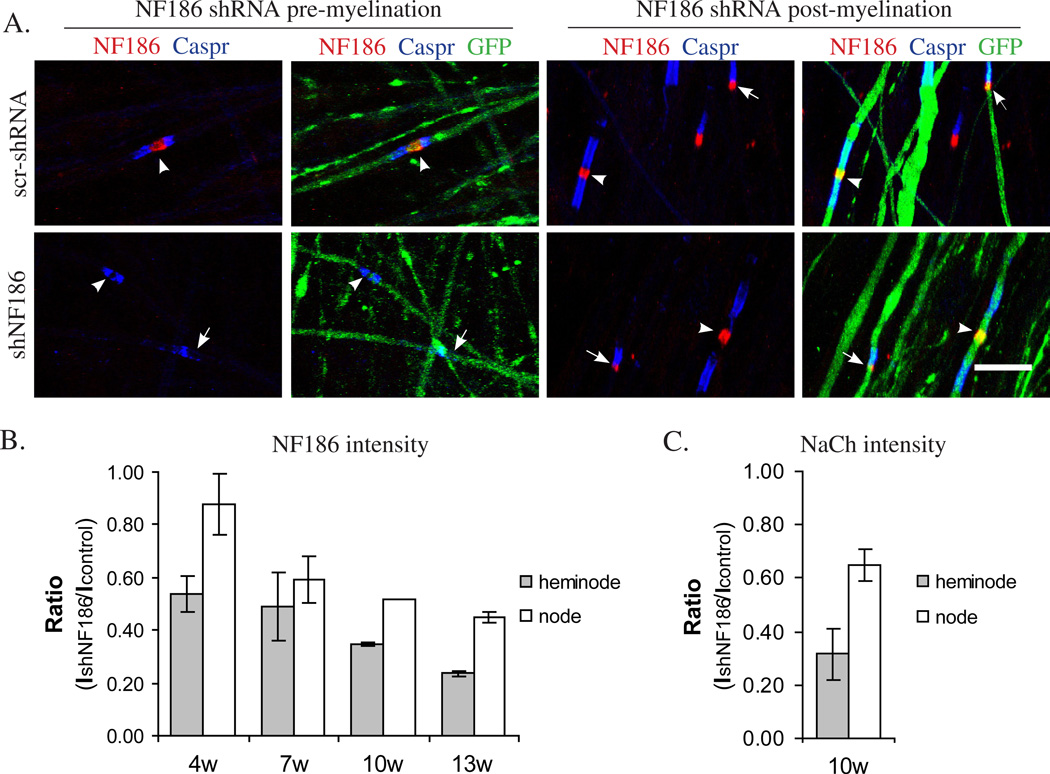
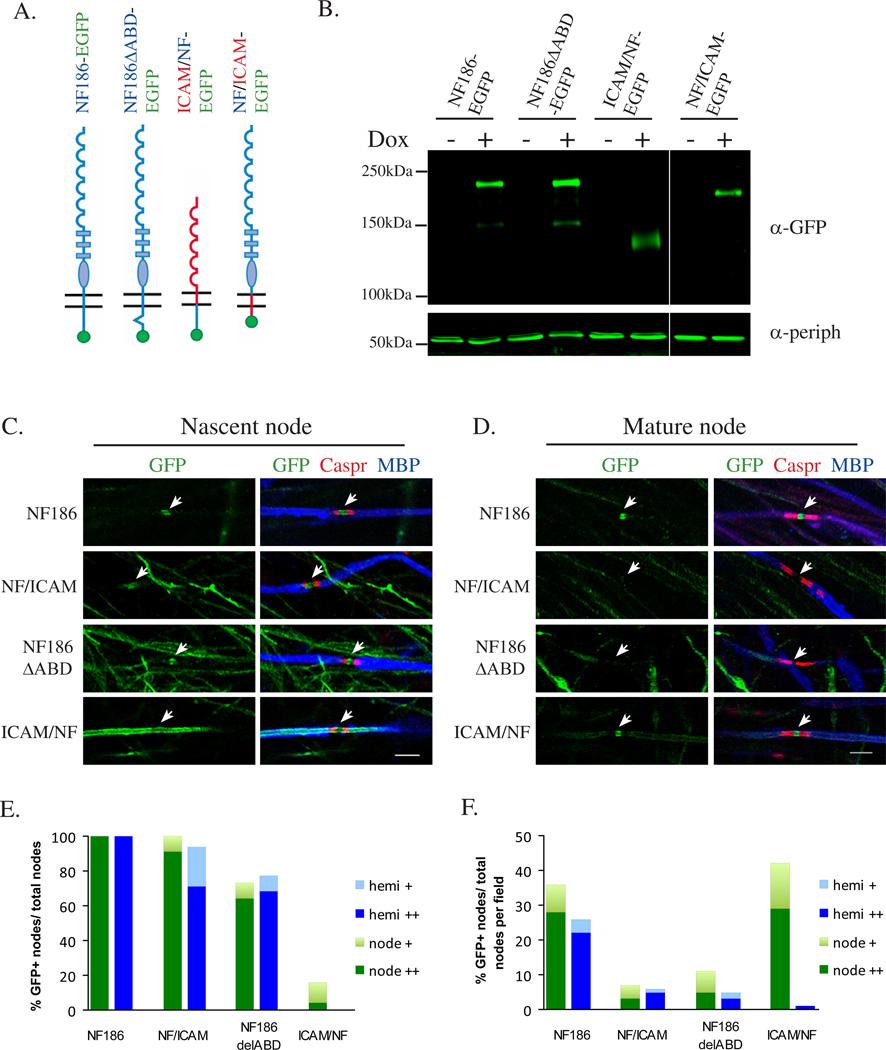
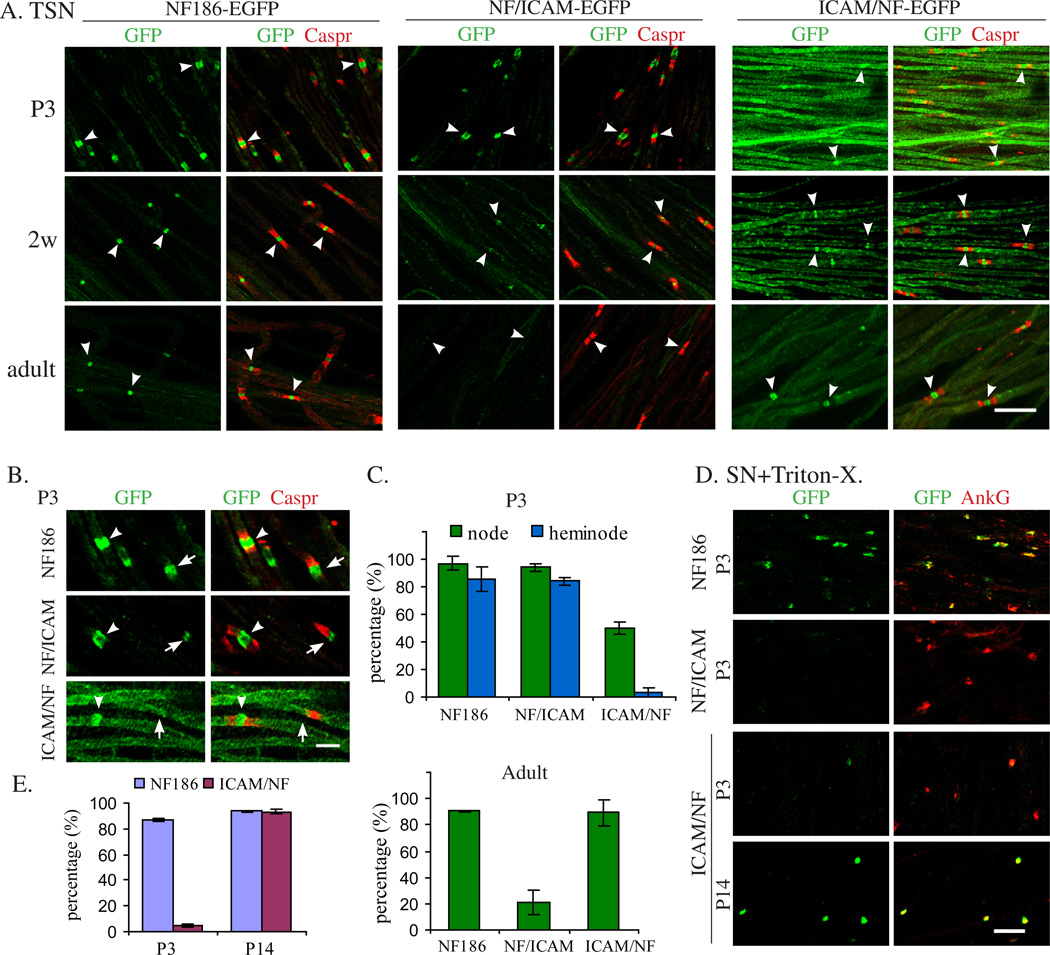
We have investigated the source(s) and targeting of components to PNS nodes of Ranvier. We show adhesion molecules are freely diffusible within the axon membrane and accumulate at forming nodes from local sources, whereas ion channels and cytoskeletal components are largely immobile and require transport to the node. We further characterize targeting of NF186, an adhesion molecule that pioneers node formation. NF186 redistributes to nascent nodes from a mobile, surface pool. Its initial accumulation and clearance from the internode require extracellular interactions, whereas targeting to mature nodes, i.e., those flanked by paranodal junctions, requires intracellular interactions. After incorporation into the node, NF186 is immobile, stable, and promotes node integrity. Thus, nodes assemble from two sources: adhesion molecules, which initiate assembly, accumulate by diffusion trapping via interactions with Schwann cells, whereas ion channels and cytoskeletal components accumulate via subsequent transport. In mature nodes, components turnover slowly and are replenished via transport.
我们研究了Ranvier 神经节下轴突结的成分来源和靶向性。我们发现,黏附分子在轴突膜内是自由扩散的,并且从局部来源聚集在形成的节点处,而离子通道和细胞骨架成分则基本不移动,需要运输到节点。我们进一步描述了 NF186 的靶向性,NF186 是一种先驱形成节点的黏附分子。NF186 从可移动的表面池中重新分布到新生节点。其在节间段的初始积累和清除需要细胞外相互作用,而靶向成熟节点(即由旁突连接包围的节点)需要细胞内相互作用。NF186 整合到节点后,其状态是固定的,且稳定节点的完整性。因此,节点由两种来源组装而成:黏附分子通过与施旺细胞的相互作用,通过扩散捕获来启动组装并积累;而离子通道和细胞骨架成分则通过随后的运输来积累。在成熟的节点中,成分的周转率较慢,通过运输进行补充。