Houben A J, Eringa E C, Jonk A M, Serne E H, Smulders Y M, Stehouwer C D
Curr Cardiovasc Risk Rep. 2012 Feb;6(1):80-90. doi: 10.1007/s12170-011-0214-0. Epub 2011 Nov 22.
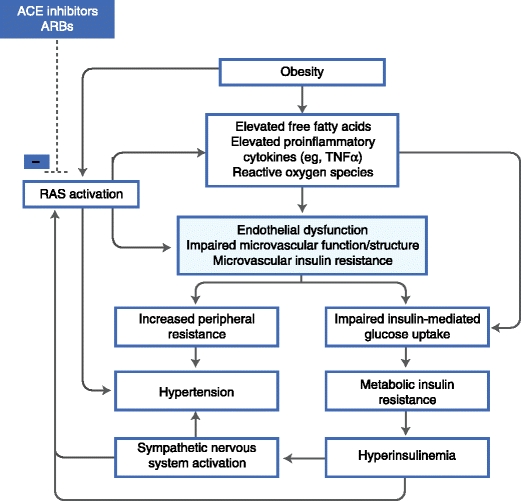
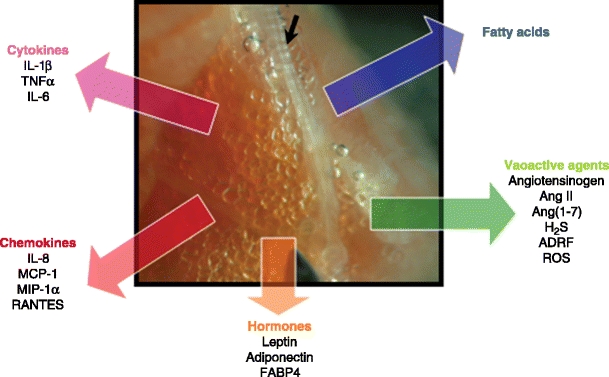
Type 2 diabetes and its major risk factor, obesity, are a growing burden for public health. The mechanisms that connect obesity and its related disorders, such as insulin resistance, type 2 diabetes, and hypertension, are still undefined. Microvascular dysfunction may be a pathophysiologic link between insulin resistance and hypertension in obesity. Many studies have shown that adipose tissue-derived substances (adipokines) interact with (micro)vascular function and influence insulin sensitivity. In the past, research focused on adipokines from perivascular adipose tissue (PVAT). In this review, we focus on the interactions between adipokines, predominantly from PVAT, and microvascular function in relation to the development of insulin resistance, diabetes, and cardiovascular disease.
2型糖尿病及其主要危险因素肥胖,正给公共卫生带来日益沉重的负担。连接肥胖及其相关病症(如胰岛素抵抗、2型糖尿病和高血压)的机制仍不明确。微血管功能障碍可能是肥胖中胰岛素抵抗与高血压之间的病理生理联系。许多研究表明,脂肪组织衍生物质(脂肪因子)与(微)血管功能相互作用并影响胰岛素敏感性。过去,研究集中于血管周围脂肪组织(PVAT)产生的脂肪因子。在本综述中,我们聚焦于主要来自PVAT的脂肪因子与微血管功能之间的相互作用,以及它们与胰岛素抵抗、糖尿病和心血管疾病发生发展的关系。