Pennington Biomedical Research Center, Louisiana State University System, Baton Rouge, Louisiana, USA.
J Neurochem. 2012 Mar;120(6):1060-71. doi: 10.1111/j.1471-4159.2012.07660.x. Epub 2012 Feb 6.
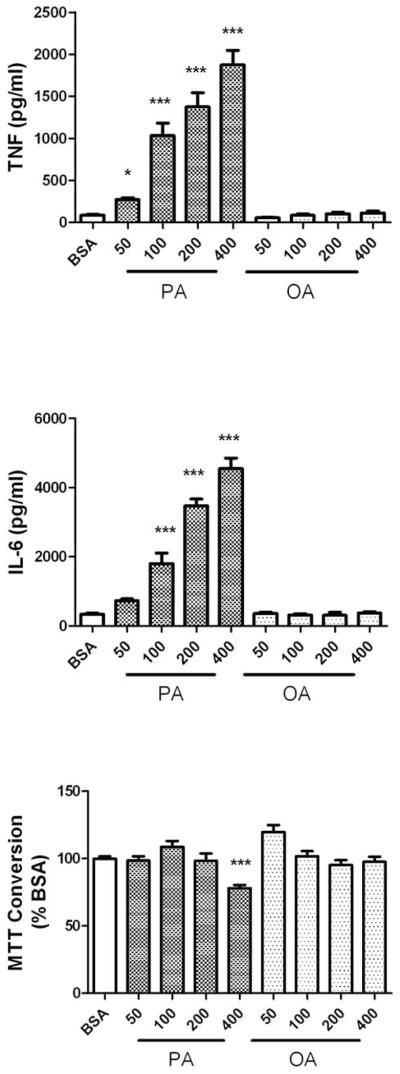
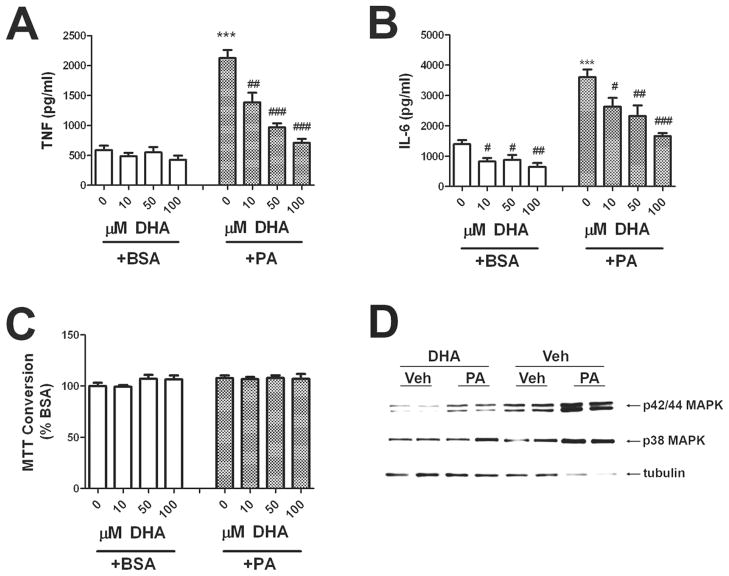
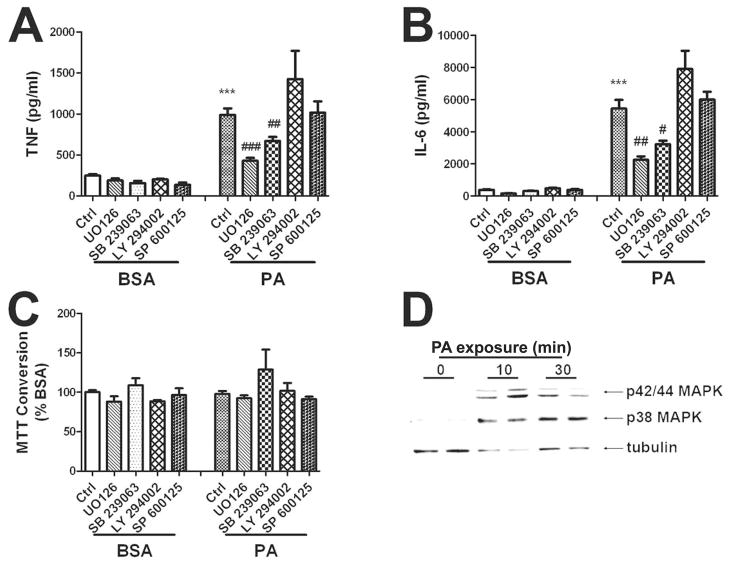
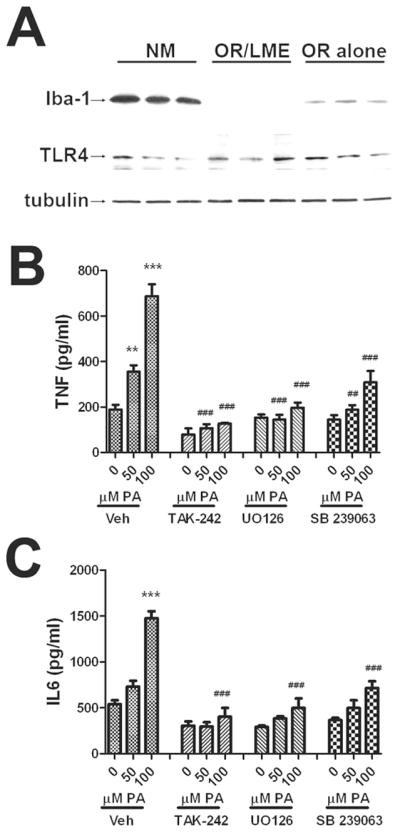
This study describes the effects of long-chain fatty acids on inflammatory signaling in cultured astrocytes. Data show that the saturated fatty acid palmitic acid, as well as lauric acid and stearic acid, trigger the release of TNFα and IL-6 from astrocytes. Unsaturated fatty acids were unable to induce cytokine release from cultured astrocytes. Furthermore, the effects of palmitic acid on cytokine release require Toll-like receptor 4 rather than CD36 or Toll-like receptor 2, and do not depend on palmitic acid metabolism to palmitoyl-CoA. Inhibitor studies revealed that pharmacologic inhibition of p38 or p42/44 MAPK pathways prevents the pro-inflammatory effects of palmitic acid, whereas JNK and PI3K inhibition does not affect cytokine release. Depletion of microglia from primary astrocyte cultures using the lysosomotropic agent l-leucine methyl ester revealed that the ability of palmitic acid to trigger cytokine release is not dependent on the presence of microglia. Finally, data show that the essential ω-3 fatty acid docosahexaenoic acid acts in a dose-dependent manner to prevent the actions of palmitic acid on inflammatory signaling in astrocytes. Collectively, these data demonstrate the ability of saturated fatty acids to induce astrocyte inflammation in vitro. These data thus raise the possibility that high levels of circulating saturated fatty acids could cause reactive gliosis and brain inflammation in vivo, and could potentially participate in the reported adverse neurologic consequences of obesity and metabolic syndrome.
本研究描述了长链脂肪酸对培养的星形胶质细胞炎症信号的影响。数据表明,饱和脂肪酸棕榈酸以及月桂酸和硬脂酸可触发星形胶质细胞释放 TNFα 和 IL-6。不饱和脂肪酸不能诱导培养的星形胶质细胞释放细胞因子。此外,棕榈酸对细胞因子释放的影响需要 Toll 样受体 4(而不是 CD36 或 Toll 样受体 2),并且不依赖于棕榈酸代谢为棕榈酰-CoA。抑制剂研究表明,p38 或 p42/44 MAPK 通路的药理学抑制可防止棕榈酸的促炎作用,而 JNK 和 PI3K 抑制不影响细胞因子释放。使用溶酶体靶向剂 l-亮氨酸甲酯从原代星形胶质细胞培养物中耗尽小胶质细胞表明,棕榈酸引发细胞因子释放的能力不依赖于小胶质细胞的存在。最后,数据表明必需的 ω-3 脂肪酸二十二碳六烯酸以剂量依赖的方式发挥作用,以防止棕榈酸对星形胶质细胞炎症信号的作用。总之,这些数据表明饱和脂肪酸具有诱导星形胶质细胞炎症的能力。因此,这些数据提出了这样一种可能性,即循环中高水平的饱和脂肪酸可能导致体内反应性神经胶质增生和脑炎症,并可能潜在参与肥胖和代谢综合征报告的不良神经后果。