Xiamen Municipal Center for Disease Control and Prevention, Xiamen City, Fujian Province, People's Republic of China.
Virol J. 2012 Jan 17;9:20. doi: 10.1186/1743-422X-9-20.
Containment of influenza A H1N1 virus spread was implemented successfully in Xiamen, with large-scale inoculation to reduce morbidity. To identify beneficial elements and to guide decision-making in epidemic containment, we analyzed the epidemiologic parameters and evaluated the control measures.
We determined various parameters from laboratory-confirmed cases, including incubation period, duration of illness and reproductive number (R0), and evaluated the control measures.
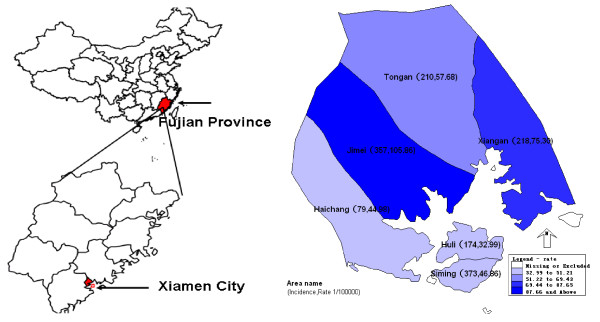
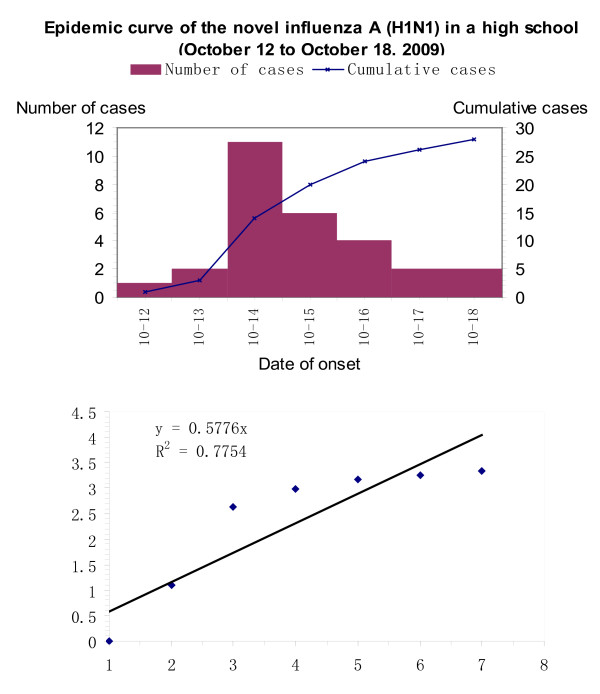
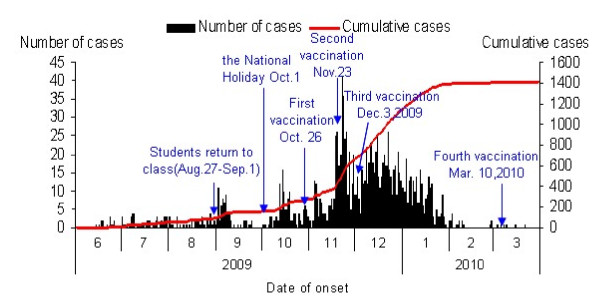
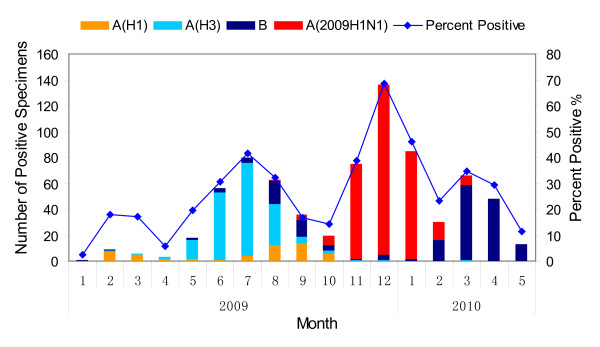
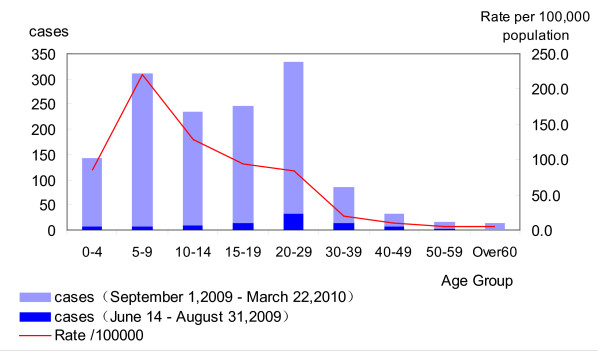
There were 1414 cases with dates of onset between June 14, 2009 and March 22, 2010. The incidence was 56.79/100,000, and mortality was 0.12/100,000. The incidence during the community epidemic phase was 6.23 times higher than in the containment phase. A total of 296,888 subjects were inoculated with domestic influenza H1N1 virus cleavage vaccine. An epidemic curve showed that vaccination in students cut the peak incidence of illness significantly. Men (relative risk (RR) = 1.30, 95% confidence interval (CI): 1.17-1.45) and persons aged 0-14 years were at greater risk of infection. The incidence increased with younger age (χ2 = 950.675, p = ∞). Morbidity was lower in urban than in rural areas (RR = 0.56, 95%CI: 0.50-0.62). The median incubation time was 2 days, median duration of symptoms was 7 days, and the within-school reproductive number was 1.35.
Our analysis indicated that the characteristics of this novel influenza virus were similar to those of seasonal influenza. The principle of "interception of imported cases" applied at Xiamen ports, and vaccination of students effectively limited the spread of the influenza pandemic and reduced the epidemic peak.
在厦门成功实施了甲型 H1N1 流感病毒的控制措施,大规模接种疫苗以降低发病率。为了确定有益因素并指导疫情控制决策,我们分析了流行病学参数并评估了控制措施。
我们从实验室确诊病例中确定了各种参数,包括潜伏期、病程和繁殖数(R0),并评估了控制措施。
2009 年 6 月 14 日至 2010 年 3 月 22 日期间共发生 1414 例发病日期。发病率为 56.79/100,000,死亡率为 0.12/100,000。社区流行阶段的发病率是控制阶段的 6.23 倍。共接种国产流感 H1N1 病毒裂解疫苗 296888 人次。流行曲线显示,学生接种疫苗显著降低了发病高峰的发病率。男性(相对风险(RR)=1.30,95%置信区间(CI):1.17-1.45)和 0-14 岁人群感染风险更高。发病率随年龄降低而增加(χ2=950.675,p=∞)。城市发病率低于农村(RR=0.56,95%CI:0.50-0.62)。潜伏期中位数为 2 天,症状持续时间中位数为 7 天,校内繁殖数为 1.35。
我们的分析表明,这种新型流感病毒的特征与季节性流感相似。厦门港口采取的“拦截输入病例”原则,以及对学生的疫苗接种,有效限制了流感大流行的传播并降低了疫情高峰。