British Columbia Centre for Disease Control, Vancouver.
University of British Columbia, Vancouver.
J Infect Dis. 2017 Dec 19;216(12):1487-1500. doi: 10.1093/infdis/jix526.
Vaccine effectiveness (VE) estimates for 2015-2016 seasonal influenza vaccine are reported from Canada's Sentinel Practitioner Surveillance Network (SPSN). This season was characterized by a delayed 2009 pandemic influenza A(H1N1) virus (A[H1N1]pdm09) epidemic and concurrent influenza B(Victoria) virus activity. Potential influences on VE beyond antigenic match are explored, including viral genomic variation, birth cohort effects, prior vaccination, and epidemic period.
VE was estimated by a test-negative design comparing the adjusted odds ratio for influenza test positivity among vaccinated compared to unvaccinated participants. Vaccine-virus relatedness was assessed by gene sequencing and hemagglutination inhibition assay.
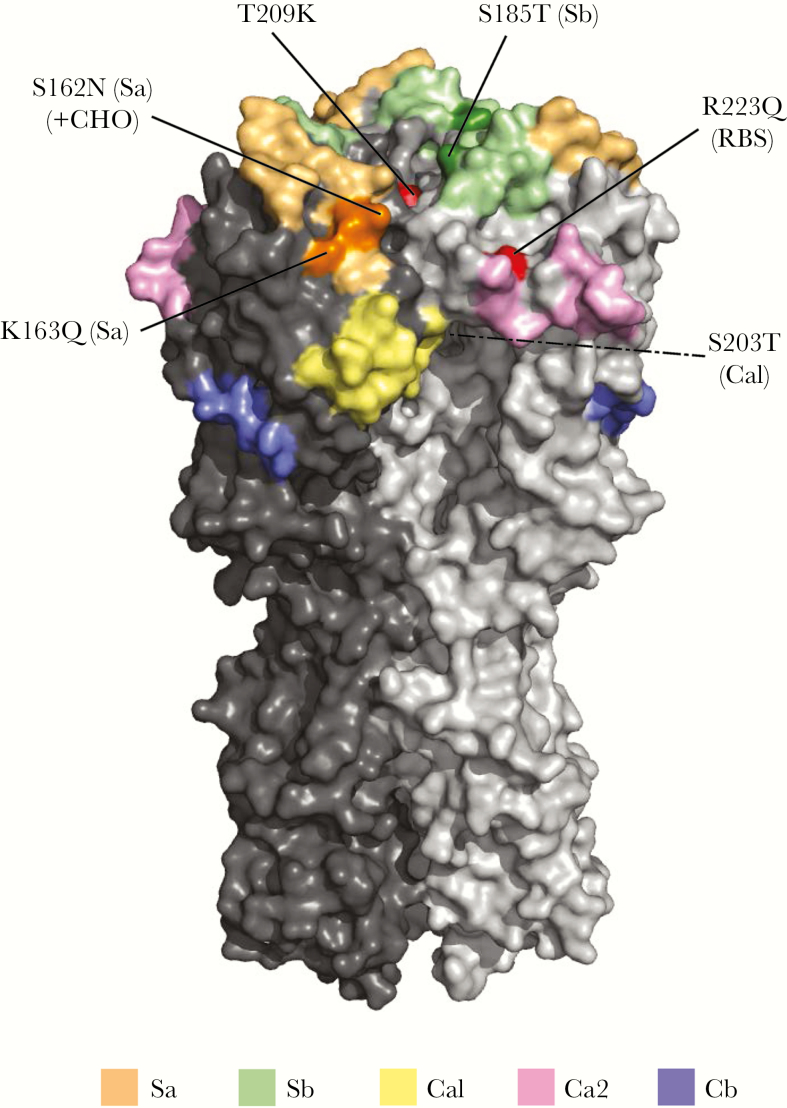
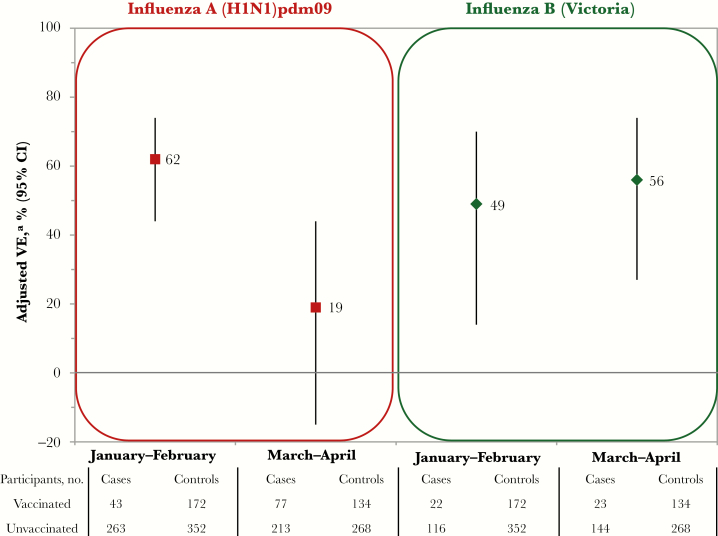
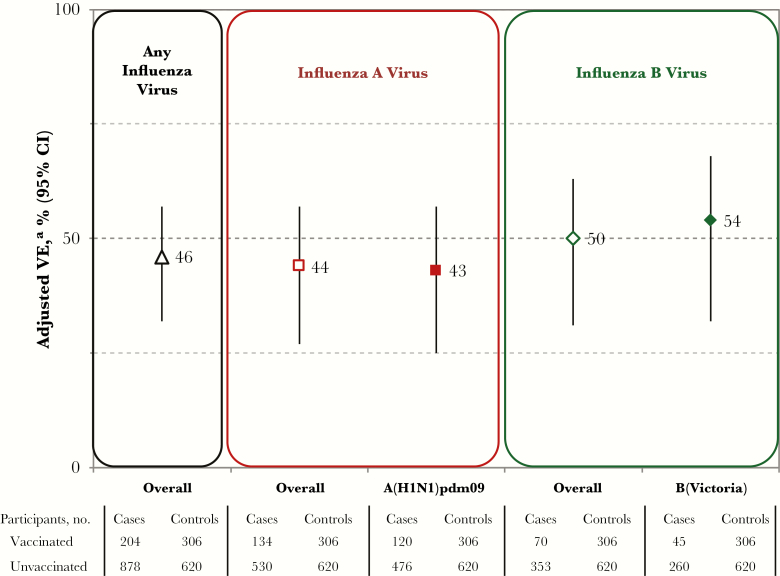
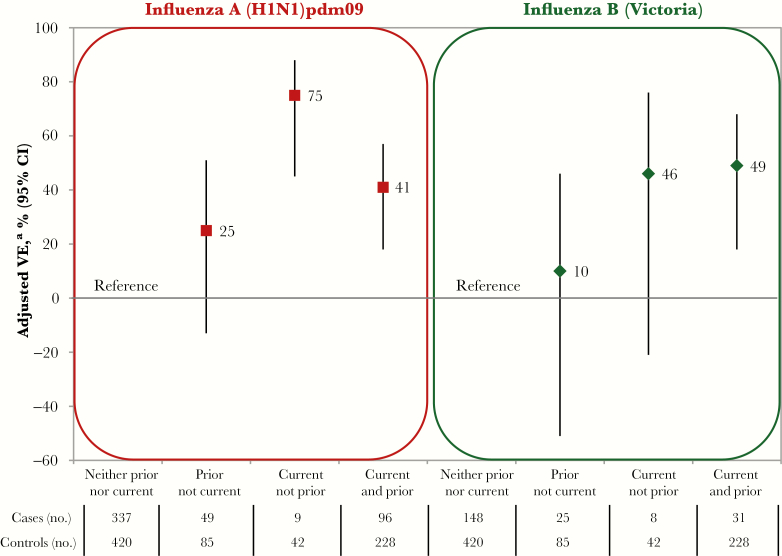
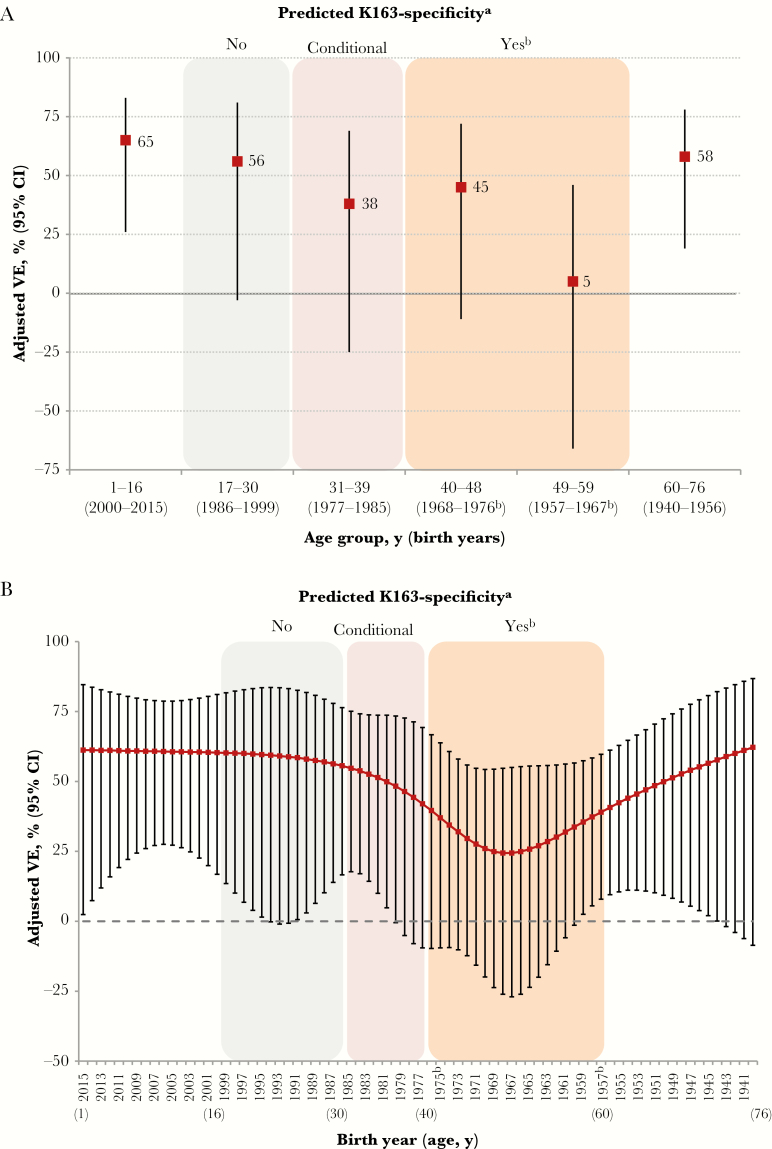
Analyses included 596 influenza A(H1N1)pdm09 and 305 B(Victoria) cases and 926 test-negative controls. A(H1N1)pdm09 viruses were considered antigenically related to vaccine (unchanged since 2009), despite phylogenetic clustering within emerging clade 6B.1. The adjusted VE against A(H1N1)pdm09 was 43% (95% confidence interval [CI], 25%-57%). Compared to other age groups, VE against A(H1N1)pdm09 was lower for adults born during 1957-1976 (25%; 95% CI, -16%-51%). The VE against A(H1N1)pdm09 was also lower for participants consecutively vaccinated during both the current and prior seasons (41%; 95% CI, 18%-57%) than for those vaccinated during the current season only (75%; 95% CI, 45%-88%), and the VE among participants presenting in March-April 2016 (19%; 95% CI, -15%-44%) was lower than that among those presenting during January-February 2016 (62%; 95% CI, 44%-74%). The adjusted VE for B(Victoria) viruses was 54% (95% CI, 32%-68%), despite lineage-level mismatch to B(Yamagata) vaccine. The further variation in VE as observed for A(H1N1)pdm09 was not observed for B(Victoria).
Influenza VE findings may require consideration of other agent-host and immuno-epidemiologic influences on vaccine performance beyond antigenic match, including viral genomic variation, repeat vaccination, birth (immunological) cohort effects, and potential within-season waning of vaccine protection.
加拿大监测实践网络(SPSN)报告了 2015-2016 年季节性流感疫苗的疫苗有效性(VE)估计值。本季节的特点是 2009 年大流行的甲型 H1N1 流感(A[H1N1]pdm09)病毒流行滞后,同时伴有乙型流感(维多利亚)病毒活动。除了抗原匹配之外,还探讨了对 VE 的潜在影响,包括病毒基因组变异、出生队列效应、先前接种和流行期。
通过比较接种疫苗的参与者与未接种疫苗的参与者中流感检测阳性的调整后比值,使用阴性测试设计估计 VE。通过基因测序和血凝抑制试验评估疫苗病毒相关性。
分析包括 596 例 A(H1N1)pdm09 和 305 例 B(维多利亚)病例和 926 例阴性对照。尽管在新兴的 6B.1 分支内出现了聚类,但 A(H1N1)pdm09 病毒被认为与疫苗具有抗原相关性(自 2009 年以来没有变化)。与其他年龄组相比,A(H1N1)pdm09 的 VE 较低,出生于 1957-1976 年的成年人(25%;95%CI,-16%-51%)。与仅在当前季节接种疫苗的参与者(75%;95%CI,45%-88%)相比,在当前和前一季节连续接种疫苗的参与者(41%;95%CI,18%-57%)对 A(H1N1)pdm09 的 VE 也较低,2016 年 3 月至 4 月就诊的参与者(19%;95%CI,-15%-44%)的 VE 低于 2016 年 1 月至 2 月就诊的参与者(62%;95%CI,44%-74%)。B(维多利亚)病毒的调整后 VE 为 54%(95%CI,32%-68%),尽管与 B(山形)疫苗存在谱系水平不匹配。对于 A(H1N1)pdm09 观察到的 VE 进一步变化,对于 B(维多利亚)未观察到。
流感 VE 发现可能需要考虑其他宿主和免疫流行病学因素对疫苗性能的影响,除了抗原匹配外,还包括病毒基因组变异、重复接种、出生(免疫)队列效应以及疫苗保护作用在季节内的潜在下降。