Ma Yuanyuan, Liang Dongming, Liu Jian, Axcrona Karol, Kvalheim Gunnar, Giercksky Karl-Erik, Nesland Jahn M, Suo Zhenhe
Department of Pathology, The Norwegian Radium Hospital, Oslo University Hospital, University of Oslo, Montebello, Ullernchausseen 70, 0310 Oslo, Norway.
Tumour Biol. 2012 Aug;33(4):967-78. doi: 10.1007/s13277-012-0325-3. Epub 2012 Jan 18.
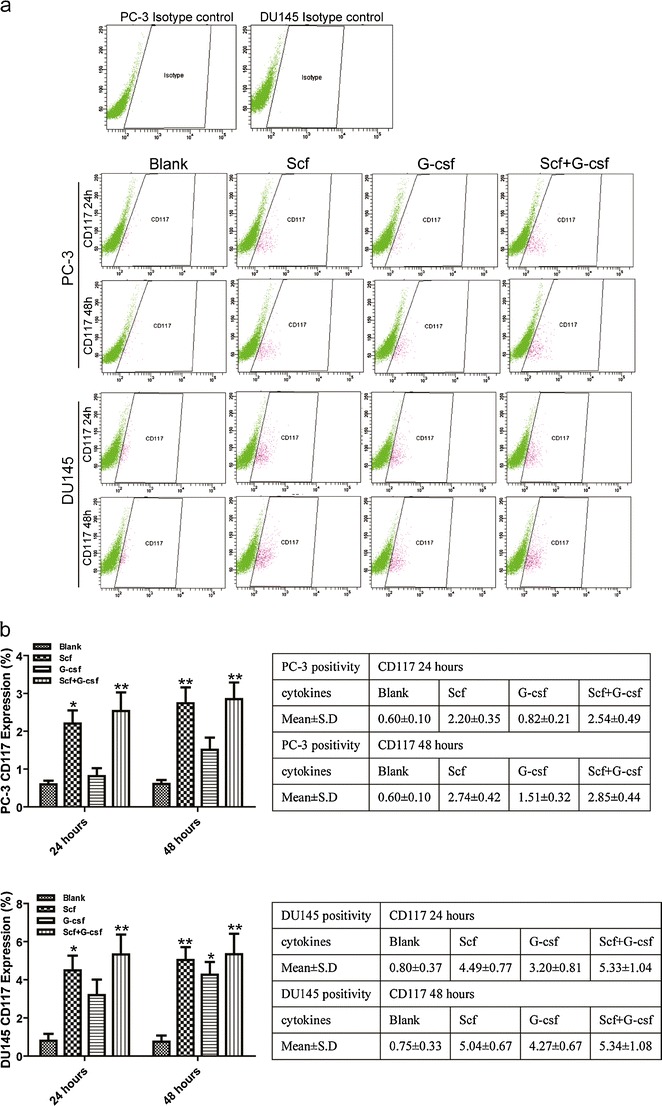
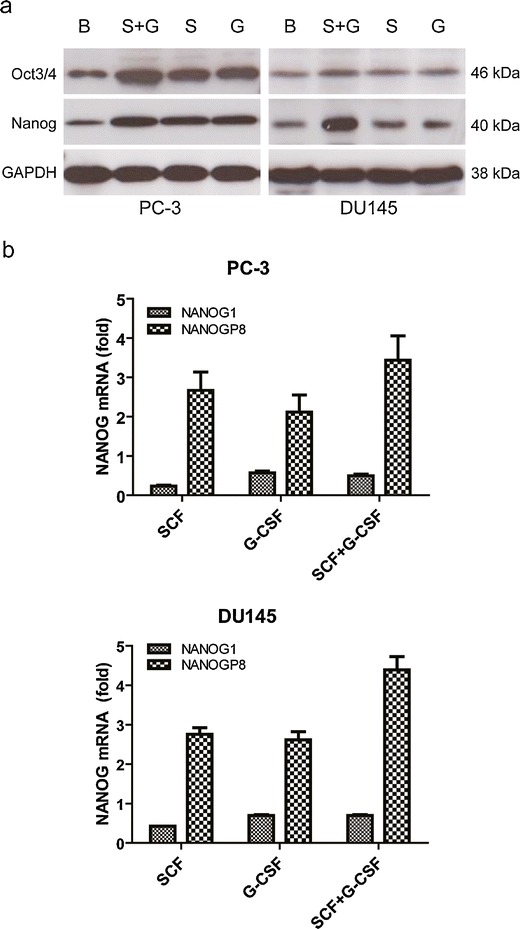
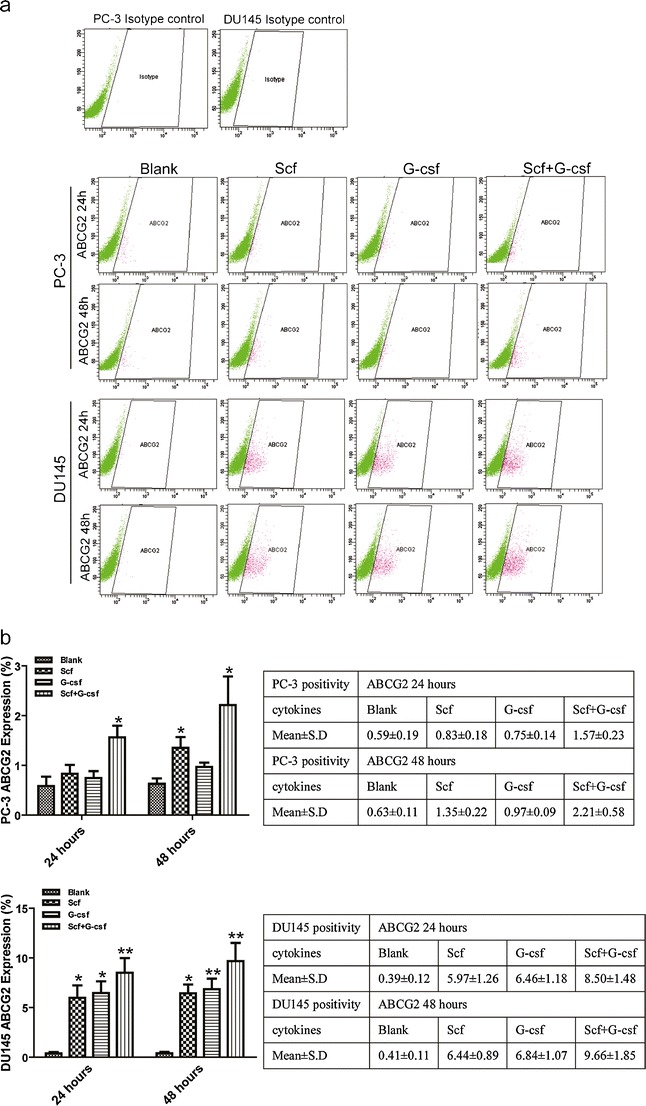
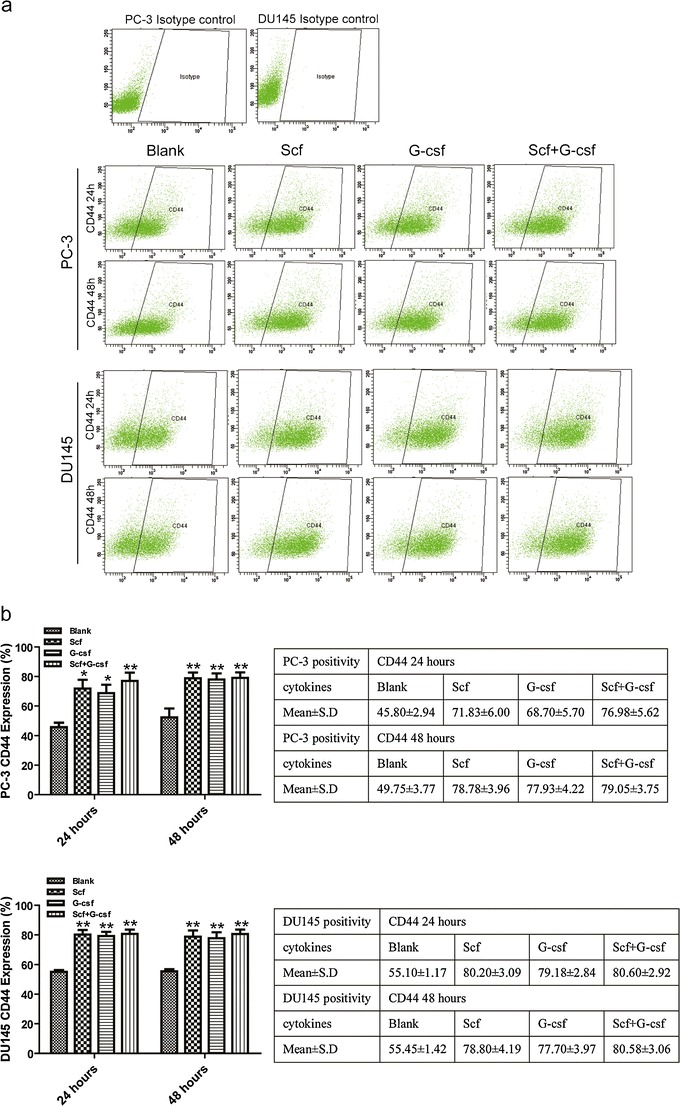
Bone marrow metastases are formed in the late phases of prostate cancer disease. Stem cell factor (SCF) and granulocyte colony-stimulating factor (G-CSF) are present in the microenvironment of the bone marrow and play a vital role in cell biology therein. The present study was to investigate the influence of SCF and G-CSF on stem-like properties in prostate cancer cell lines. Upon stimulation with SCF or G-CSF, higher levels of CD117, ABCG2, and CD44 were observed in PC-3 and DU145 cells examined by flow cytometry. Simultaneously, the expressions of Oct3/4 and Nanog were upregulated. Moreover, quantitative real-time PCR verified that the increased Nanog under the stimulations was mostly derived from NANOGP8. In parallel with the increasing expressions of these proteins, higher colony and sphere formation efficiencies were seen in these cells in response to the cytokine stimulations. Furthermore, a synergistic effect of SCF and G-CSF on colony and sphere formations and ABCG2 expression was disclosed. Our results indicate a favorable bone marrow niche for prostate cancer cells where higher levels of cell stemness are maintained at least partly by the cytokines SCF and G-CSF.
骨髓转移在前列腺癌疾病的晚期形成。干细胞因子(SCF)和粒细胞集落刺激因子(G-CSF)存在于骨髓微环境中,并在其中的细胞生物学中发挥重要作用。本研究旨在探讨SCF和G-CSF对前列腺癌细胞系干细胞样特性的影响。在用SCF或G-CSF刺激后,通过流式细胞术检测发现PC-3和DU145细胞中CD117、ABCG2和CD44的水平升高。同时,Oct3/4和Nanog的表达上调。此外,定量实时PCR证实,刺激下Nanog的增加主要来源于NANOGP8。与这些蛋白质表达的增加同时,在这些细胞中,响应细胞因子刺激,可见更高的集落形成和球形成效率。此外,还揭示了SCF和G-CSF对集落形成、球形成和ABCG2表达的协同作用。我们的结果表明,骨髓微环境对前列腺癌细胞有利,其中至少部分通过细胞因子SCF和G-CSF维持较高水平的细胞干性。