Department of Nutrition, University of California, Davis, CA 95616, USA.
Nutrients. 2011 Mar;3(3):274-82. doi: 10.3390/nu3030274. Epub 2011 Feb 28.
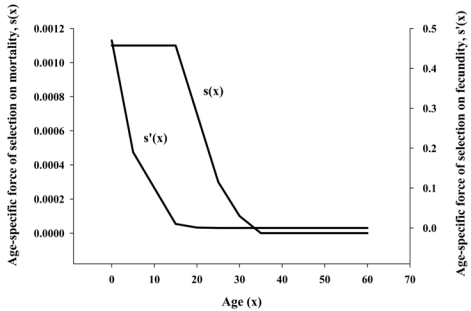
Life expectancies after the age of 70 and the number of individuals living with age-related chronic conditions that affect daily activities continue to increase. Age-specific nutritional recommendations may help to decrease the incidence or severity of age-related debilitating chronic disorders. However, research in this area has seen limited success in identifying nutrition-related mechanisms that underlie the functional loss and chronic conditions that occur as a function of time. We believe that the limited success in establishing age-specific nutrition recommendations for the older population reflects, at least in part, research designs that fail to consider the evolutionary and biological bases of aging and longevity. Longevity has evolved as a by-product of genes selected for their contribution in helping the organism survive to the age of reproduction. As such, the principle of genetic determinism provides an appropriate underlying theory for research designs evaluating nutritional factors involved with life span. Aging is not a product of evolution and reflects stochastic and/or random events that most likely begin during the early, reproductively-active years. The genetic determinism model by which young (normal, control) are compared to old (abnormal, experimental) groups will not be effective in identifying underlying mechanisms and nutritional factors that impact aging. The purpose of this commentary is to briefly discuss the difference between aging and longevity and why knowing the difference is important to nutrition research and to establishing the most precise nutritional recommendations possible for the older population.
70 岁以上人群的预期寿命以及受年龄相关慢性疾病影响日常生活的人数不断增加。针对特定年龄的营养建议可能有助于降低与年龄相关的使人衰弱的慢性疾病的发病率或严重程度。然而,在确定与功能丧失和随时间发生的慢性疾病相关的营养相关机制方面,该领域的研究仅取得了有限的成功。我们认为,为老年人群制定特定年龄的营养建议的有限成功,至少部分反映了研究设计未能考虑衰老和长寿的进化和生物学基础。长寿是作为有助于生物体繁殖到繁殖年龄的基因选择的副产品而进化的。因此,遗传决定论原则为评估与寿命相关的营养因素的研究设计提供了一个适当的基础理论。衰老不是进化的产物,它反映了随机的或随机的事件,这些事件很可能在早期的生殖活跃期就开始了。将年轻(正常、对照)组与年老(异常、实验)组进行比较的遗传决定论模型,将无法有效确定影响衰老的潜在机制和营养因素。本评论的目的是简要讨论衰老和长寿之间的区别,以及了解这种区别对营养研究和为老年人群制定最精确的营养建议的重要性。