Division of Molecular Pathology, The Institute of Cancer Research, Brookes Lawley Building, 15 Cotswold Road, Sutton, Surrey SM2 5NG, UK.
Nature. 2012 Jan 18;481(7381):306-13. doi: 10.1038/nature10762.
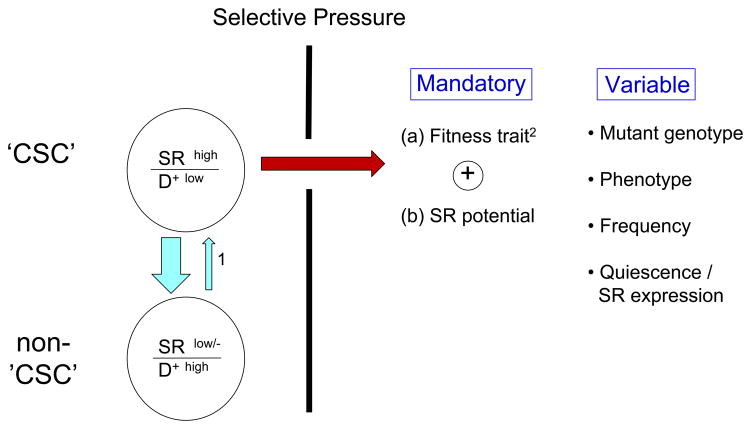
Cancers evolve by a reiterative process of clonal expansion, genetic diversification and clonal selection within the adaptive landscapes of tissue ecosystems. The dynamics are complex, with highly variable patterns of genetic diversity and resulting clonal architecture. Therapeutic intervention may destroy cancer clones and erode their habitats, but it can also inadvertently provide a potent selective pressure for the expansion of resistant variants. The inherently Darwinian character of cancer is the primary reason for this therapeutic failure, but it may also hold the key to more effective control.
癌症是通过在组织生态系统的适应景观内进行克隆扩张、遗传多样化和克隆选择的反复过程而进化的。其动态是复杂的,具有高度可变的遗传多样性模式和由此产生的克隆结构。治疗干预可能会破坏癌细胞克隆并侵蚀其栖息地,但也可能无意中为耐药变体的扩张提供强大的选择压力。癌症固有的达尔文特征是导致这种治疗失败的主要原因,但它也可能是更有效控制癌症的关键。