Department of Neurology, St Josef Hospital Bochum, Ruhr-University Bochum, Germany.
J Neuroinflammation. 2012 Jan 20;9:15. doi: 10.1186/1742-2094-9-15.
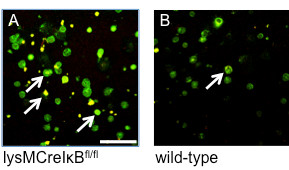
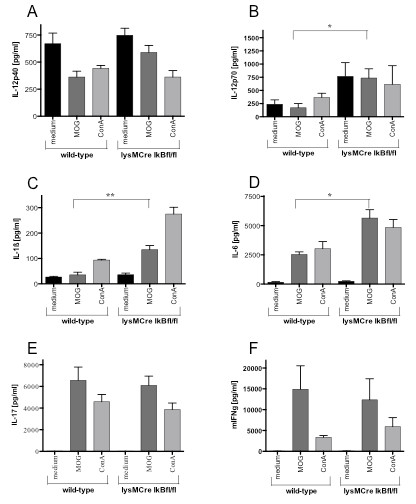
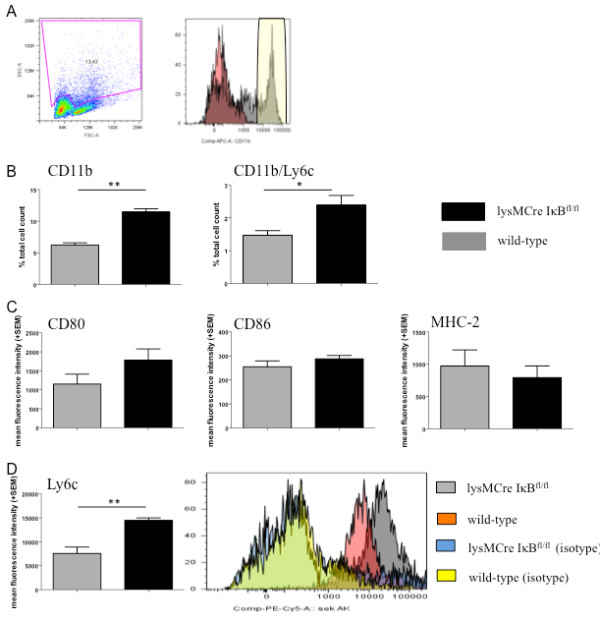
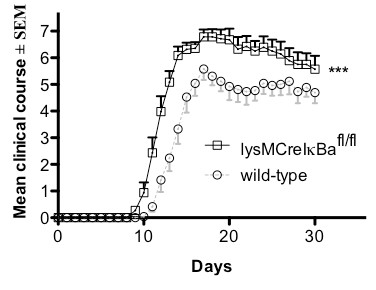
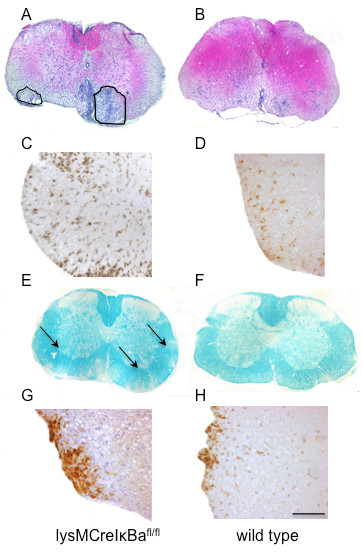
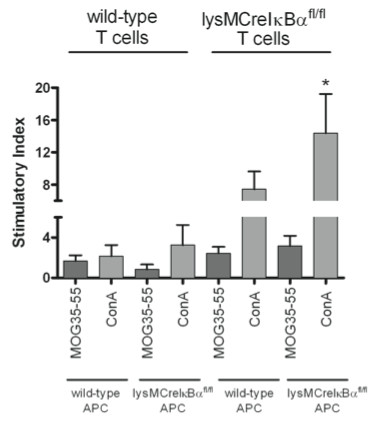
The NF-κB/REL-family of transcription factors plays a central role in coordinating the expression of a wide variety of genes controlling immune responses including autoimmunity of the central nervous system (CNS). The inactive form of NF-κB consists of a heterodimer which is complexed with its inhibitor, IκB. Conditional knockout-mice for IκBα in myeloid cells (lysMCreIκBα(fl/fl)) have been generated and are characterized by a constitutive activation of NF-κB proteins allowing the study of this transcription factor in myelin-oligodendrocyte-glycoprotein induced experimental autoimmune encephalomyelitis (MOG-EAE), a well established experimental model for autoimmune demyelination of the CNS.In comparison to controls, lysMCreIκBα(fl/fl) mice developed a more severe clinical course of EAE. Upon histological analysis on day 15 p.i., there was an over two fold increased infiltration of T-cells and macrophages/microglia. In addition, lysMCreIκBα(fl/fl) mice displayed an increased expression of the NF-κB dependent factor inducible nitric oxide synthase in inflamed lesions. These changes in the CNS are associated with increased numbers of CD11b positive splenocytes and a higher expression of Ly6c on monocytes in the periphery. Well in accordance with these changes in the myeloid cell compartment, there was an increased production of the monocyte cytokines interleukin(IL)-12 p70, IL-6 and IL-1beta in splenocytes. In contrast, production of the T-cell associated cytokines interferon gamma (IFN-gamma) and IL-17 was not influenced.In summary, myeloid cell derived NF-κB plays a crucial role in autoimmune inflammation of the CNS and drives a pathogenic role of monocytes and macrophages independently from T-cells.
NF-κB/REL-家族转录因子在协调控制免疫反应的各种基因表达中发挥核心作用,包括中枢神经系统(CNS)的自身免疫。NF-κB 的无活性形式由与抑制剂 IκB 复合的异源二聚体组成。已经产生了骨髓细胞中 IκBα 的条件性敲除小鼠(lysMCreIκBα(fl/fl)),其 NF-κB 蛋白持续激活,允许研究该转录因子在髓鞘少突胶质细胞糖蛋白诱导的实验性自身免疫性脑脊髓炎(MOG-EAE)中的作用,这是一种用于中枢神经系统自身免疫性脱髓鞘的成熟实验模型。与对照组相比,lysMCreIκBα(fl/fl) 小鼠发展出更严重的 EAE 临床病程。在感染后第 15 天进行组织学分析时,T 细胞和巨噬细胞/小胶质细胞的浸润增加了两倍以上。此外,lysMCreIκBα(fl/fl) 小鼠在炎症病灶中显示出 NF-κB 依赖性因子诱导型一氧化氮合酶的表达增加。CNS 中的这些变化与脾细胞中 CD11b 阳性的 splenocytes 和单核细胞上 Ly6c 的表达增加有关。与髓细胞区室中的这些变化非常一致的是,在脾细胞中产生了更多的单核细胞细胞因子白细胞介素(IL)-12 p70、IL-6 和 IL-1β。相比之下,T 细胞相关细胞因子干扰素γ(IFN-γ)和 IL-17 的产生不受影响。总之,髓样细胞衍生的 NF-κB 在中枢神经系统自身免疫炎症中发挥着至关重要的作用,并独立于 T 细胞驱动单核细胞和巨噬细胞的致病作用。