Nelson Jennifer, Francom Lyndee L, Anderson Lynn, Damm Kelly, Baker Ryan, Chen Joseph, Franklin Sarah, Hamaker Amy, Izidoro Izadora, Moss Eric, Orton Mikayla, Stevens Evan, Yeung Celestine, Judd Allan M, Bell John D
Department of Physiology and Developmental Biology, Brigham Young University, Provo, Utah 84602, USA.
Biochim Biophys Acta. 2012 May;1818(5):1196-204. doi: 10.1016/j.bbamem.2012.01.005. Epub 2012 Jan 13.
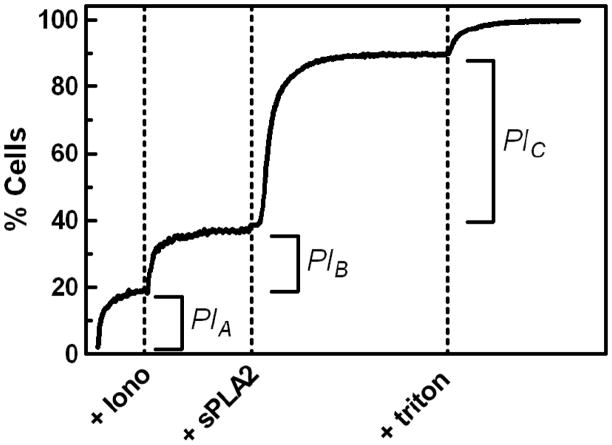
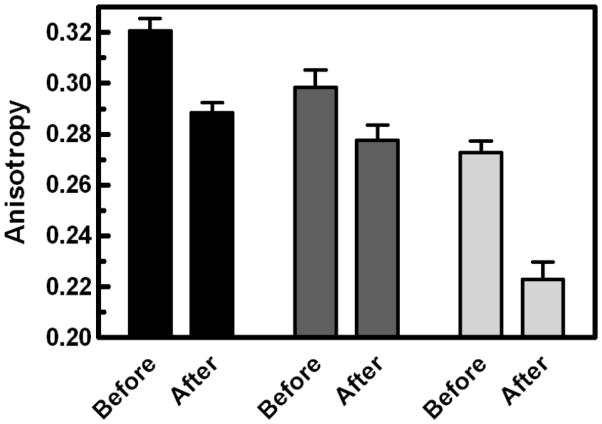
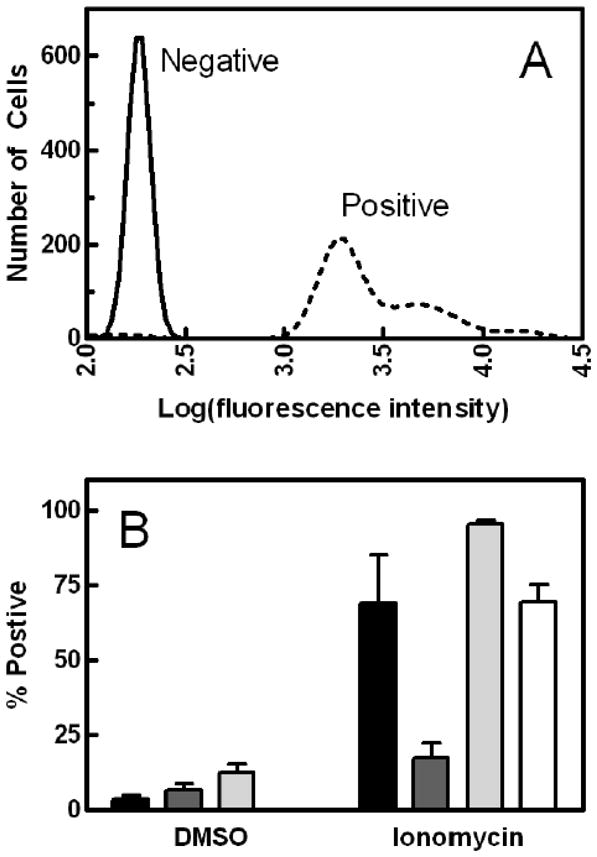
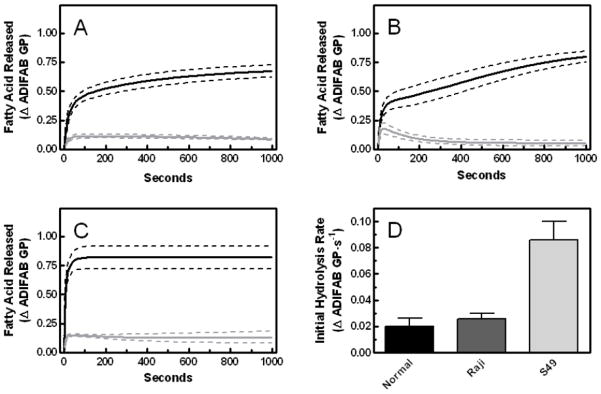
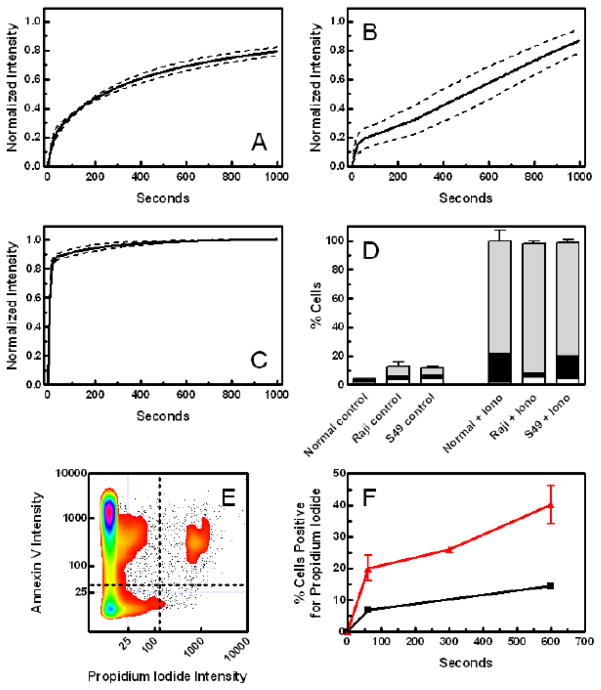
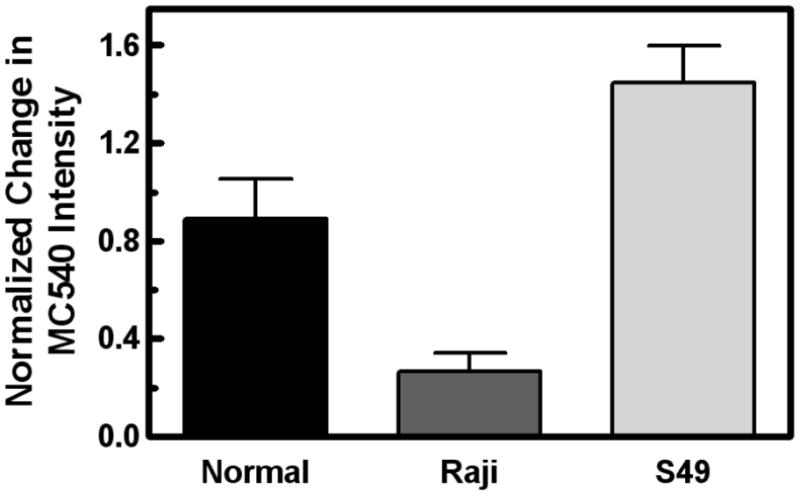
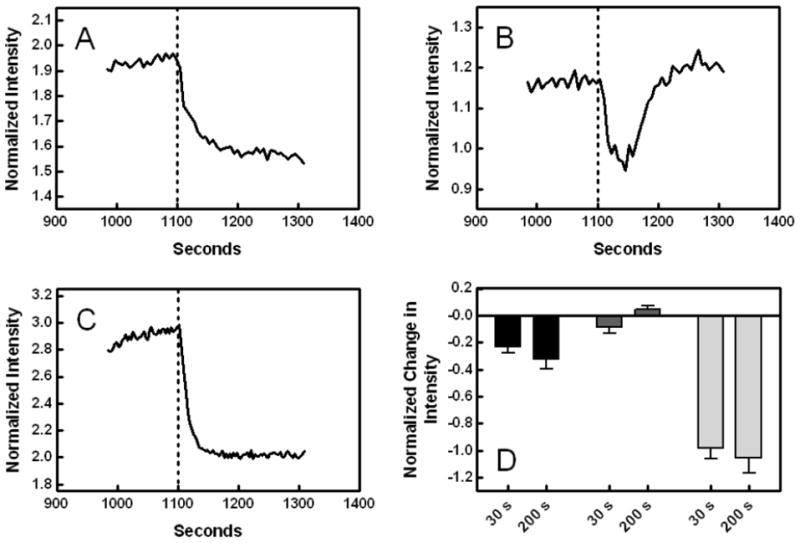
Normal human lymphocytes resisted the hydrolytic action of secretory phospholipase A(2) but became susceptible to the enzyme following treatment with a calcium ionophore, ionomycin. To test the hypothesis that this susceptibility requires exposure of the anionic lipid phosphatidylserine on the external face of the cell membrane, experiments were repeated with a human Burkitt's lymphoma cell line (Raji cells). In contrast to normal lymphocytes or S49 mouse lymphoma cells, most of the Raji cells (83%) did not translocate phosphatidylserine to the cell surface upon treatment with ionomycin. Those few that did display exposed phosphatidylserine were hydrolyzed immediately upon addition of phospholipase A(2). Interestingly, the remaining cells were also completely susceptible to the enzyme but were hydrolyzed at a slower rate and after a latency of about 100s. In contradistinction to the defect in phosphatidylserine translocation, Raji cells did display other physical membrane changes upon ionomycin treatment that may be relevant to hydrolysis by phospholipase A(2). These changes were detected by merocyanine 540 and trimethylammonium diphenylhexatriene fluorescence and were common among normal lymphocytes, S49 cells, and Raji cells. The levels of these latter effects corresponded well with the relative rates of hydrolysis among the three cell lines. These results suggested that while phosphatidylserine enhances the rate of cell membrane hydrolysis by secretory phospholipase A(2), it is not an absolute requirement. Other physical properties such as membrane order contribute to the level of membrane susceptibility to the enzyme independent of phosphatidylserine.
正常人类淋巴细胞可抵抗分泌型磷脂酶A2的水解作用,但在用钙离子载体离子霉素处理后,对该酶变得敏感。为了验证这种敏感性需要细胞膜外表面的阴离子脂质磷脂酰丝氨酸暴露这一假设,我们用人伯基特淋巴瘤细胞系(拉吉细胞)重复了实验。与正常淋巴细胞或S49小鼠淋巴瘤细胞不同,大多数拉吉细胞(83%)在用离子霉素处理后并未将磷脂酰丝氨酸转运至细胞表面。那些确实显示出磷脂酰丝氨酸暴露的少数细胞在加入磷脂酶A2后立即被水解。有趣的是,其余细胞对该酶也完全敏感,但水解速度较慢,且有大约100秒的延迟。与磷脂酰丝氨酸转运缺陷不同,拉吉细胞在用离子霉素处理后确实表现出其他可能与磷脂酶A2水解相关的细胞膜物理变化。这些变化通过部花青540和三甲基铵二苯基己三烯荧光检测到,在正常淋巴细胞、S49细胞和拉吉细胞中都很常见。这些后期效应的程度与三种细胞系中的相对水解速率非常吻合。这些结果表明,虽然磷脂酰丝氨酸可提高分泌型磷脂酶A2对细胞膜的水解速率,但它并非绝对必需。其他物理性质,如膜有序性,在不依赖磷脂酰丝氨酸的情况下,也会影响细胞膜对该酶的敏感程度。