Mucosal Inflammation Program, School of Medicine, Aurora, Colorado, USA.
Gut. 2013 Jan;62(1):53-62. doi: 10.1136/gutjnl-2011-301272. Epub 2012 Jan 20.
The earliest endoscopically-evident lesion in Crohn's disease is the aphthous ulcer, which develops over ectopic lymphoid tissues (ie, inducible lymphoid follicles (ILF), tertiary lymphoid tissue (TLT)) in the chronically inflamed intestine. ILF/TLT are induced within effector sites by homeostatic lymphoid chemokines, but their role in the development of intestinal ILF/TLT and in the pathogenesis of Crohn's disease is poorly understood.
Using a mouse model of Crohn's-like ileitis (TNFARE) which develops florid induction of ILF/TLT within its terminal ileum, the contribution of the CCR7/CCL19/CCL21 chemokine axis during the development of TLT and its role in disease pathogenesis were assessed.
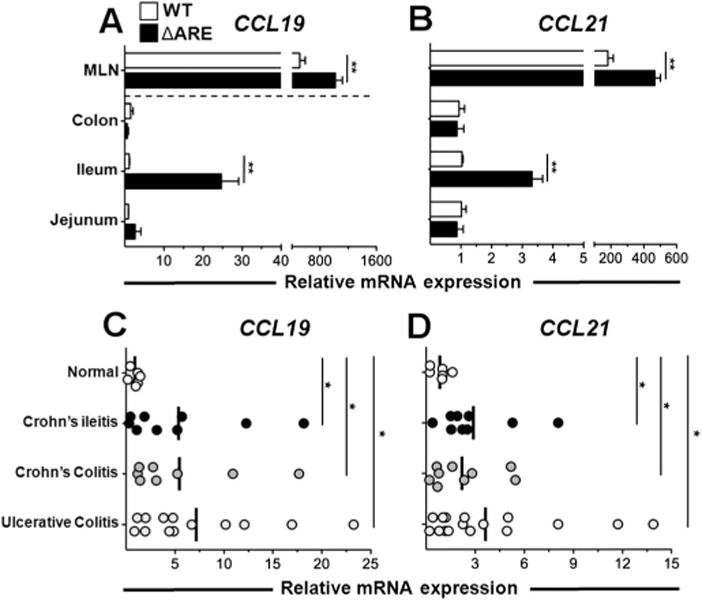
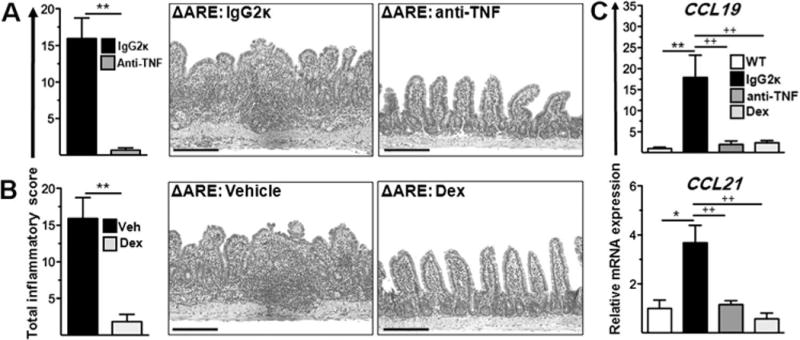
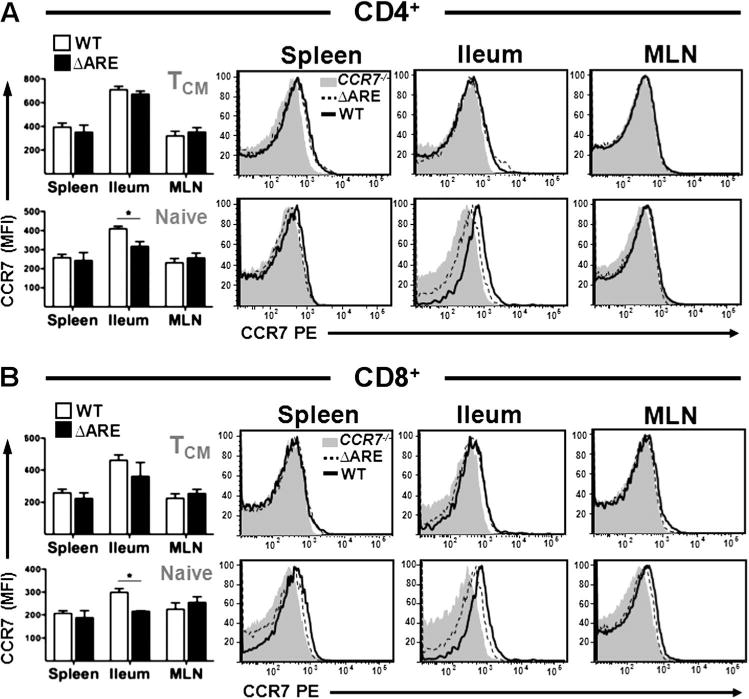
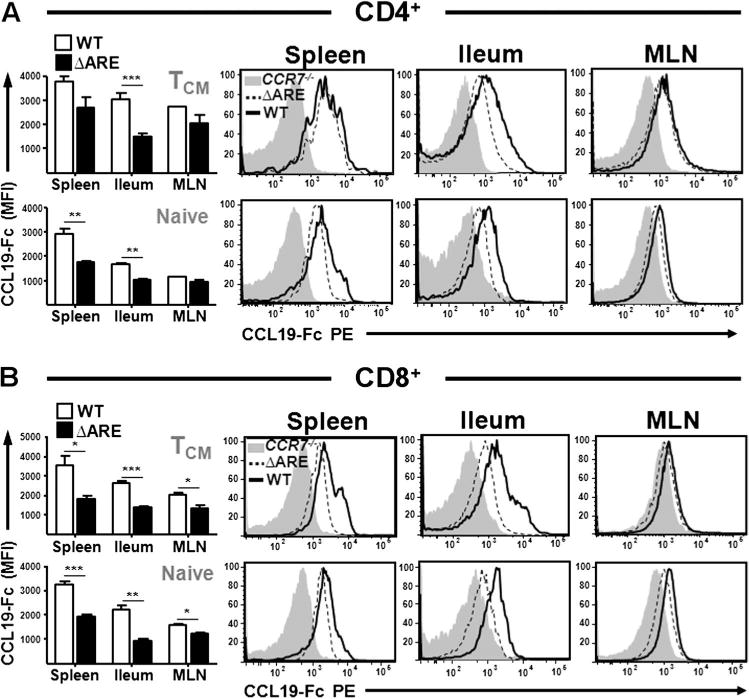
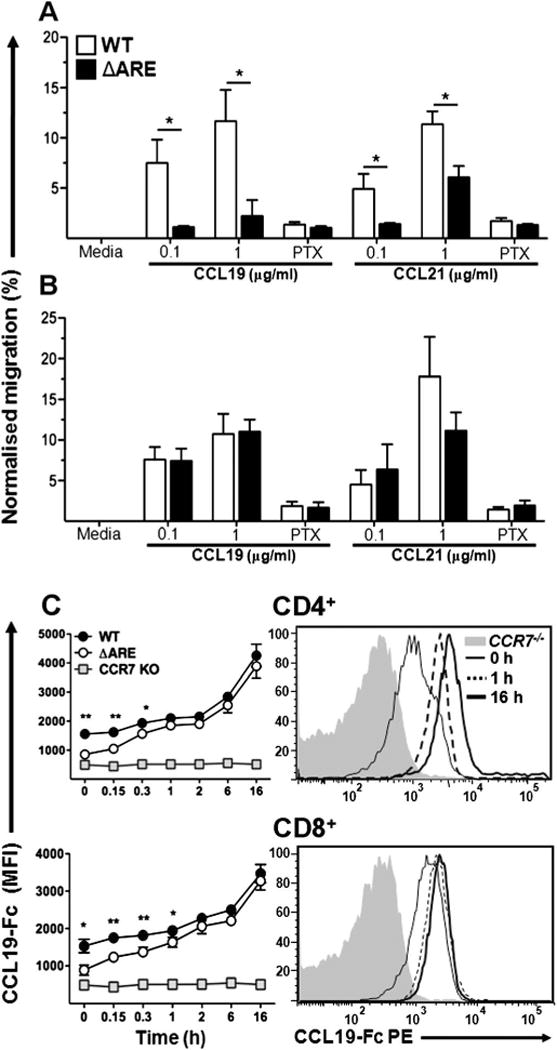
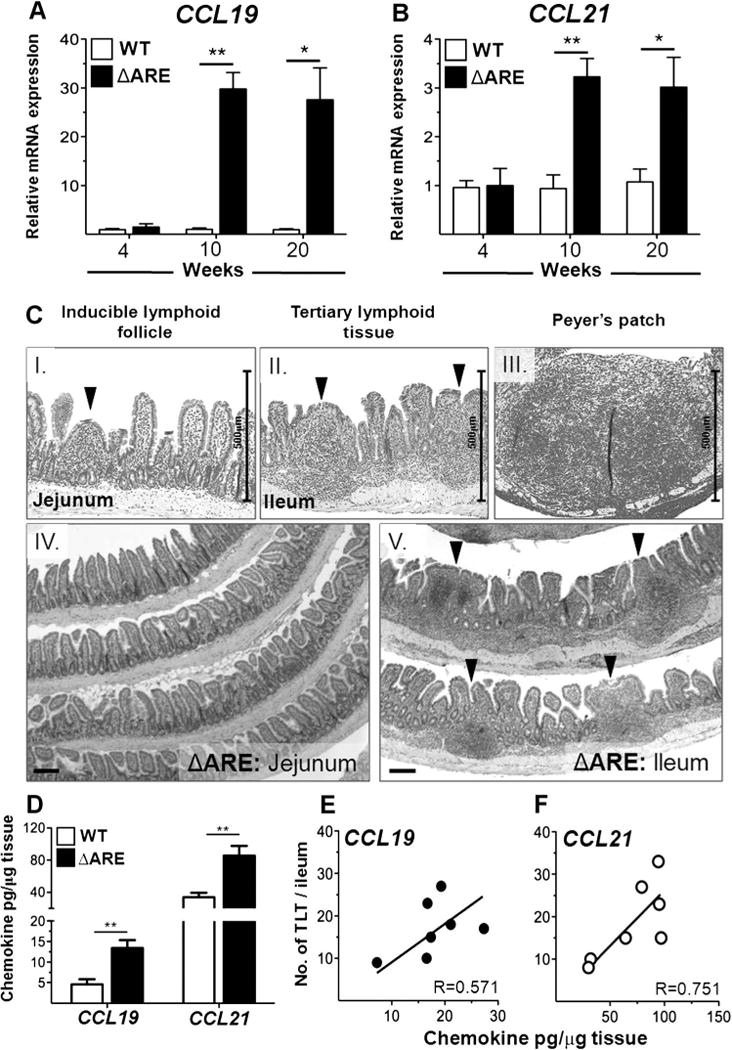
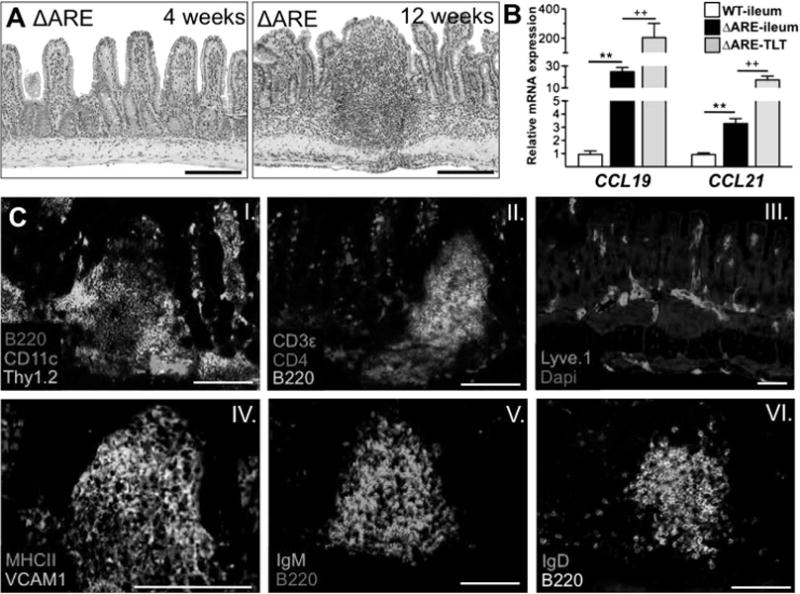
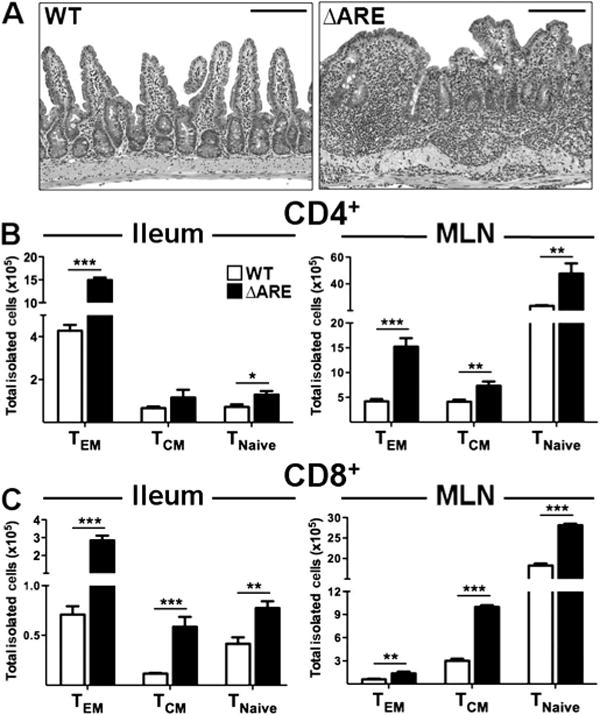
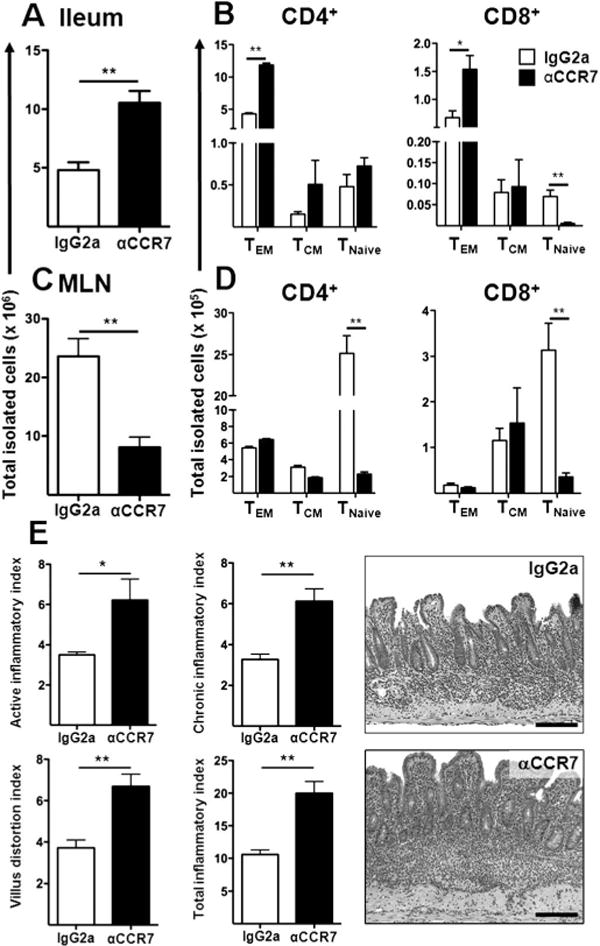
Both CCL19 and CCL21 were increased within the inflamed ileum of TNFARE mice, which resulted in CCR7 internalisation and impaired T cell chemotaxis. ILF/TLT were a major source of CCL19 and CCL21 and increased local synthesis, augmented recruitment/retention of effector, naïve and central memory T cell subsets within the inflamed ileum. Immunoblockade of CCR7 resulted in further effector T cell retention and exacerbation of ileitis.
Induction of ILF/TLT in the chronically inflamed intestine alters the homeostatic CCL19-CCL21 lymphoid-chemokine gradient and increases recruitment/retention of effector CCR7+ T cell subsets within the terminal ileum, contributing to the perpetuation of chronic inflammation. Thus, blockade of CCR7 or its ligands might result in deleterious consequences for subjects with chronic inflammatory diseases.
克罗恩病最早的内镜下可见病变是口疮性溃疡,它发生在慢性炎症肠道中的异位淋巴组织(即诱导性淋巴滤泡(ILF)、三级淋巴组织(TLT))上。ILF/TLT 是由稳态淋巴趋化因子在效应部位诱导产生的,但它们在肠道 ILF/TLT 的发展和克罗恩病发病机制中的作用尚不清楚。
使用类似于克罗恩病的回肠炎(TNFARE)的小鼠模型,该模型在其末端回肠中形成丰富的 ILF/TLT 诱导,评估了 CCR7/CCL19/CCL21 趋化因子轴在 TLT 发展过程中的作用及其在发病机制中的作用。
TNFARE 小鼠炎症回肠中 CCL19 和 CCL21 均增加,导致 CCR7 内化和 T 细胞趋化性受损。ILF/TLT 是 CCL19 和 CCL21 的主要来源,增加了局部合成,增强了效应、幼稚和中央记忆 T 细胞亚群在炎症回肠中的募集/保留。CCR7 的免疫阻断导致效应 T 细胞进一步保留和回肠炎加重。
慢性炎症肠道中 ILF/TLT 的诱导改变了稳态 CCL19-CCL21 淋巴趋化因子梯度,并增加了效应 CCR7+T 细胞亚群在末端回肠中的募集/保留,导致慢性炎症的持续存在。因此,阻断 CCR7 或其配体可能会对慢性炎症性疾病患者产生有害影响。