Division of Theoretical Bioinformatics, German Cancer Research Center and Institute of Pharmacy and Molecular Biotechnology, Bioquant, University of Heidelberg, Heidelberg, Germany.
PLoS One. 2012;7(1):e28694. doi: 10.1371/journal.pone.0028694. Epub 2012 Jan 17.
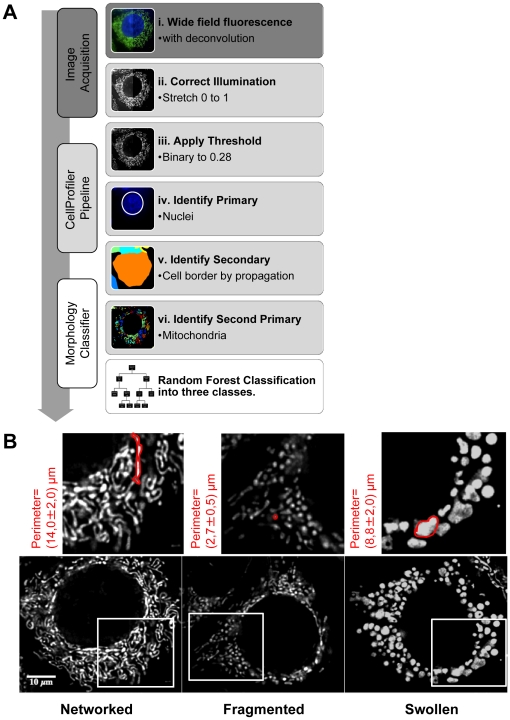
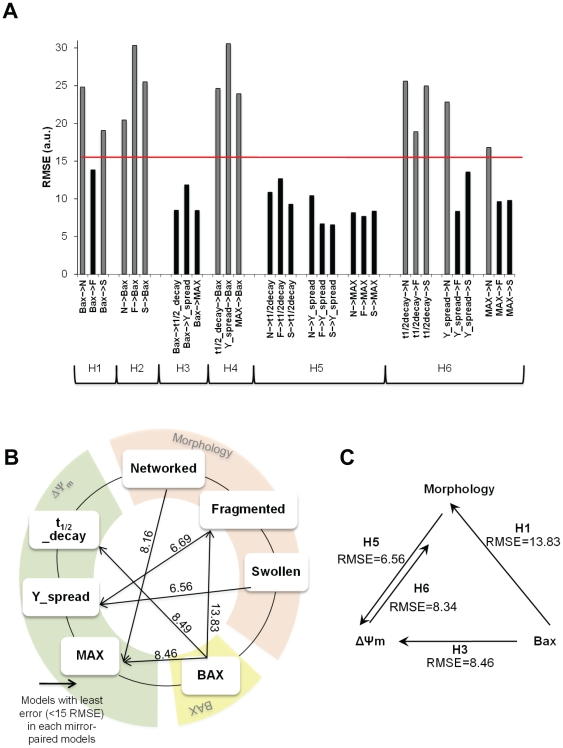
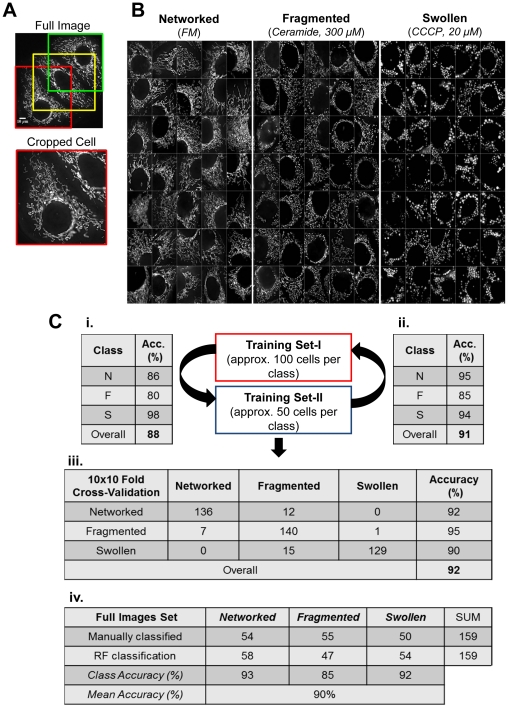
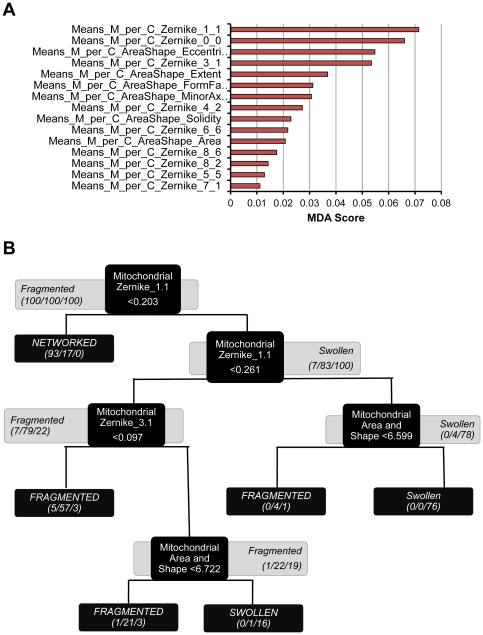
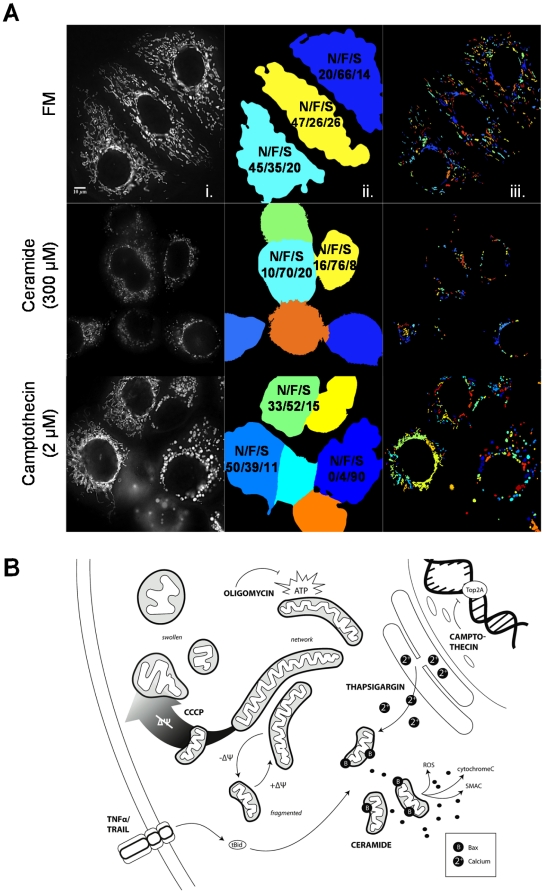
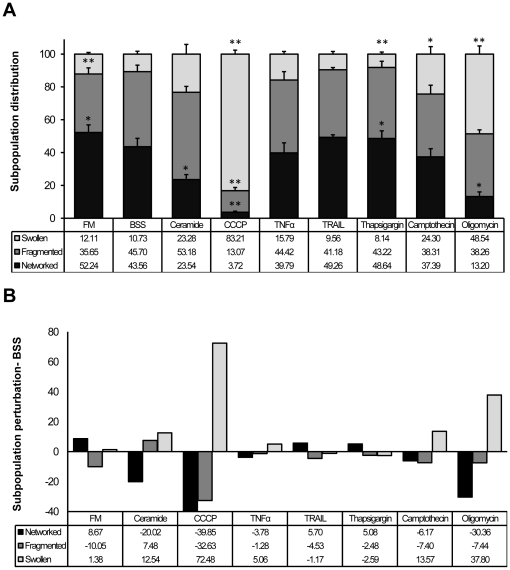
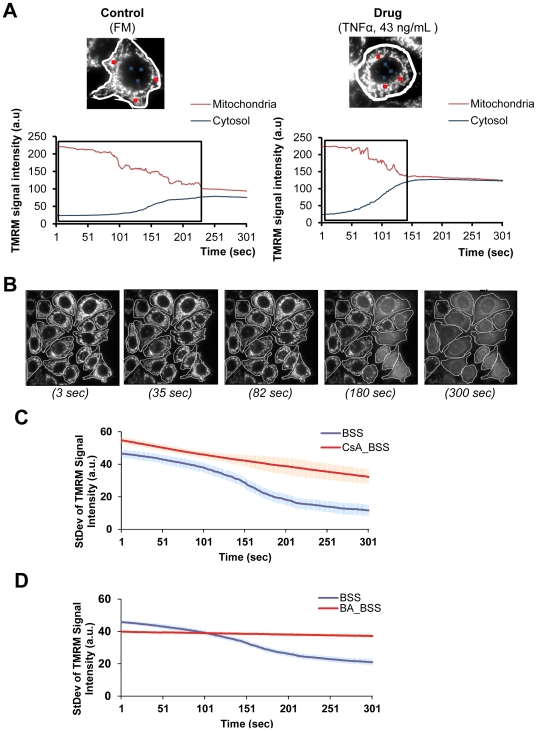
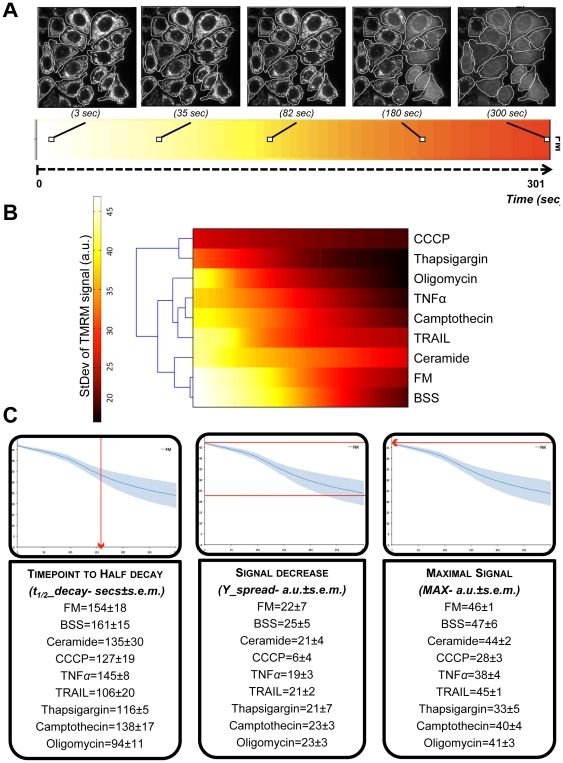
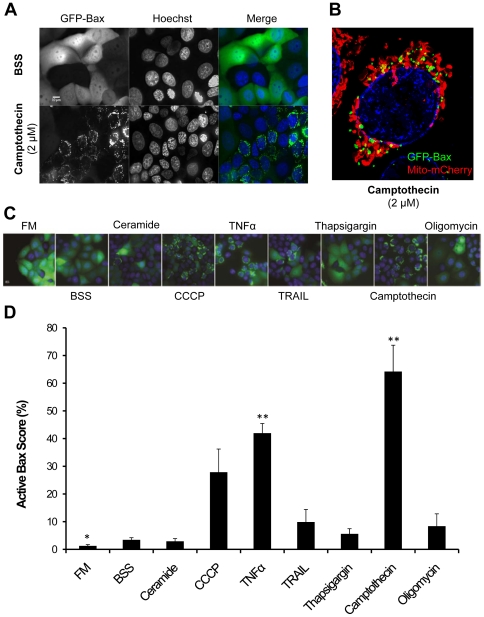
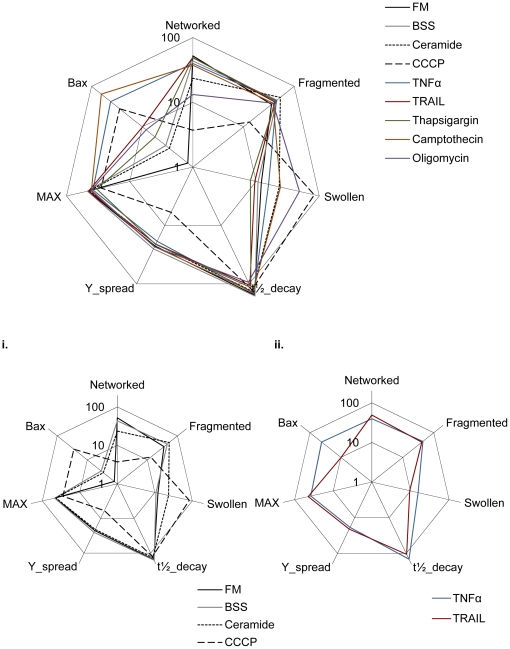
Mitochondria exist as a network of interconnected organelles undergoing constant fission and fusion. Current approaches to study mitochondrial morphology are limited by low data sampling coupled with manual identification and classification of complex morphological phenotypes. Here we propose an integrated mechanistic and data-driven modeling approach to analyze heterogeneous, quantified datasets and infer relations between mitochondrial morphology and apoptotic events. We initially performed high-content, multi-parametric measurements of mitochondrial morphological, apoptotic, and energetic states by high-resolution imaging of human breast carcinoma MCF-7 cells. Subsequently, decision tree-based analysis was used to automatically classify networked, fragmented, and swollen mitochondrial subpopulations, at the single-cell level and within cell populations. Our results revealed subtle but significant differences in morphology class distributions in response to various apoptotic stimuli. Furthermore, key mitochondrial functional parameters including mitochondrial membrane potential and Bax activation, were measured under matched conditions. Data-driven fuzzy logic modeling was used to explore the non-linear relationships between mitochondrial morphology and apoptotic signaling, combining morphological and functional data as a single model. Modeling results are in accordance with previous studies, where Bax regulates mitochondrial fragmentation, and mitochondrial morphology influences mitochondrial membrane potential. In summary, we established and validated a platform for mitochondrial morphological and functional analysis that can be readily extended with additional datasets. We further discuss the benefits of a flexible systematic approach for elucidating specific and general relationships between mitochondrial morphology and apoptosis.
线粒体作为相互连接的细胞器网络而存在,不断经历着裂变和融合。目前研究线粒体形态的方法受到数据采样率低的限制,同时还需要手动识别和分类复杂的形态表型。在这里,我们提出了一种综合的力学和数据驱动的建模方法,用于分析异质的、定量的数据集,并推断线粒体形态和凋亡事件之间的关系。我们最初通过对人乳腺癌 MCF-7 细胞的高分辨率成像,进行了线粒体形态、凋亡和能量状态的高内涵、多参数测量。随后,基于决策树的分析用于在单细胞水平和细胞群体内自动分类网络状、碎片化和肿胀的线粒体亚群。我们的结果揭示了在响应各种凋亡刺激时,形态类分布的微妙但显著的差异。此外,在匹配的条件下,还测量了包括线粒体膜电位和 Bax 激活在内的关键线粒体功能参数。数据驱动的模糊逻辑模型用于探索线粒体形态和凋亡信号之间的非线性关系,将形态和功能数据组合为一个单一的模型。模型结果与先前的研究一致,Bax 调节线粒体碎片化,线粒体形态影响线粒体膜电位。总之,我们建立并验证了一个用于线粒体形态和功能分析的平台,该平台可以很容易地扩展到更多的数据集。我们进一步讨论了灵活的系统方法在阐明线粒体形态和凋亡之间的特定和一般关系方面的优势。